Archives


2026 Best Sun Hat Types for Global Buyers?

Choosing the best Sun Hat in 2026 requires more than following seasonal fashion. Global buyers face stronger sunlight, humid cities, dry deserts, coastal winds, and changing travel habits. A hat that works in Singapore may feel unsuitable in Madrid or Nairobi. Climate matters.

The World Health Organization reports that ultraviolet radiation causes significant preventable skin damage worldwide. Its joint WHO–ILO estimates also connect occupational solar exposure with thousands of non-melanoma skin cancer deaths annually. These findings support practical protection, not just attractive styling. The Cancer Council recommends broad-brimmed hats for better coverage of the face, ears, and neck. However, brim width alone does not guarantee comfort or consistent use.

Industry research from Grand View Research and Euromonitor continues to highlight consumer interest in sun protection, outdoor recreation, lightweight products, and sustainable materials. Yet market reports often group hats with wider apparel categories. That makes detailed product comparison difficult. Buyers still need to examine UPF-rated fabrics, ventilation panels, sweatbands, packability, chin cords, and size ranges. Small details matter under direct midday sun.

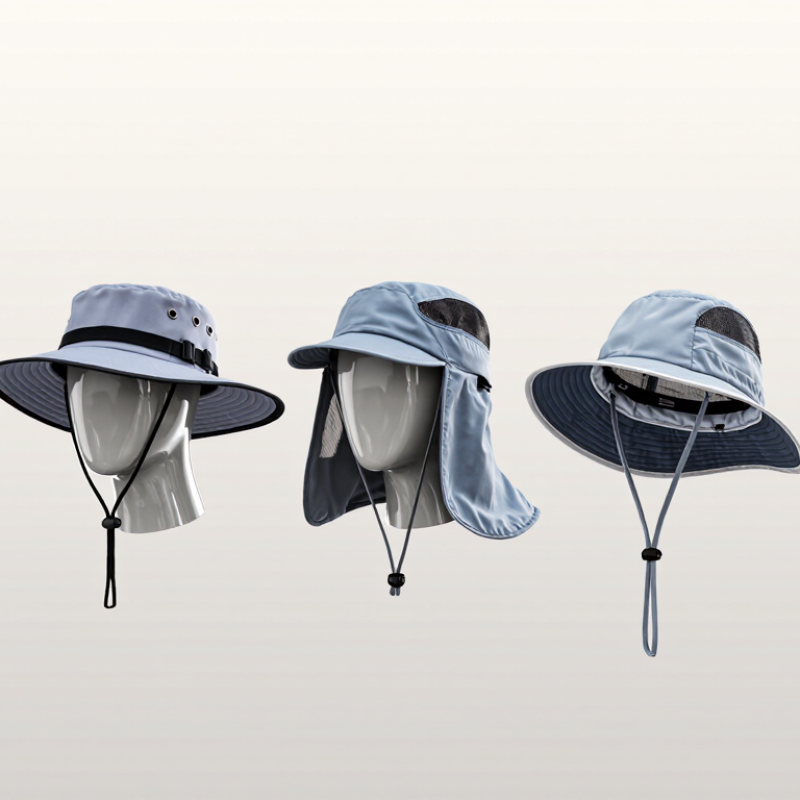
This guide compares bucket hats, wide-brim hats, legionnaire styles, folding travel hats, and performance caps. It considers protection, climate suitability, durability, appearance, and international sourcing needs. A UPF label helps, but it is not the whole answer. Fit remains frequently overlooked. Even the best design fails when wind lifts it, moisture makes it uncomfortable, or the brim blocks peripheral vision. The ideal choice is practical, tested, and honest about its limits.
2026 Best Sun Hat Types for Global Buyers?

What Is a Sun Hat and Why Does Its Type Matter?

A sun hat is a head covering designed to reduce direct sunlight on the face, neck, and scalp. Its type matters because coverage, airflow, weight, and stability differ widely. A wide-brim hat can shade the ears and shoulders, while a bucket style offers a softer, more flexible fit. A visor protects the face but leaves the scalp exposed.

In practical fitting work, I check brim width, crown depth, material, and adjustability before appearance. A tightly woven fabric usually blocks more light than an open weave, but it may feel warmer. Ventilation panels can improve comfort during travel or outdoor work. For windy coastlines, a chin cord and secure inner band are useful. For humid destinations, lightweight fabric and moisture control may matter more than maximum coverage. No type is perfect. I once chose a broad brim for strong protection, then found it awkward on crowded transport.

Tips: Match the hat to the activity, climate, and local movement. Test whether the brim blocks your view when walking. Check stitching, edge binding, and colorfastness before bulk purchasing. A pale exterior may feel cooler, but darker fabric can hide marks better. Buyers should also request measured brim dimensions, not vague terms such as “extra wide.” Small differences affect comfort. A hat that looks protective may still expose the neck when worn incorrectly. Fit should be reviewed with real clothing, hair volume, and expected weather.

How to Compare Sun Hat Materials, Shapes, and UV Protection

When comparing sun hats in 2026, start with material density, not appearance. The World Health Organization’s Global Solar UV Index recommends protection when the index reaches 3 or higher. Tightly woven polyester, nylon, and treated cotton usually shield more UV than loosely woven straw. Hold the hat toward a window. Visible pinholes reveal weak coverage.

Shape changes practical protection. A broad brim shades the ears, cheeks, and neck better than a short baseball-style peak. The Cancer Council recommends brims around 7.5 centimetres for broad coverage.

Bucket, safari, and legionnaire styles can work well, but fit still matters. A loose crown may lift in coastal wind. A chin cord helps, although it can feel irritating during humid travel.

UPF labeling deserves careful checking. The AS/NZS 4399 standard classifies UPF 50 and 50+ as excellent protection; UPF 50 transmits about 2% of tested UV radiation.

That result applies to the tested fabric, not every seam, mesh panel, or worn section. The American Association of Textile Chemists and Colorists also notes that stretch and moisture can alter fabric performance.

This is easy to overlook. Ask for test-method details, brim measurements, fiber content, and colorfastness data. Darker fabric often absorbs more UV, but comfort may decide whether buyers actually keep the hat on.

Which Sun Hat Types Suit Different Climates and Outdoor Activities?

2026 Best Sun Hat Types for Global Buyers?

Climate changes the right sun hat more than fashion does. In hot, humid regions, choose a lightweight wide-brim hat with mesh ventilation and moisture-wicking fabric. A firm brim protects the face, neck, and ears during long outdoor hours. It should not feel heavy.

Dry, bright climates need dense fabric, a generous brim, and reliable ultraviolet protection. A chin cord helps during desert walks or windy coastal trips. For tropical beaches, quick-drying materials are practical after swimming, although no hat replaces sunscreen or shade. In cooler high-altitude areas, a sun hat with a warmer lining can reduce discomfort.

Activity also matters. Gardeners often benefit from full neck coverage and a stable fit. Hikers may prefer a crushable hat with ventilation and an adjustable band. Cyclists usually need a low-profile cap that fits under a helmet, not a large brim. Anglers may value side coverage and a secure cord near open water.

Fit is easy to underestimate. Try bending, walking, and looking upward before buying. The brim should stay clear of your eyes. A hat that blocks vision can become unsafe on uneven trails. Packable hats are convenient, but repeated folding may weaken their shape. No category is perfect. My own preference can change after one hot, windy afternoon. Check care instructions, fabric testing, and local weather before choosing.

How Should Global Buyers Evaluate Size, Comfort, and Packability?

For global buyers, a sun hat should fit real heads, not just product charts. Measure head circumference above the eyebrows, then request an adjustable range in centimeters. A secure hat should stay firm during walking, but leave no pressure mark after 30 minutes. The World Health Organization links ultraviolet exposure with millions of non-melanoma skin cancer cases annually. Brim coverage matters. A practical target is at least 7.5 centimeters for everyday outdoor use, with extra side coverage for intense sunlight.

Comfort depends on the sweatband, crown depth, and fabric weight. Buyers should ask for moisture-wicking lining, smooth seams, and ventilation panels that do not expose the scalp. A hat can feel light in a showroom and become unpleasant in humid weather. Request wear-test feedback from users in tropical and dry climates. This step is often skipped. It should not be.

Packability needs a clear test, not vague wording such as “travel-friendly.” Ask whether the hat folds, rolls, or only tolerates gentle compression. Measure its packed height, recovery time, and visible creasing after 24 hours. UN Tourism reported about 1.4 billion international tourist arrivals in 2024, showing why luggage efficiency matters across markets. Still, a crushable crown may lose its shape. Buyers should compare recovery photos, carton dimensions, and repeated packing samples before approval. A smaller package is not always the better product.

What Quality, Compliance, and Sourcing Factors Affect Sun Hat Selection?

Choosing a sun hat in 2026 means more than matching seasonal colors. Global buyers should examine protection, construction, compliance, and sourcing evidence. A wide brim helps shade the face, neck, and ears, but coverage depends on shape and wear. Ask for laboratory results supporting the claimed ultraviolet protection factor, not only a supplier statement. Materials should resist fading, sweat, and light rain during outdoor use. Natural fibers may feel cooler, while tightly woven synthetics often provide more consistent performance. Comfort still matters. A hat left in a suitcase is useless.

Quality control begins with measurable details. Check seam density, brim recovery, sweatband attachment, stitching tension, and size tolerance across several samples. Test colorfastness against rubbing and perspiration. Inspect cords, toggles, and detachable parts for secure attachment and applicable safety requirements. Compliance documents should match the actual material, factory, and shipment. Requirements differ by destination, so buyers need current testing plans and labeling reviews for each market. Do not rely on an old report. Standards and retailer specifications change.

Sourcing decisions also involve factory capacity, minimum order quantities, tooling, lead times, and backup material options. Request production samples before approving bulk output. Keep written inspection criteria with photographs. Traceable records make problems easier to isolate. An attractive price can hide weak packing or unstable supply. I have found that supplier questionnaires reveal intentions, while repeated inspections reveal habits. Still, inspections are not perfect. Human error remains. Build buffer time, approve realistic tolerances, and discuss corrective actions openly. Reliable partnerships grow through evidence, not promises.

Close
Enter your email address to receive special offers!
linkedin facebook pinterest youtube rss twitter instagram facebook-blank rss-blank linkedin-blank pinterest youtube twitter instagram