For wholesale buyers, Eco Friendly Gift Bags are no longer a niche add-on. They influence packaging plans, supplier reviews, and the customer’s final impression. A sturdy kraft bag, neatly folded tissue, and a handle that stays secure can make a simple purchase feel considered. Small details matter.
Industry data offers useful context, though it does not guarantee sales. Trivium Packaging’s 2023 Global Buying Green Report surveyed consumers across nine countries and found that 82% were willing to pay more for sustainable packaging. That figure reflects stated preferences, not actual purchasing behavior. Still, it gives buyers a reason to assess materials, print methods, and durability alongside price. The report is a signal, not a promise.
For 2026, wholesale decisions should compare recycled content, material traceability, bag strength, and practical end-of-use options. A recycled-paper bag may suit a boutique’s lightweight gifts, while heavier items may need reinforced bases and handles. Those features can add material and cost. There is no perfect bag. Buyers should ask suppliers for clear specifications and sample bags, then test them with real products before placing a large order. A beautiful sample that tears under a boxed candle is not a useful solution. Better choices come from evidence, careful testing, and honest trade-offs.
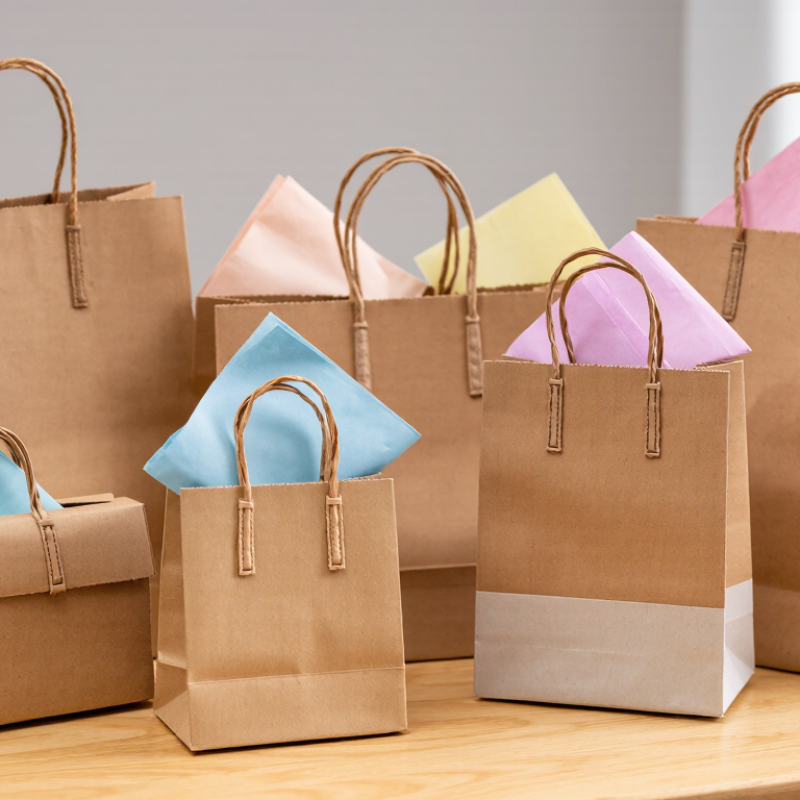
In 2026, an eco-friendly gift bag is not defined by brown paper or a green label. It is a bag designed to reduce material impacts across its life: responsibly sourced or recycled fibers, practical durability, and components that suit local recycling systems. Small details matter. A laminated finish, plastic window, or mixed-material handle can complicate recycling, even when the bag looks like paper.
The scale is significant. UNEP’s 2023 report, Turning off the Tap, estimates that packaging accounts for 36% of all plastics produced. In the United States, the EPA reported that containers and packaging generated 82.2 million tons of municipal solid waste in 2018, or 28.1% of the total. Those figures cover packaging broadly, not gift bags alone, but they show why material choices deserve scrutiny. For wholesale buyers, ask suppliers for documented recycled-content claims, fiber sourcing information, and clear disposal guidance. Check the bag itself: Can it carry a jar without tearing? Can its handles be separated easily? Reuse can help, but only if the bag survives repeated trips. There is no perfect option. A recyclable bag may still be wasted where collection systems are limited, so evaluate real local conditions rather than relying on appearance.
“Eco-friendly” is not a single material claim. Compare the bag’s source materials, actual reuse potential, local end-of-life options, and verifiable supplier documentation.
| Bag Type | Typical Material | Environmental Profile | End-of-Life Considerations | Wholesale Use | What Buyers Should Verify |
|---|---|---|---|---|---|
| Recycled Paper Gift Bag | Paper made partly or wholly from recovered fiber; may include paper handles and a paper base insert. | Uses recovered paper fiber and is generally lightweight. A high recycled-content claim should be supported by product-specific documentation. | Often accepted in paper recycling where local programs allow, provided the bag is clean and free of non-paper components. Remove ribbons or other attachments when required by local rules. | Suitable for retail, events, and short-term gifting where a paper look and easy stacking are priorities. | Ask for the recycled-fiber percentage and evidence for any responsible-forestry claim. Check whether handles, coatings, windows, or inserts affect local recyclability. |
| Uncoated Kraft Paper Bag | Virgin or recycled kraft paper, usually with twisted-paper or flat-paper handles. | Paper is fiber-based and can be recyclable; uncoated designs avoid some mixed-material complications. The impact depends on fiber sourcing, manufacturing, and how often the bag is used. | Typically suited to paper recycling if clean and accepted locally. Wet-strength treatments, heavy inks, and attached materials can affect handling by recycling facilities. | A practical option for high-volume campaigns, take-home packaging, and designs where simple customization is important. | Confirm whether the paper is recycled or sourced from responsibly managed forests, and request documentation that matches the finished bag—not just the raw material. |
| Reusable Cotton Tote Bag | Woven cotton fabric; cotton may be conventional or organic. | Designed for repeated use, but cotton production can require substantial water and other resources. Its benefit depends in part on how often it replaces other bags. | Textile collection and recycling access varies by location. Do not assume a used tote belongs in household paper or packaging recycling. | Best for premium gifting, conferences, and programs where recipients are likely to reuse the bag. | Check fiber composition, fabric weight, sewing quality, and any organic-fiber claim. Avoid treating “reusable” as proof of lower impact without considering expected reuse. |
| Jute Gift Bag | Woven jute fiber, sometimes combined with cotton, paper, or synthetic lining and handles. | Jute is a plant-based fiber and can make a durable bag. Mixed materials and added finishes may complicate repair, reuse, or material recovery. | End-of-life options depend on the bag’s full construction and local textile or organic-waste systems. A blended or lined bag may not be accepted for fiber recycling or composting. | Works for heavier gifts and repeat-use packaging where a textured, sturdy bag is appropriate. | Request the complete material breakdown, including lining, coatings, handles, and thread. Check durability and whether the supplier substantiates any compostability claim. |
| Recycled-Content Polyester (rPET) Bag | Polyester fabric made partly or wholly from recycled polyester, commonly sourced from recycled plastic feedstock. | Uses recycled feedstock when verified, and a durable design may support repeat use. It remains a synthetic textile and can release microfibers during use and washing. | Textile recycling is not widely available in all areas. Do not assume the bag is recyclable in curbside packaging collections; mixed components can further limit recovery. | Useful when water resistance, color printing, and repeated promotional use are important. | Verify the recycled-content percentage and chain-of-custody documentation. Ask whether the bag is mono-material and whether a realistic take-back or recycling route exists. |
| Certified Compostable Bag | Compostable paper or a certified compostable material; composition varies by product. | “Compostable” applies only under specified conditions and should not be treated as a general synonym for biodegradable or environmentally preferable. | May require an industrial composting facility that accepts the exact product. It should not be placed in recycling unless local guidance explicitly permits it. | Consider only for programs with a clear collection route and access to facilities that accept the bag. | Request a valid, product-specific certification and confirm the applicable composting conditions. Check local facility acceptance before making disposal claims to customers. |