Archives


What Is the Best Embroidery Pattern Fabric for Global Buyers?

Choosing the best Embroidery Pattern Fabric is not simply a matter of color, softness, or price. Global buyers must assess fiber content, weave stability, fabric weight, shrinkage, and surface smoothness. A beautiful pattern can still fail during hooping, washing, or international transport. No single fabric wins every order.

Textile Exchange’s Materials Market Report 2024 estimates that global fiber production reached about 124 million tonnes in 2023. It also projects continued growth toward 2030. This expansion increases material choices, but it complicates responsible purchasing. Cotton, linen, polyester, rayon, and blended fabrics each offer different embroidery results. Cotton provides a stable, familiar base. Linen adds texture but may distort under dense stitching. Polyester often supports consistent color and dimensional stability. These are practical observations from production and sampling, not universal guarantees.

Reliable sourcing requires measurable checks. Buyers should request fiber-composition records, fabric GSM, width tolerance, colorfastness results, and shrinkage data. ISO 105-C06 can support washing colorfastness evaluation, while ISO 6330 provides standardized domestic washing procedures. OEKO-TEX STANDARD 100 certification may also help verify restricted-substance testing, where applicable. The Global Organic Textile Standard offers further guidance for certified organic fibers and processing. Yet certificates alone cannot replace physical samples. A test swatch may reveal loose yarns, needle damage, or uneven backing. Small details matter. The better question is not only, “Which fabric looks best?” It is, “Which fabric remains reliable after embroidery, laundering, packing, and repeated customer use?” Some recommendations still need adjustment for climate, machine settings, and stitch density. That uncertainty deserves honest attention.
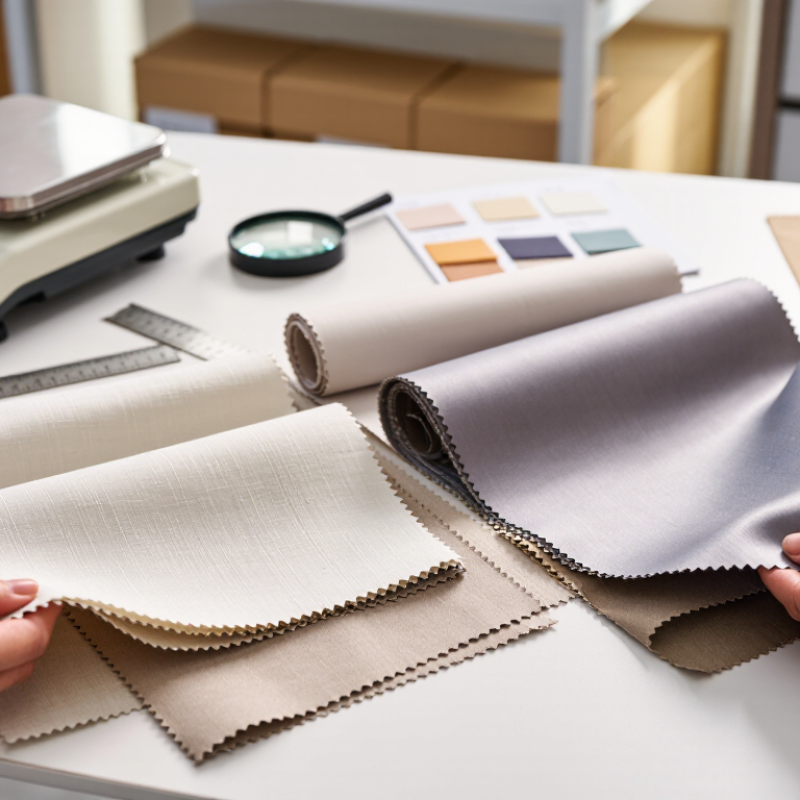
What Is the Best Embroidery Pattern Fabric for Global Buyers?

Embroidery Fabric Types Compared by Fiber, Weave, and Global Use

What Is the Best Embroidery Pattern Fabric for Global Buyers?

Embroidery fabric choice depends on fiber, weave, and end use. Cotton remains a practical option for hand embroidery because its smooth surface holds printed patterns clearly. Linen offers sharper holes and a crisp, natural texture, but uneven slubs can challenge beginners. Polyester provides strong color retention and moisture resistance for uniforms, home décor, and export products.

Textile Exchange’s Materials Market Report 2024 recorded about 124 million tonnes of global fiber production in 2023. Polyester represented roughly 57% of that volume, showing its importance in scalable textile supply.

Yet high volume does not mean universal suitability. A tightly woven plain fabric can resist needle movement, while an evenweave structure supports counted patterns with more predictable spacing. Canvas suits bold motifs. Twill adds durability, but its diagonal ribs may distort fine stitches.

Global buyers should match fabric performance with climate and handling. Lightweight cotton-linen blends feel cooler in warm regions, while polyester blends tolerate repeated washing and long-distance transport. Silk creates refined detail, but its delicate surface demands careful packing and slower production. I have found that the same pattern can look balanced on linen and crowded on cotton. That small difference matters.

Test first. Always.

A 10-centimeter sample can reveal shrinkage, thread slippage, color bleeding, and needle resistance before bulk production. No fabric is perfect; even experienced buyers sometimes prioritize appearance over production speed.

Choosing Cotton Canvas by 200–400 GSM Weight and Thread Count

For global embroidery buyers, cotton canvas between 200 and 400 GSM offers a practical range. Lighter 200–250 GSM canvas feels flexible and suits hoops, pouches, and decorative panels. Heavier 300–400 GSM fabric gives firmer support for bags, wall art, and repeated handling. My sampling experience suggests 280–320 GSM is often the safest middle ground. It holds stitches without feeling excessively rigid.

Thread count needs careful interpretation. A higher count can create a smoother surface, but it may also make needle penetration harder. ASTM D3775 defines fabric count by measuring yarns per inch in woven fabric.

Buyers should request warp and weft counts separately, not only a single “thread count” number. A 12-by-12 construction behaves differently from a 20-by-20 construction at the same weight. That detail is easy to overlook.

Textile Exchange’s Materials Market Report 2024 states that cotton represented approximately 22% of global fiber production in 2023. This scale supports stable sourcing, but it does not guarantee equal canvas quality.

Ask for GSM tolerance, shrinkage results, weave inspection, and colorfastness testing. A practical tolerance of about ±5% can help control purchasing risk, although some suppliers may require negotiation.

Do not judge fabric by weight alone. I have seen dense canvas stitch beautifully, then distort after washing. Pre-wash testing remains necessary.

Evaluating Linen Fabric Through Flax Content and 150–300 GSM Standards

For global embroidery buyers, linen should be evaluated by flax content, not appearance alone. A natural linen fabric usually contains a high percentage of flax fiber, while blended cloth may include cotton, viscose, or synthetic fibers. The European Confederation of Flax and Hemp reported that European growers supply about 85% of the world’s long flax fiber. This supports traceability, but it does not guarantee embroidery performance.

GSM matters immediately. Fabrics from 150 to 180 GSM feel light and suit small motifs, yet their open structure can distort under tight stitching. Around 200 to 250 GSM offers better balance for hoop work, table textiles, and decorative panels. At 260 to 300 GSM, linen feels firmer and supports dense patterns more reliably. Textile Exchange’s Materials Market Report 2024 identifies linen as a smaller but established natural-fiber category, reinforcing the need for careful material verification rather than trend-based purchasing.

Do not rely on GSM alone. A 250 GSM fabric can still fray if its weave is loose or heavily washed. I usually test a 10-centimeter square with the planned needle and thread before approving a production lot. Check flax content, weave density, shrinkage, edge stability, and color consistency. Some suppliers provide incomplete fiber details. That is a warning sign. A perfect fabric may not exist; buyers should record acceptable flaws and test results before scaling orders.

Testing Polyester Blends for ISO 105-C06 Colorfastness Performance

What Is the Best Embroidery Pattern Fabric for Global Buyers?

Testing Polyester Blends for ISO 105-C06 Colorfastness Performance

For global buyers, polyester blends offer a practical base for embroidered fabrics. They resist wrinkles, dry quickly, and support sharp pattern details. Yet fiber content alone cannot predict colorfastness. A fabric with 65% polyester and 35% cotton may behave differently from a 50/50 blend.

ISO 105-C06 testing evaluates color change and staining after controlled washing. A qualified laboratory uses specified detergent, temperature, liquor ratio, and washing cycles. The test also checks adjacent fabrics for transferred color. This matters when bright embroidery meets white backing cloth. In our fabric evaluations, dark red and deep navy shades often require closer review. Small production differences can affect results.

Ask for test data from the actual production lot. Do not rely only on a general fabric certificate. Check the blend ratio, fabric weight, dye method, and finishing process. Embroidery thread should be tested with the base fabric, not separately. That detail is easy to miss. It can change the final assessment.

Some samples perform well after one cycle but weaken after repeated washing. That result deserves discussion, not excuses. Buyers should compare grey scale ratings, shrinkage, surface appearance, and thread stability. A fabric may pass colorfastness yet show puckering around dense stitches. ISO 105-C06 does not measure every visual defect. Careful inspection remains necessary.

Selecting the Best Fabric by Stitch Density, Durability, and Export Needs

What Is the Best Embroidery Pattern Fabric for Global Buyers?

Selecting fabric for embroidery starts with stitch density, not appearance alone. Light designs usually suit stable cotton or linen with moderate thread tension. Dense patterns need tighter weaves, stronger tear resistance, and controlled shrinkage. A loosely woven fabric may look attractive, but repeated needle penetration can create holes, puckering, or distorted edges. In sample testing, I check a 10-by-10-centimeter area after washing and pressing. Small details often reveal larger problems.

Durability also affects export performance. The 2024 Textile Exchange Materials Market Report estimates global fiber production reached 124 million tonnes in 2023. This scale increases pressure to document fiber content, performance, and responsible sourcing. For embroidery fabric, buyers should request weight, width, shrinkage, colorfastness, and tensile-strength data. ISO 105-C06 can support laundering colorfastness checks, while ISO 13934-1 helps assess tensile strength. These tests do not replace real embroidery trials.

Export buyers should also examine roll consistency, moisture protection, labeling, and carton dimensions. Polyester blends often provide dimensional stability during long shipments, while natural fibers may require stronger humidity controls. There is no perfect fabric. A heavier base can reduce distortion, yet it may increase freight cost and reduce needle efficiency. I still distrust a flawless swatch. Testing the actual production lot remains more reliable than trusting a supplier sheet.

Close
Enter your email address to receive special offers!
linkedin facebook pinterest youtube rss twitter instagram facebook-blank rss-blank linkedin-blank pinterest youtube twitter instagram