Archives


7 Best Giant Lanterns for Events and Festivals

giant lanterns can turn an ordinary event space into a vivid gathering point. Picture a glowing dragon above a festival path, or a cluster of silk lanterns warming a winter market. Their scale attracts attention, but size alone does not make a display successful. Materials, lighting, installation needs, weather exposure, and viewing distance all affect the result.

Industry research offers useful context. Eventbrite’s 2024 Social Study explores audiences’ interest in shared, community-focused experiences, while Freeman’s attendee-experience research examines what makes in-person events meaningful. These reports do not rank lantern designs, but they reinforce an important planning idea: visual installations should invite people to pause, gather, and participate. Small details matter. A lantern that looks striking in a product photo may feel too dim outdoors or overwhelm a compact venue. The fit is not always obvious.

This guide compares seven giant lantern options for events and festivals, with attention to appearance, practical use, and the atmosphere each can create. You’ll find ideas for entrances, stages, gardens, and open-air celebrations, along with considerations such as setup and placement. Some designs are bold. Others are quieter. Choosing well means matching the lantern to the audience, site, and event purpose—not simply choosing the largest one.
7 Best Giant Lanterns for Events and Festivals

Understanding Giant Lanterns and Their Role in Festivals

Giant lanterns are illuminated structures designed to make a shared space feel memorable after dark. They may depict animals, flowers, folklore figures, or abstract shapes. Their role is more than decoration: a glowing installation can guide visitors through a festival, create a meeting point, and give a local story a visible form.

Scale changes how people experience a display. A lantern towering above a walkway draws attention from far away, while smaller details reward visitors who stop nearby. Designers should consider viewing distance, crowd movement, and sightlines before choosing a location. Warm, even lighting helps reveal color and texture; harsh glare can flatten both. Safety matters, too. Stable frames, protected electrical connections, and weather-appropriate materials reduce avoidable problems. Check the ground and overhead clearance.

The setting shapes the result. A bright city square may need stronger contrast than a quiet garden path, while wind can make an exposed structure harder to secure. The first mock-up is rarely perfect. A display may look striking in photographs yet block a useful route in person. Walk the site at night, test visibility from several angles, and leave enough room for people to pause without creating a bottleneck. A little awkwardness in planning is worth noticing early; it is harder to fix once the festival is open.

Key Types of Giant Lanterns for Events

Key Types of Giant Lanterns for Events

Fabric-covered lanterns suit garden festivals and evening markets. Their soft glow works well with floral shapes, animals, or oversized traditional motifs. A steel or aluminum frame helps them hold their shape outdoors. Check seams and anchors, though; fabric can catch wind, and a beautiful design may still need sturdy supports.

Wire-frame illuminated lanterns create crisp silhouettes, such as dragons, flowers, or city scenes. Sculptural lanterns add depth with layered surfaces and internal lighting. Walk-through arches and lantern tunnels invite visitors inside the display. They need clear entry points and enough room for queues. Small details matter.

LEDs make large displays easier to illuminate efficiently. The U.S. Department of Energy reports that LEDs use at least 75% less energy than incandescent lighting and can last up to 25 times longer. That comparison comes from the DOE’s LED lighting guidance; actual event savings depend on the full installation. Ask about power demand, weather protection, and repair access before choosing a type. A bright surface can hide awkward maintenance. Some plans miss that.

Seven Standout Giant Lantern Designs for Large Celebrations

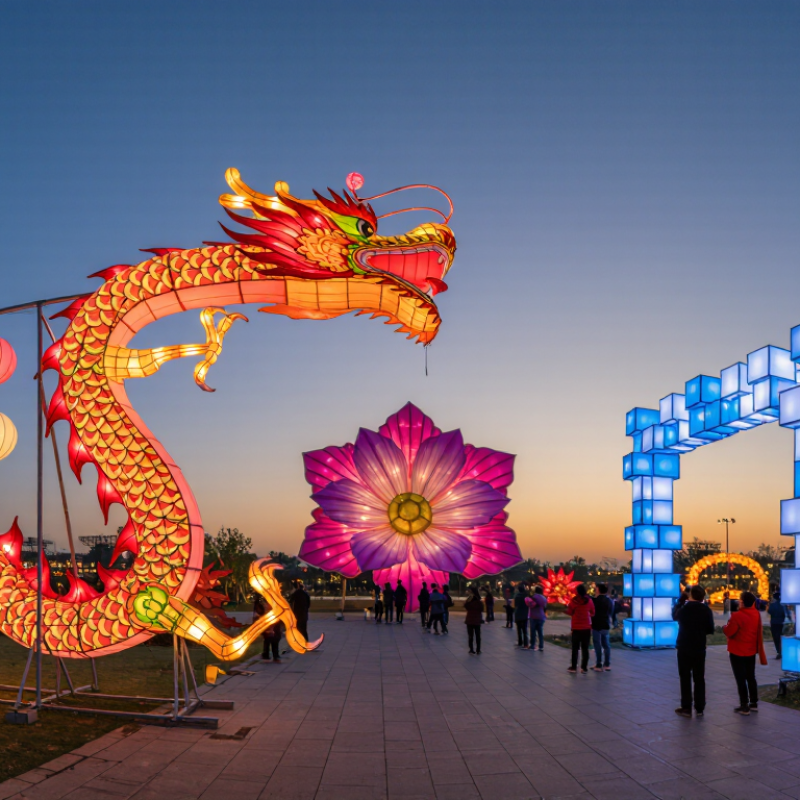
A glowing archway makes a clear entrance and gives guests an easy photo spot. Keep its frame broad enough for two people to pass without turning sideways. A coiling dragon lantern brings movement to a parade route, especially when its scales use layered colors. It needs careful internal support; a beautiful head can still look awkward if the body sags. A flower canopy suits gardens and evening markets. Petal-shaped panels cast soft patterns, though too many colors can make the display feel busy. A moon gate offers a quieter option. Its circular outline frames performers or a distant stage.

A giant zodiac animal can give a festival a recognizable centerpiece. Choose a pose that reads from far away, not only up close. A lotus lantern works well beside ponds or reflective surfaces, where its shape can appear doubled. Keep electrical components protected from moisture. A lantern-shaped tower adds height to an open plaza, but its base must remain stable in wind. Details matter. Finally, a school of oversized fish can suggest motion above a walkway; translucent fins catch light without blocking it. Test the lighting after dusk. Some details disappear outdoors, and that is easy to overlook. Scale models and site checks help reveal problems before installation.

7 Best Giant Lanterns for Events and Festivals – Seven Standout Giant Lantern Designs for Large Celebrations
Lantern Design Typical Height Common Construction Best For Lighting Approach Planning Notes
Giant Geometric Star 3–6 m (10–20 ft) Lightweight metal or bamboo frame with translucent fabric or paper panels Holiday displays, city squares, entrance plazas, and nighttime photo spots Low-heat LED modules or string lights mounted inside the frame Allow space for support cables or a weighted base, especially in exposed outdoor locations.
Oversized Floral Lantern 2–5 m (6.5–16 ft) Sectioned wire or lightweight metal frame covered with colored translucent material Spring festivals, garden events, parades, and cultural celebrations Evenly spaced LEDs highlight the petals and central form Modular petals make transport and assembly easier; confirm that the finished shape fits through access routes.
Lantern Animal Sculpture 2–8 m (6.5–26 ft) Shaped frame with translucent fabric, paper, or weather-resistant mesh panels Family festivals, themed light trails, zoos, and community events Internal LED lighting, with optional separate lighting for facial details Large or irregular forms may need multiple support points and a site-specific stability assessment.
Giant Moon or Celestial Lantern 2–4 m (6.5–13 ft) Inflatable shell or lightweight frame with a translucent outer skin Night markets, waterfront events, evening performances, and immersive displays Diffused LED lighting creates a soft, even glow Inflatable versions need continuous power and blower protection; framed versions need secure anchoring.
Illuminated Archway Lantern 3–5 m (10–16 ft) high Modular frame with translucent panels, fabric, or decorative lattice Festival entrances, procession routes, and event photo backdrops LED strips or compact fixtures integrated along the frame Keep the opening clear, check overhead clearance, and provide an accessible route through the structure.
Pagoda-Inspired Lantern Tower 4–10 m (13–33 ft) Stacked frame sections with lightweight decorative panels Large festival grounds, heritage-themed celebrations, and central plazas Internal LEDs on each level, with separate illumination for the roof details Use a level base and engineered supports; taller structures require careful wind and load planning.
Giant Lantern Globe 2–6 m (6.5–20 ft) diameter Segmented lightweight frame with translucent fabric or weather-resistant membrane Open-air installations, public squares, night gardens, and large indoor halls Diffused LEDs positioned within the sphere for consistent illumination Plan for the globe’s full footprint, rigging or base requirements, electrical access, and safe visitor clearance.

Planning note: Dimensions are representative design ranges, not fixed standards. Final size, materials, anchoring, electrical setup, and weather suitability should be confirmed for the venue and local safety requirements.

How to Choose the Right Lantern for Your Venue

Choosing a giant lantern starts with the venue, not the catalog image. Measure ceiling height, doorway width, and clear space around stages, walkways, and exits. A 10-foot lantern may feel impressive in an open courtyard but crowded beneath a low tent. Check sightlines from entrances and seating, too. Guests should see the display without losing sight of signs or performers. Scale matters.

Match the lantern’s material and setup to the conditions. For outdoor events, check its wind limits, anchoring method, and weather rating; a heavy-looking frame is not automatically stable. Confirm how it is assembled, where cables run, and whether the venue has a suitable power source. Indoors, inspect hanging points and protect floors from support equipment. This is easy to overlook. A lantern can photograph beautifully yet create awkward bottlenecks on site. Recheck measurements if the layout changes.

Tips: Mark the lantern’s footprint with tape before installation. View it from the farthest guest area, then adjust its height or position. Leave clear access to exits and equipment.

Installation, Lighting, and Safety Considerations

Giant lanterns can create a striking focal point, but installation needs more planning than their lightweight appearance suggests. Measure doorways, ceiling height, and audience routes before delivery. Check the venue’s fixing points and the lantern’s frame, especially for pieces several metres wide. Secure each structure using supports rated for its size and expected conditions. Outdoors, wind can turn a broad lantern into a sail. A common oversight is checking the display from the front but not from below, where loose ties or exposed supports may be visible. Small details matter.

Lighting affects both appearance and safety. Use cool-running LED fixtures suited to the lantern’s material, and follow the maker’s guidance on distance and ventilation. Confirm electrical loads with the venue or a qualified electrician; keep connections protected from moisture and away from walkways. Route cables under suitable covers, not beneath rugs or loose fabric. Test the full setup after dark, when glare, shadows, and dim corners become easier to spot. Keep exits and access routes clear. Assign someone to inspect fixings and lights during the event, particularly after strong gusts or crowd changes. One lesson worth revisiting: a setup that looks secure at noon may need adjustment by evening.

Lighting Color Temperature Options for Giant Lanterns

Common LED color temperatures, measured in kelvins (K), can help set the mood at events and festivals. Color temperature describes the light’s appearance—not its brightness or operating temperature. Check lantern materials, electrical ratings, and venue safety requirements before installation.

Close
Enter your email address to receive special offers!
linkedin facebook pinterest youtube rss twitter instagram facebook-blank rss-blank linkedin-blank pinterest youtube twitter instagram