Archives


7 Best Hand Crank Coffee Grinders for Camping

A quiet campsite can make small comforts feel important. The kettle begins to whisper, cold air settles around the tent, and freshly ground coffee brings a little warmth to the morning. A Hand Crank Coffee Grinder For Camping offers a simple way to prepare beans without batteries or a power outlet. But the best choice depends on more than portability. Burr consistency, handle comfort, capacity, and how easily the grinder fits into a pack all matter.

Coffee educator James Hoffmann has discussed how grind size affects extraction. A useful paraphrase of that principle is: “Choose a grind that suits the coffee you want to make.” This is a summary, not a verbatim quotation. For campers, it points to a practical question: can the grinder produce a steady grind without turning breakfast into a workout? Some compact models are impressively light. Others feel slow when grinding enough beans for two cups. The trade-off is real.

This guide compares seven hand-crank grinders for camping, with attention to portability, build quality, ease of adjustment, and everyday usability. We consider details you notice outdoors: a handle that stays put, grounds that do not spill across a picnic table, and parts that are manageable to clean. No single grinder suits every trip. A short overnight hike calls for different priorities than a long stay beside the car. And even a good grinder can feel tedious before coffee. We’ll point out both the strengths and the compromises, so you can choose with clearer expectations.
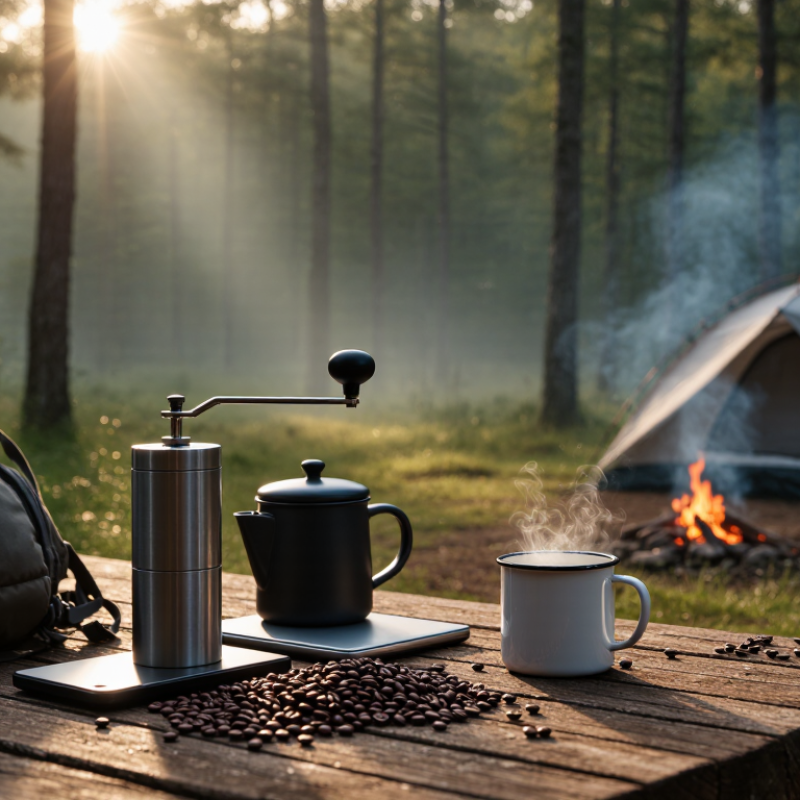
7 Best Hand Crank Coffee Grinders for Camping

What Makes a Hand Crank Coffee Grinder Suitable for Camping

A camping-ready hand crank grinder should earn its space in your pack. Look for a compact body with a secure lid, so beans stay put when the trail gets rough. Weight matters, but so does shape: a narrow grinder can fit beside a mug or stove without awkward packing. Check the handle, too. A removable crank is easier to stow, while a firm grip helps when your hands are cold. Small details count.

Consistent burrs and useful grind settings matter more than a long list of features. Coarse grounds suit a French press, while finer settings work for pour-over. Adjustment should be easy to feel and repeat, even outdoors. A clear, stable setting ring helps. Very tiny steps may be less useful if they are hard to adjust with cold fingers. Consider capacity as well: grinding enough for two cups saves time, but a larger chamber adds bulk.

For field use, choose sturdy materials and parts that are easy to brush clean. Damp grounds can cling inside after a rainy morning. A simple design is often easier to maintain than one with hidden crevices. Set the grinder on a flat rock or camp table while turning; lightweight models can wobble. There is a trade-off: a compact grinder may take more turns per cup, and that can feel tedious before breakfast.

Key Features to Compare in a Camping Coffee Grinder

A camping grinder should balance grind consistency, pack size, weight, and ease of cleaning. The Outdoor Industry Association’s 2024 Outdoor Participation Trends Report counted 175.8 million U.S. outdoor recreation participants in 2023, a reminder that gear often travels beyond the car park. For coffee, burr alignment and a useful adjustment range matter more than a long list of settings.

The Specialty Coffee Association’s brewing guidance places a common extraction target around 18–22 percent. That’s a brewing benchmark, not a grinder certification, but uneven grounds can make a consistent cup harder to achieve.

Check the grinder’s packed dimensions and weight against your actual kit. A folding handle saves space, though a tiny handle can feel awkward when grinding a coarse dose. Try the motion before buying, if possible. The axle should turn smoothly, and the catch cup should stay secure when tipped over.

Cleaning matters too: trapped grounds can make tomorrow’s cup taste stale. Look for parts that separate without tools, but avoid assuming every removable piece is useful in the field. Stainless components may tolerate rough handling, while lighter materials reduce pack weight; neither choice is perfect. A few extra grams may be worth it if the grinder feels steady in cold hands.

Seven Hand Crank Coffee Grinders for Camping

Seven Hand Crank Coffee Grinders for Camping

Seven hand crank coffee grinders for camping should be compared on more than size. The National Coffee Association’s 2024 National Coffee Data Trends report found that 67% of U.S. adults had coffee in the past day. Outdoor trips make a compact, reliable brew setup useful. The Outdoor Industry Association also reported 175.8 million U.S. participants in outdoor recreation in 2023. A grinder that packs neatly and works without power suits many campsites.

Compare the seven options by burr consistency, grind adjustment, capacity, weight, and ease of cleaning. Steel burrs can handle frequent use, while ceramic burrs may suit campers prioritizing corrosion resistance. Check whether the crank folds or detaches; loose parts are easy to misplace in a dim tent. A small hopper saves space but may require several batches for a group. That trade-off is easy to underestimate. Keep it simple.

Tips: Test the grinder at home before packing it. Set a medium grind for a pour-over, then adjust to taste. Brush out grounds after use, and store the crank securely. Small details matter.

How to Choose a Grinder for Your Camping Setup

A camping grinder should fit your brew method, trip length, and tolerance for extra weight. For pour-over, choose a model with repeatable adjustments; uneven grounds can leave a cup tasting both sharp and bitter. The Specialty Coffee Association’s Golden Cup guidance places brewed-coffee extraction yield around 18–22%, a useful benchmark for dialing in grind size and brewing. That number is not a promise of perfect flavor. Water temperature, dose, and pouring also matter.

Consider how the grinder behaves on a cold morning, not just how it looks at home. A long handle can make grinding easier, but it may snag in a crowded pack. A compact body saves space; a tiny catch cup can spill grounds onto damp tent fabric. Check whether the adjustment setting stays put while packed, and whether the parts are simple to brush clean. No tool is effortless. If you usually make coffee for two, a small grinder may turn breakfast into a slow chore. Weigh it with your other kit, then test one dose before leaving. A slightly imperfect cup outdoors is still useful feedback.

Using and Maintaining a Coffee Grinder Outdoors

A hand-crank grinder works best outdoors when you keep it steady and protect it from grit. Set it on a flat rock or camp table, then hold the body firmly while turning the handle. Add only the beans you plan to brew; loose beans can spill onto damp ground surprisingly fast. Grind over a mug or a wide-mouth container, especially when wind is moving through camp. Keep it dry. A little moisture can make grounds cling inside the chamber and complicate cleanup.

After brewing, tap out the remaining grounds and use a small, soft brush to clear the burr area. Avoid rinsing the grinder unless its maker specifically allows it; water trapped inside can encourage rust or leave parts damp. That matters. Store the grinder in a sealed pouch, separate from dusty cookware and food crumbs. If the handle or adjustment ring feels stiff, stop and check for a lodged bean rather than forcing it. I once hurried through cleanup and missed grounds around the burrs, so the next grind felt uneven. It was a small mistake, but outdoors, spare cleaning tools are easy to forget. Check the adjustment and moving parts at home before a trip, and pack the brush beside your coffee kit.

Close
Enter your email address to receive special offers!
linkedin facebook pinterest youtube rss twitter instagram facebook-blank rss-blank linkedin-blank pinterest youtube twitter instagram