7 Best Latching Push Button Switches for Buyers?
Choosing a Latching Push Button is about more than finding a switch that fits a panel hole. Buyers need a control that feels clear, stays in its selected state, and suits the electrical load. A button that looks sturdy may still have the wrong contact arrangement or terminal style. Small details matter.
Engineering author Henry Petroski wrote, “Science is about knowing; engineering is about doing.” His perspective is useful when comparing components: specifications must work in the real assembly, not only on a product page. This guide reviews seven Latching Push Button options through practical buying criteria, including actuator style, mounting dimensions, contact configuration, rated voltage and current, and expected operating conditions. Check the manufacturer’s datasheet before purchase. Ratings and dimensions can vary between models that look nearly identical.
The right choice depends on the application. A compact metal button may suit a machine panel, while a larger illuminated model can be easier to locate in a dim workspace. Consider wiring access, maintenance, and how often the switch will be operated. There is no universal best option. Even a careful comparison can miss a detail, so confirm fit and load compatibility before installation. These checks make the shortlist more useful and help buyers ask better questions of suppliers.
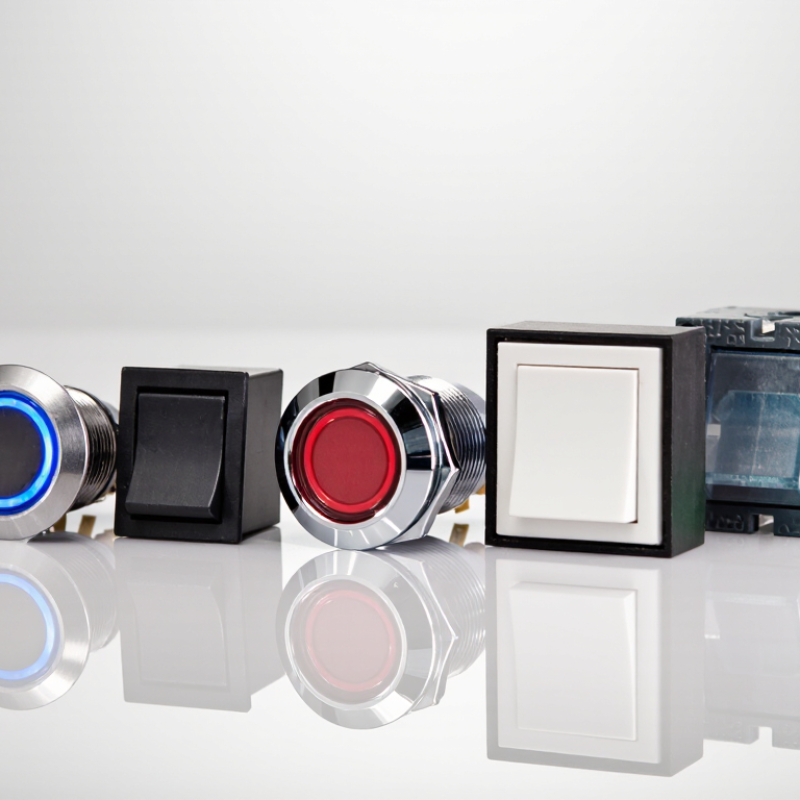
What Is a Latching Push Button Switch?
What Is a Latching Push Button Switch?
A latching push button switch changes state with each press and stays there after you release it. Press once, and the circuit may turn on; press again, and it turns off. No continuous finger pressure is needed. This differs from a momentary switch, which returns to its resting state when released. A latching switch suits controls that should remain set, such as a small equipment power input or a panel light.
Many latching switches use a mechanical mechanism to hold their position. The button may stay visibly in or out, though some designs look nearly identical in both states. Check the switch’s rated voltage and current against your circuit, and confirm whether it is intended for AC or DC use. The click can feel reassuring, but it does not prove the electrical connection is sound. That detail is easy to miss.
Tips: Before buying, check panel-hole size, terminal layout, and contact type. Match the rating to the actual load, not just the supply voltage. If the switch controls a motor or other inductive load, verify that its specifications cover that application.
How Latching Push Button Switches Work
A latching push button changes electrical state with each press and keeps that state after your finger lifts. In a common mechanical design, a small cam or detent holds the actuator in position. The first press closes or opens the contacts; the next press releases the mechanism and reverses the state. Click. It stays put.
Inside, conductive contacts connect the circuit when the switch is on. Their arrangement may be normally open, normally closed, or changeover, so check the product’s wiring diagram rather than relying on appearance. Latching switches differ from momentary buttons, which return as soon as pressure stops. Some models include an illuminated ring, but its lamp may need separate terminals and a suitable supply. The click is reassuring, though it does not prove the wiring is correct.
Tips: Disconnect power before wiring. Match the switch’s voltage and current ratings to the load, and use the specified terminal layout. Test the circuit with a meter before installation. If the button feels inconsistent, inspect its mounting and wiring; I would not assume the switch itself is faulty immediately.
Typical Latching Pushbutton: Output State
A latching pushbutton retains its state after you release it. In this typical toggle sequence, the first press switches the output ON and the next press switches it OFF. Actual contact configurations vary by switch.
Key Features to Compare Before Buying
When comparing latching push button switches, check what happens after you release the button. A latching model stays in its new position until pressed again, which suits power controls and mode selection. Confirm the contact arrangement, such as normally open, normally closed, or both. Match it to the circuit diagram rather than relying on button appearance. A small wiring mismatch can change how the equipment behaves.
Check the rated voltage and current for the actual circuit. Ratings may differ between AC and DC, so read the specification sheet carefully. Leave suitable electrical margin instead of choosing a switch right at the stated limit. Also measure the panel cutout and available space behind it. A switch may fit the front panel but collide with a nearby connector. That detail is easy to miss.
Consider the environment and how often the switch will be used. A dusty workshop may call for a suitable ingress protection rating, while frequent operation makes mechanical life and terminal strength more important. Look at the actuator size, illumination needs, and connection type, too. A glove-friendly button can help, though oversized controls may crowd a compact panel. I have found that tactile feel is hard to judge from a data sheet alone. When possible, inspect a sample and verify its fit before ordering a batch.
Common Types and Their Applications
Latching push button switches keep their state after pressure is released. One press turns a circuit on; another turns it off. Panel-mount models are common on control boxes, small machines, and equipment consoles. They suit situations where an operator needs a clear, deliberate on/off action. Contact arrangements vary, including normally open, normally closed, and changeover options. Match the arrangement to the circuit diagram, not just the button’s appearance.
Illuminated types add a visible status cue, useful on dim panels or equipment with several controls. Sealed versions can help in dusty or splash-prone settings, but “sealed” does not mean suitable for every environment. Larger switches may be easier to operate with gloves, while compact models fit crowded panels. Check the panel cutout, rated voltage and current, and expected switching frequency. A switch that fits physically may still be wrong electrically. Small detail, big headache.
Tips: Before installation, confirm whether the switch is momentary or latching; they can look nearly identical. Test the circuit with power disconnected, and verify the contact terminals using the datasheet or a continuity meter. Leave room behind the panel for wiring and terminals. This is easy to overlook. If the switch controls a safety-critical function, get the design checked by a qualified technician.
Seven Latching Push Button Switches for Buyers
Latching push button switches stay in their selected state until pressed again, making them useful for equipment that must remain on or off without constant pressure. Buyers can compare seven common styles: metal panel-mount, plastic panel-mount, illuminated, sealed, miniature, high-current, and guarded emergency-stop switches. Each suits a different job. A stainless-steel bezel may handle frequent contact, while a compact switch can fit a tight control panel.
Look beyond appearance. Check the panel cutout, terminal type, rated voltage and current, and expected operating life. An illuminated switch can make a machine’s status easier to see in a dim workshop, but its lamp voltage must match the circuit. For outdoor or dusty equipment, review the stated ingress protection rating; “sealed” alone is not enough detail. Small details matter.
High-current models need careful load matching, and emergency-stop controls should be selected for the machine’s actual safety design, not just their color. Verify the datasheet and test the switch in the intended enclosure before ordering in quantity. A switch that clicks firmly on a workbench may feel awkward behind a crowded panel. I have seen fit overlooked. That mistake is easy to make.
