Menstrual care is personal, but sourcing decisions are commercial. Buyers need products that fit real users, alongside dependable specifications and transparent manufacturing information. The Customized Menstrual Cup market therefore calls for more than attractive packaging. It calls for careful supplier evaluation.
The evidence is useful, but it has limits. A 2019 systematic review in The Lancet Public Health examined 43 studies involving 3,319 participants. It found menstrual cups could be an acceptable option, while also noting that product guidance and user familiarity matter. In the review, 73% of participants in studies reporting continuation said they wanted to keep using a cup. This is encouraging, not a guarantee for every market or user. UNFPA has also cited an estimate that around 500 million people worldwide lack access to menstrual products and adequate facilities. That gap matters.
For buyers comparing China-based suppliers, practical details deserve close attention: silicone specifications, available sizes, stem and rim design, packaging options, production capacity, and quality records. Ask how material and finished-product checks are documented, and request samples before approving a bulk order. Details matter. Customization can help a product serve a defined audience, but it can also add complexity, lead time, and cost. A polished catalog is not proof of consistent production. This guide explores how buyers can assess suppliers with evidence, realistic questions, and room to reconsider assumptions.
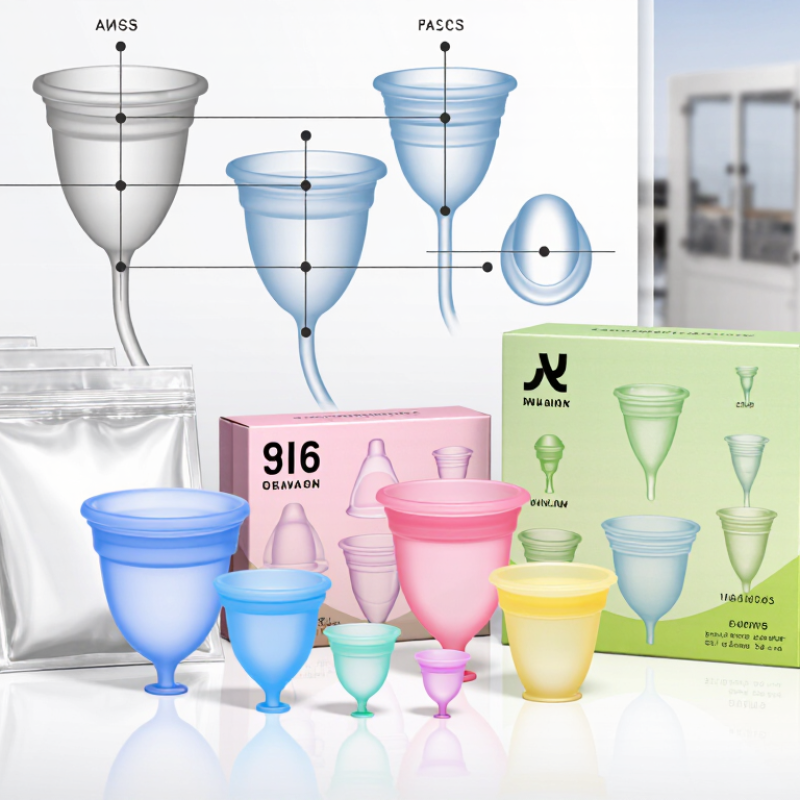
For buyers comparing customized menstrual cups, evidence should shape the brief before color or packaging. Findings drawn from 43 studies and 3,319 participants offer a broad starting point, not a single design rule. Participants differ in flow, comfort, anatomy, and experience using internal menstrual products. Study methods also vary. Details matter.
A practical supplier discussion can cover capacity options, cup length, rim shape, firmness, stem style, and material documentation. Ask how dimensions are measured and whether samples can be assessed before a large order. Clear specifications make comparisons easier: request product drawings, measurement tolerances, and consistent material information. A cup that feels too firm or sits poorly may not suit every user. That nuance is easy to lose in a short product brief.
Use research to guide questions, not to promise identical results for all users. Buyers can ask suppliers how design choices address different comfort preferences and how quality checks are documented. If testing reveals discomfort, revise the specification rather than assuming one fit works for everyone. I would not treat participant totals as proof that any particular custom design will succeed; that needs careful product evaluation and honest feedback.
A systematic review included 43 studies and 3,319 participants. In 10 studies involving 1,144 participants, 73% wanted to continue using a menstrual cup.
The 73% figure reflects reported willingness to continue, not measured long-term use. Source: van Eijk et al., Lancet Public Health, 2019.
When choosing a customized menstrual cup supplier, specify the material before discussing color, firmness, or packaging. Ask whether the cup uses silicone or another elastomer, and request details on pigments, processing aids, and any surface treatments. A smooth sample tells you little about its composition. Looks are not evidence. Keep the material specification tied to the exact product design, since changes can affect performance and biological safety.
ISO 10993 is a framework for evaluating biological risks, not a blanket certificate for a material. The evaluation should consider contact type, duration, and the finished cup, including colorants and manufacturing residues. Ask for a documented rationale and relevant test reports, such as assessments for cytotoxicity, irritation, or sensitization where appropriate. Check that report samples match the proposed formulation and production process. Paperwork can be incomplete; that is worth challenging, not quietly assuming away.
Tips: Request lot traceability and written notice of material changes. Have an experienced regulatory or testing specialist review the evidence. A report for a raw material alone may not answer questions about the finished cup.
A useful customization brief starts with capacity, not appearance. Buyers can compare measured volumes, such as 20, 25, and 30 milliliters, while checking that product dimensions remain clear and consistent. A printed capacity mark helps, but it should be easy to read after repeated washing. Ask for sample measurements and material specifications before approving a production run. Small details matter.
Firmness changes how a cup folds and opens, but a single option may not suit every user. Request samples in different firmness levels and assess them with realistic handling tests. Stem choices also deserve careful review: a rounded, trimmed, or ring-style stem can affect removal comfort. Avoid assuming that a longer stem is always better; fit varies, and users may need guidance on safe trimming.
Color and packaging complete the specification. Confirm that pigments are suitable for the intended product and that color remains stable after routine cleaning. Packaging should protect each cup from dust and moisture, while making instructions easy to find. Include dimensions, capacity, care guidance, and batch details where appropriate. Test before scaling. One early assumption can prove wrong, so collect feedback from diverse users and revise the sample before confirming bulk quantities.
For buyers seeking a customized menstrual cup supplier, ISO 13485:2016 is a useful framework for assessing quality systems, not a shortcut to trust. Ask to review the supplier’s current certificate, its scope, and the issuing body. Confirm that the listed site actually makes or controls the products you are sourcing. Paperwork is not proof.
Look for clear records at each production stage. Incoming silicone should be checked against approved material specifications, with supplier and batch details traceable. Review how the factory controls mold settings, cup dimensions, color changes, and inspection equipment. Ask for sample inspection records, defect criteria, and examples of how nonconforming products are held and investigated. Small details matter. A change to a mold or material should trigger documented review, not just a quick verbal approval.
A capable supplier should also explain complaint handling, corrective actions, and how staff learn from recurring defects. During an audit, compare written procedures with what operators actually do at the line. Gaps can happen, even in a documented system; what matters is whether they are identified, corrected, and checked later. I would also verify that test evidence matches the specific product configuration, rather than relying on a generic report. A polished audit file can still leave questions.
For buyers sourcing a customized menstrual cup from China, a sample is more than a color check. Inspect the rim, stem, surface, and pouch; ask for material and test records linked to the sample’s production batch. A clean-looking cup can still have a rough seam. Small details matter. Grand View Research estimated the global menstrual cup market at about US$1.2 billion in 2023, making supplier verification important as product options expand. Approve a signed “golden sample,” then confirm that later production will match its dimensions, color, and packaging.
Request the minimum order quantity for each customization level, not just the standard cup. A printed pouch or custom mold may change the MOQ and unit cost. Ask for a written production schedule covering sample approval, tooling, manufacturing, and inspection. Add buffer time for port handling and peak-season freight. The World Bank’s 2023 Logistics Performance Index assessed 139 economies and tracks customs and shipment reliability; these factors can affect delivery plans. Real schedules still slip sometimes, so avoid promising a launch date before confirming capacity.
Before payment, request a document checklist for the destination market. Typical shipping files include a commercial invoice, packing list, and bill of lading; a certificate of origin or product test reports may also be requested. Requirements vary by buyer and route. Check names, quantities, and carton details across every document. A mismatch can delay clearance. Ask the supplier to share draft documents before dispatch, and have your customs broker verify destination-specific requirements.
Buyer due-diligence checklist. MOQ and lead times are supplier- and order-specific; obtain written quotations rather than relying on universal estimates.
| Procurement dimension | What to confirm | Evidence to request | Buyer planning data | Important note |
|---|---|---|---|---|
| Product specification | Cup sizes, dimensions, capacity, stem design, color, packaging, and labeling language. | Approved specification sheet, drawings, and a signed sample reference. | Record each size and customization as a separate specification. | Do not rely on a product photo alone to define the finished product. |
| Sample validation | Check dimensions, surface finish, flexibility, odor, color consistency, and packaging against the agreed specification. | Pre-production samples, material documentation, and applicable test reports from a competent laboratory. | Approve and retain a signed “golden sample” before mass production. | A “medical-grade silicone” description by itself does not establish finished-product compliance or suitability. |
| Minimum order quantity (MOQ) | MOQ by size, color, packaging type, and customization; clarify whether quantities can be combined across variants. | Written quotation stating MOQ, unit price, tooling or setup charges, and any sample fees. | Enter the supplier’s confirmed quantity for each SKU; no universal MOQ applies. | Confirm whether the MOQ applies to the product, the packaging, or both. |
| Lead times | Sample preparation, artwork approval, production, inspection, and dispatch dates. | Written production schedule with start conditions and estimated completion date. | Request calendar-day estimates for each stage; confirm when the clock starts, such as after deposit and final artwork approval. | Lead times vary with order quantity, customization, material availability, and factory workload. |
| Quality control | Inspection criteria, defect classifications, traceability, and handling of nonconforming goods. | Quality-control plan, batch or lot identification method, and pre-shipment inspection records where agreed. | Agree acceptance criteria and inspection timing in the purchase contract. | Inspection scope and sampling rules should be agreed in advance, not assumed. |
| Commercial export documents | Document names, consignee details, product descriptions, quantities, values, and shipping terms. | Commercial invoice, packing list, and transport document such as a bill of lading or air waybill, as applicable. | Have the supplier and freight forwarder confirm which documents apply to the chosen transport mode and destination. | A certificate of origin may be needed or requested, depending on destination and import requirements. |
| Regulatory and product records | Destination-market classification, applicable registration or authorization, labeling, and importer responsibilities. | Relevant test reports, material declarations, product specifications, and regulatory records applicable to the destination market. | Confirm requirements with the destination-market regulator or a qualified compliance professional before placing the order. | Regulatory requirements differ by market; a supplier’s certificate does not automatically authorize sale in every country. |
| Shipping and customs details | Incoterms® rule and named place, carton dimensions, gross and net weights, and shipment routing. | Packing details and the agreed shipping quotation; confirm tariff classification with the importer or customs broker. | Confirm these details before booking freight and preparing final shipping documents. | Import duties, taxes, and customs requirements depend on the destination and applicable classification. |