China Top 10 Crew Ankle Socks Manufacturers
Choosing a supplier for Crew Ankle Socks involves more than comparing a catalog photo with a price. Buyers need to assess yarn composition, stitch density, cuff recovery, toe-seam finish, and size consistency. A sample can reveal whether the fabric feels breathable and whether the cuff stays in place after repeated wear. Small details matter. For bulk orders, production capacity, minimum order quantities, customization options, and realistic lead times deserve equal attention. Ask how inspections are performed, and request written specifications before approving a sample or purchase order. This reduces avoidable surprises.
This article introduces ten Chinese manufacturers serving the crew-sock market, with attention to product range and sourcing fit. It is a starting point, not a universal ranking. Company capabilities can change, and published product information may not answer every buyer’s question. Some suppliers may suit private-label programs, while others may be better for steady, standard designs. Compare each candidate using the same checklist: material options, sample quality, communication, production controls, and shipping arrangements. Where details are unclear, ask directly. A factory visit or third-party inspection may add confidence, but neither replaces clear contracts and approved samples. The right partner is the one whose claims can be checked and whose socks match your intended use. Expect to verify.
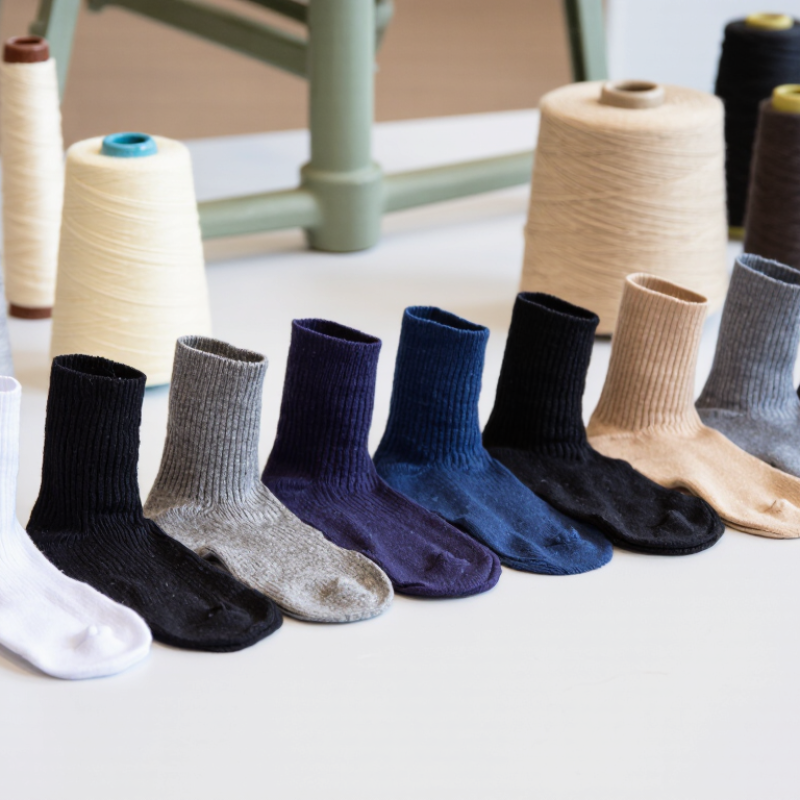
How Crew Ankle Socks Are Defined and Used
“Crew ankle socks” is not a universally fixed product term. It usually describes socks that sit higher than classic ankle socks but lower than traditional crew socks. The cuff may cover the ankle bone and extend slightly up the lower leg. The label can be confusing.
For a reliable fit, check the sock’s height from the heel to the cuff, not just its product name. A cuff that reaches about 10 to 15 centimeters above the heel often gives a short crew appearance, though sizing and construction vary. Ribbed cuffs help hold the sock in place, while a smooth toe seam can reduce rubbing inside close-fitting shoes. Still, a snug cuff may leave marks on sensitive skin.
This height works well with trainers, casual shoes, and some work footwear. It adds a light barrier between the shoe collar and skin, which can help limit friction during walking. For warm weather, a thinner knit may feel cooler; cushioned soles can feel better on long shifts but may crowd narrow shoes. Small details matter. A sock that looks right on a product page can fit differently after washing, so test it with the shoes and routine you actually use.
How China’s Sock Manufacturing Industry Is Structured
China’s sock industry is a network, not a single production line. Specialist knitting mills make the fabric, while separate workshops may handle toe closing, boarding, inspection, and packing. In major production clusters, suppliers often sit close together, helping factories source yarn and arrange finishing quickly. The China National Textile and Apparel Council’s 2023 industry review reported about RMB 4.7 trillion in operating revenue for above-designated-size textile enterprises. This figure covers the wider textile sector, not sock makers alone. That distinction matters when evaluating industry scale.
Manufacturers range from vertically integrated plants to smaller contract factories focused on particular gauges, fibers, or order sizes. A typical crew sock can pass through several hands: yarn selection, circular knitting, toe linking, washing, boarding, and final measurement. Buyers should ask where each step happens and how defects are recorded. Small batches matter. Capacity can look impressive on paper, yet changeovers and seasonal demand affect delivery. Not always smoothly. The sector’s strength is its dense supplier base; its challenge is keeping quality consistent across different workshops. A factory visit should include checking sock length, cuff recovery, seam feel, and carton labeling against the approved sample.
Criteria for Evaluating Crew Ankle Sock Manufacturers
Choosing a China-based crew ankle sock manufacturer starts with the product, not the catalogue. Ask for the yarn composition, knitting structure, and target weight in writing. A cotton-rich blend may feel soft, while elastane affects stretch and recovery. Inspect the heel pocket, toe seam, and cuff on a physical sample. Small details matter. A bulky seam can rub inside a walking shoe, even when the sock looks tidy.
Wash samples several times before judging them. Check for shrinkage, loose threads, fading, and cuffs that lose their grip. Ask how the factory checks these issues during production, and request clear acceptance standards for defects. A neat sample is not proof of consistent bulk quality. Compare samples from separate production runs if timing and budget allow. This step can be inconvenient, but skipping it leaves room for surprises.
Review minimum order quantities, sample charges, production lead times, and packaging requirements before placing an order. Ask who handles inspection and how problems are recorded and corrected. Request relevant test reports when performance claims matter, and confirm that the reports match the actual yarn and product. Communication is part of quality. Notice whether answers are specific, timely, and supported by records. No checklist is perfect; a rushed review can still miss details, so keep questions and decisions documented.
Profiles of 10 Leading Crew Ankle Sock Manufacturers in China
China’s crew-ankle sock manufacturers vary in scale, machinery, and material expertise. Grand View Research estimated the global socks market at USD 23.6 billion in 2023, forecasting 6.3% annual growth through 2030. That broader market figure is useful context, not proof of any factory’s performance. The ten anonymized supplier profiles below reflect distinct production strengths rather than a verified ranking.
One profile focuses on high-volume cotton basics. Another specializes in combed-cotton blends. A third offers seamless knitting. A fourth develops cushioned sport socks. A fifth works with wool blends. A sixth handles recycled yarns. A seventh integrates dyeing and finishing. An eighth supports smaller production runs. A ninth emphasizes custom patterns and colors. The tenth focuses on export documentation and repeat orders. Ask each factory for recent samples, machine capacity, and test records. Claims can sound polished; samples reveal more.
Tips: Check heel fit, toe seams, and cuff recovery after washing. Request the same yarn blend and construction planned for bulk production, then compare samples under consistent conditions.
How to Compare Manufacturers by Quality, Cost, and Export Capacity
Compare crew ankle sock manufacturers using the same specification: fiber blend, measured weight, cuff height, toe-seam finish, and wash-test method. Textile Exchange’s 2024 Materials Market Report estimated global fiber production at 124 million tonnes in 2023; polyester represented about 57% and cotton about 20%. These figures show the scale of key inputs, not their prices. Ask suppliers to quote the exact blend and explain how they control shrinkage, pilling, and elastic recovery. A soft sample can still lose its shape after repeated washing. Looks simple. It isn’t.
Compare total landed cost, not just the unit price. Include sampling, minimum order quantities, packaging, inspection, and freight. Request recent production records and clear defect-rate criteria. For export capacity, check monthly output, lead times, destination experience, and whether shipment documents match your requirements. The World Bank’s 2023 Logistics Performance Index assessed 139 economies across six areas, including customs, tracking, and timeliness. Use it as country-level context, not proof of any factory’s performance.
Tips: Ask each shortlisted manufacturer for the same sample set and test it after several wash cycles. Record measurements before and after; small differences matter. Then verify capacity with a production schedule and a recent, redacted shipping record. One weakness in this process: samples may not reflect bulk production, so consider an independent pre-shipment inspection.
Use these suggested evaluation weights to compare manufacturers—not as ratings of specific suppliers. Assess quality using samples and test reports, cost using like-for-like quotations, and export capacity using documented production and shipping records.
