Archives


How to Choose Reusable Canvas Tote Bags for Wholesale

Choosing Reusable Canvas Tote Bags for wholesale requires more than comparing unit prices. A dependable buying decision begins with the bag’s intended use, expected load, and customer profile. A bookstore may need a compact 8-ounce canvas bag. A grocery retailer may require heavier fabric, reinforced handles, and a wider base. Small details matter.

In practical sourcing work, I examine fabric weight, stitching density, handle attachment, dimensions, and finishing quality. A sample should carry realistic products before any large order is approved. Fill it with books, bottles, or folded clothing. Then inspect the seams after repeated lifting. Ask suppliers about cotton composition, production consistency, packaging, and available test reports. Clear specifications reduce misunderstandings between buyers and factories.

Price alone can mislead.

A low-cost bag may use thin fabric or weak handles. It may also shrink after washing, affecting printed artwork and final dimensions. Reliable wholesalers should request pre-production samples and confirm artwork placement in writing. They should review color references, tolerances, delivery schedules, and quality inspection procedures. When sustainability claims appear, verify the supporting documentation instead of relying on attractive wording.

No sourcing process is perfect. Even approved samples cannot predict every production issue. That is why practical buyers keep inspection records and allow time for corrections. This guide explains how to compare materials, construction, customization options, supplier reliability, and total purchasing costs. The goal is not merely to find attractive bags, but to select products that perform consistently and represent your brand responsibly.
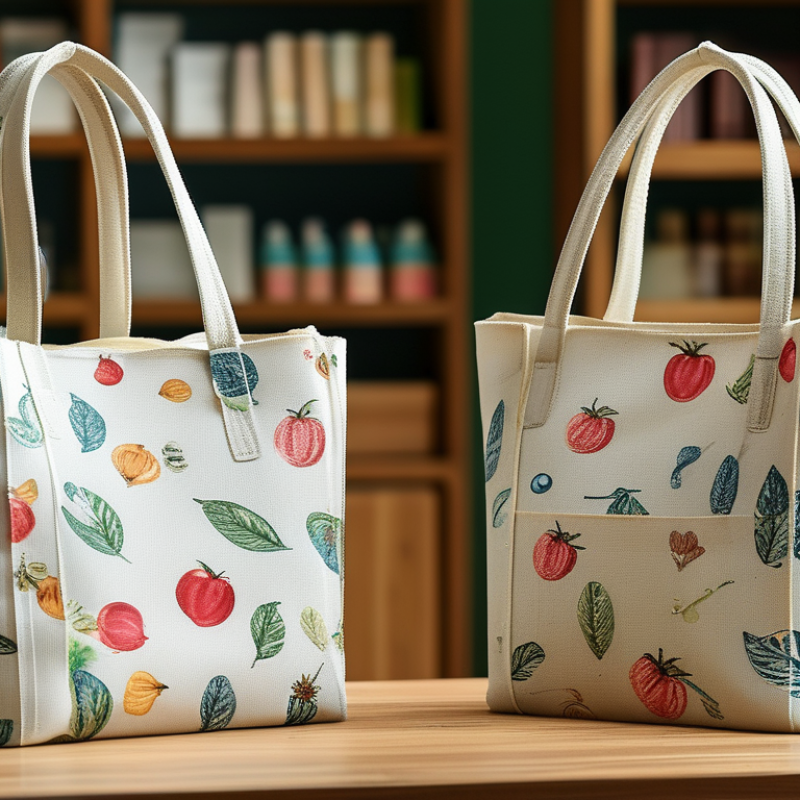
How to Choose Reusable Canvas Tote Bags for Wholesale

Understanding Reusable Canvas Tote Bags for Wholesale

Reusable canvas tote bags are more than simple promotional carriers. For wholesale buyers, understanding their structure helps prevent costly mismatches. Canvas usually means a tightly woven cotton fabric, often measured by weight in ounces per square yard. A 10–12 ounce canvas bag feels practical for books, groceries, and daily errands. Heavier fabric adds durability, but it also increases shipping weight and material use.

The United Nations Environment Programme’s 2020 review found that reusable bags must be used repeatedly to offset their production impacts. The required number varies by material, weight, and disposal method. That detail matters. A thick cotton tote used twice is not automatically sustainable. I would ask suppliers for fabric composition, stitching details, load-testing results, and packaging information. Check the handles closely. Reinforced cross-stitching can prevent tearing when the bag carries several glass jars or a laptop. Small construction choices matter.

Wholesale selection also requires practical testing. Place 8–10 kilograms inside a sample bag and inspect the seams after repeated lifting. Measure shrinkage after washing, if washable care is promised. The International Organization for Standardization provides testing frameworks for textile durability, but not every supplier offers complete results. That is a weakness worth acknowledging.

Request independent test documents when possible, rather than trusting vague claims such as “eco-friendly.” The European Environment Agency also emphasizes that reuse depends on actual consumer behavior, not just product design. Choose a useful size, comfortable handles, and neutral construction. Otherwise, attractive stock may remain unused in storage.
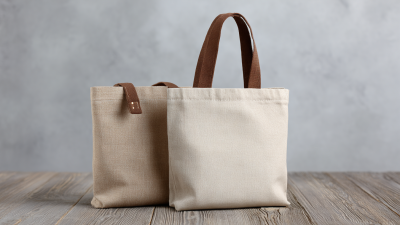
Defining Wholesale Requirements and Target Customers

Choosing reusable canvas tote bags for wholesale starts with a clear customer profile, not a low unit price. A gift shop may need compact bags with refined handles and simple colors. A grocery buyer may prioritize strength, washable fabric, and wide gussets. Write down purchase occasions, customer age groups, preferred sizes, and expected retail prices. In my sourcing experience, vague requirements create expensive revisions. A first forecast is rarely accurate. Leave room for seasonal changes.

Define product requirements in measurable terms. Specify dimensions, canvas weight, handle length, stitching quality, load capacity, and printing areas. Request a physical sample before approving bulk production. Check whether the handles remain comfortable after carrying books or groceries. For printed designs, approve a color reference and inspect edge clarity. Set a practical defect standard for loose threads, stains, and uneven seams. Confirm packaging, carton quantities, delivery windows, and inspection procedures in writing.

Target customer behavior should guide the order quantity. Corporate event buyers may want thousands of affordable bags with consistent printing. Boutique owners may prefer smaller batches and distinctive colors. Farmers’ market sellers could value reinforced bottoms and quick restocking. Compare landed cost with the customer’s likely selling price, including freight and packaging. Speak with several buyers before finalizing the specification. Their feedback may challenge your assumptions. I once overestimated demand for long handles because they looked fashionable, but shoppers found them awkward on crowded streets. That mistake changed how I test comfort.

How to Choose Reusable Canvas Tote Bags for Wholesale - Defining Wholesale Requirements and Target Customers

Target Customer Typical Use Recommended Bag Size Recommended Fabric Handle Specification Useful Capacity Suggested Order Quantity Indicative Wholesale Price* Key Buying Requirements
Grocery and Food Retailers Carrying packaged groceries, produce, and household items 38 × 42 cm; 10–12 cm gusset 280–340 g/m² cotton canvas 60–70 cm handles; cross-stitched reinforcement 12–18 L 500–2,000 pieces per design US$1.80–4.50 per piece High load strength, washable fabric, wide opening, optional gusset
Fashion and Lifestyle Retailers Retail packaging, everyday shopping, and seasonal collections 35 × 40 cm; 8–10 cm gusset 240–320 g/m² cotton canvas 55–65 cm handles; clean edge finishing 10–15 L 300–1,500 pieces per color US$1.60–4.20 per piece Consistent color, smooth printing surface, neat seams, custom labeling
Bookstores and Publishers Books, notebooks, stationery, and event merchandise 34 × 38 cm; flat base or 6–8 cm gusset 220–280 g/m² cotton canvas 55–65 cm handles; 2.5–3 cm width 8–12 L 250–1,000 pieces per artwork US$1.40–3.60 per piece Readable print area, abrasion resistance, compact storage, low minimum order
Trade Shows and Corporate Events Distributing brochures, samples, and promotional materials 38 × 42 cm; flat or 8 cm gusset 180–240 g/m² cotton canvas 55–65 cm handles; standard bar tack 10–15 L 1,000–10,000 pieces per campaign US$0.90–2.60 per piece Low unit cost, fast production, one- or two-color printing, easy bulk packing
Museums and Cultural Institutions Gift-shop sales and exhibition-related merchandise 35 × 40 cm; 8–10 cm gusset 280–340 g/m² cotton canvas 60–70 cm handles; reinforced top hem 10–15 L 300–1,500 pieces per design US$2.00–5.00 per piece Premium hand feel, accurate artwork reproduction, colorfastness, durable construction
Farmers' Markets and Artisan Sellers Carrying fresh products, handmade goods, and small purchases 35 × 40 cm; 8–12 cm gusset 260–320 g/m² cotton canvas 60–70 cm handles; reinforced attachment points 10–16 L 100–800 pieces per design US$1.70–4.20 per piece Small-batch flexibility, washable material, natural appearance, practical capacity
Schools and Universities Student welcome kits, library use, and campus events 35 × 40 cm; flat base 220–280 g/m² cotton canvas 60–70 cm handles; reinforced seams 10–14 L 500–5,000 pieces per academic program US$1.20–3.20 per piece Budget control, durable handles, clear logo placement, repeat-order consistency
Nonprofit and Community Organizations Awareness campaigns, donation distribution, and outreach events 38 × 42 cm; flat or 8 cm gusset 180–240 g/m² cotton canvas 55–65 cm handles; standard reinforcement 10–15 L 500–5,000 pieces per campaign US$0.90–2.80 per piece Transparent pricing, simple artwork, scalable production, recyclable packaging options
Hotels, Cafés, and Restaurants Guest gifts, takeaway items, and retail merchandise 30 × 35 cm; 6–8 cm gusset 240–300 g/m² cotton canvas 45–60 cm handles; reinforced top edge 7–11 L 250–2,000 pieces per location or program US$1.50–4.00 per piece Compact size, attractive finish, stain-resistant color selection, reliable repeat supply
Online and Specialty Gift Retailers Selling customized bags as standalone products or gift sets 35 × 40 cm; 8–10 cm gusset 280–360 g/m² cotton canvas 60–70 cm handles; premium seam finishing 10–15 L 100–1,000 pieces per SKU US$2.20–5.50 per piece Photogenic appearance, accurate measurements, protective packing, low defect rate

*Indicative wholesale price ranges are in U.S. dollars per piece and assume standard cotton canvas, basic sewing, and one-color printing where applicable. Actual pricing varies by fabric weight, order volume, customization, packaging, shipping terms, and destination.

Evaluating Canvas Quality, Size, Design, and Functionality

Choosing reusable canvas tote bags for wholesale starts with measurable quality, not attractive photos. Textile Exchange’s Materials Market Report 2024 states that global fiber production reached about 124 million tonnes in 2023. This highlights why material selection matters. Check the canvas weight, weave density, fiber content, and surface consistency. A heavier bag is not automatically better. Very thick canvas may increase shipping costs and feel uncomfortable in daily use. I prefer samples with even stitching, reinforced handle points, and a firm but flexible body.

Size must match the buyer’s real routine. A flat 35 × 40 cm bag suits books and groceries, while a gusseted design carries boxed products more safely. Measure handle drop length with a coat, not only a T-shirt. Functional details also deserve testing. Inspect seam strength, load capacity, pocket placement, closure security, and print durability after repeated washing. The European Commission’s Product Environmental Footprint guidance stresses that durability and actual use influence environmental performance. A reusable bag used only twice may perform poorly, regardless of its material.

Tips: Request pre-production samples, then conduct simple load and abrasion tests. Record dimensions after washing. Ask suppliers for fiber composition and production inspection records. Do not rely on one sample. In my experience, small handle defects often appear only after packing several kilograms. Design decisions can be imperfect; review customer feedback before repeating a large order.

Comparing Suppliers, Customization Options, and Minimum Orders

Choosing reusable canvas tote bags wholesale starts with supplier comparison, not the lowest quote. Ask for fabric weight, weave, handle length, seam method, and production location. A 10-ounce canvas bag feels different from a lightweight promotional bag. Request a physical sample before approving thousands. Check stitching around the handles. Test it with books, bottles, and repeated folding. Also request recent quality records and material information. Suppliers who answer clearly are easier to manage. Still, paperwork alone cannot prove consistency.

Customization should match the bag’s use. Screen printing suits simple artwork and larger quantities. Embroidery adds texture, but it may increase cost and production time. Confirm print size, ink method, color references, and artwork requirements before sampling. Ask how the design performs after washing and abrasion testing. Natural canvas can show slight color variation. That is normal, but it should be stated early. One mistake is approving a digital mockup without inspecting a printed sample. The image looked right; the final ink felt too heavy. That changed our approval process.

Minimum orders need a wider comparison. Review the first-order MOQ, custom-color MOQ, sample fee, and reorder quantity separately. A low MOQ may carry higher unit pricing or setup charges. Request quotes at three volumes, such as 100, 500, and 1,000 pieces. Include packaging, inspection, freight estimates, and lead times. Ask what happens when a small percentage fails inspection. Build a realistic buffer for seasonal demand. I would not choose solely on price. A reliable supplier with clear tolerances can prevent costly rework, although no process is flawless.

How to Choose Reusable Canvas Tote Bags for Wholesale

Typical minimum order quantities by customization level

Minimum order quantities usually increase as customization becomes more extensive. Stock-color bags often start at around 50 units, while custom fabric, size, or construction can require several hundred units. Confirm the final MOQ, sample cost, production lead time, and printing requirements with each supplier before placing an order.

Checking Prices, Sustainability Standards, and Delivery Terms

When choosing reusable canvas tote bags for wholesale, price is only the starting point. Ask for a complete quotation, not just the unit cost. Confirm printing fees, packaging, sample charges, freight, taxes, and payment terms. A low offer may exclude important costs. I once compared two quotes and missed the shipping difference. The cheaper option was not cheaper after delivery.

Sustainability claims need evidence. Check the canvas fiber content, recycled material percentage, dye process, and factory audit records. Request current certificates or laboratory reports for relevant standards. Also verify whether the certificate covers the finished bag, not only the fabric. Organic or recycled wording can sound convincing. It can still be unclear. Ask for batch references and document validity dates. Inspect the fabric weight, stitching, handles, and wash resistance before approving bulk production.

Delivery terms deserve equal attention. Confirm the sample timeline, production lead time, minimum order quantity, shipping method, and destination responsibilities. Put the expected dispatch date in writing. Clarify inspection procedures and solutions for shortages, stains, or damaged cartons. Build a small time buffer for customs delays or rework. My own planning became too optimistic once. A two-week buffer would have prevented rushed decisions. Reliable suppliers explain delays early and provide realistic updates, even when the news is inconvenient.

Close
Enter your email address to receive special offers!
linkedin facebook pinterest youtube rss twitter instagram facebook-blank rss-blank linkedin-blank pinterest youtube twitter instagram