How to Choose the Best Cotton Muslin Fabric?
Choosing the right Cotton Muslin Fabric starts with the job it needs to do. A lightweight, open weave may suit a breathable summer shirt, while a denser muslin can work better for curtains or sewing samples. Softness alone is not enough. Check the fiber content, fabric weight, weave consistency, and care instructions before buying. Hold the cloth toward a window: uneven gaps, thick slubs, or a stiff finish may affect the result.
Textile artist and educator Anni Albers wrote, “Designing is not a profession but an attitude.” Her words are about design broadly, not muslin specifically, but they offer a useful way to approach fabric selection: look closely, and question first impressions. A smooth surface can hide a finish that changes after washing. A low price can also mean more shrinkage or irregular width. Test a small swatch. Wash it as you plan to wash the finished item, then check its softness, dimensions, and color. This guide will compare weave, weight, finish, and intended use so you can choose with clearer expectations. There is no perfect option. The right fabric depends on what you are making, and even careful checks cannot predict every result.
Define the Intended Use of the Cotton Muslin
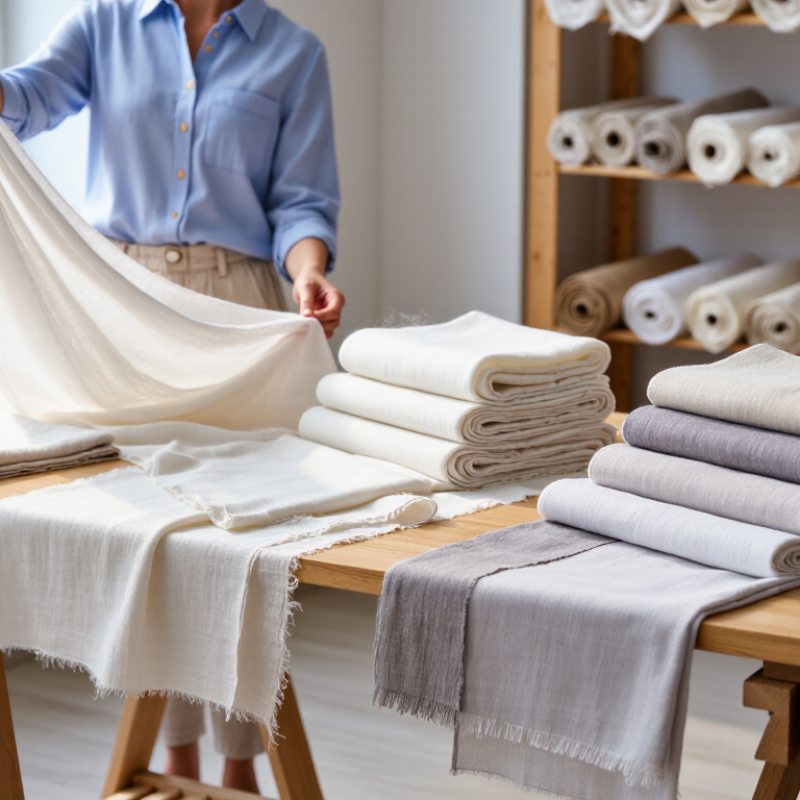
Before comparing cotton muslin fabrics, decide what the fabric needs to do. Will it touch skin, hold a garment’s shape, filter sunlight, or serve as a test layer? The answer changes which weight, weave, and finish make sense. Keep it practical.
For a lightweight blouse or summer lining, choose a soft, breathable muslin with a fine, even weave. A loose weave can feel airy, but it may show through or stretch out of shape. For curtains, a denser, heavier cloth often hangs more smoothly and filters light better. Need a pattern-making fabric? An affordable, plain option may be enough, since drape and color matter less than easy marking and cutting.
Think about care, too. If the finished item will be washed often, prewash a sample and check for shrinkage, puckering, or a change in hand. That small test can prevent surprises. I would not judge fabric by softness alone; washing can alter it, and “soft” is partly subjective. Compare a swatch with the actual project, ideally under the light and conditions where it will be used. A little uncertainty remains until you test it.
How to Choose the Best Cotton Muslin Fabric
Define the Intended Use
Fabric weight is one useful starting point: lighter muslin is often chosen for linings and lightweight garments, while heavier options can suit quilting, curtains, and crafts. These ranges are illustrative, not universal standards; check the fabric’s feel, weave, care instructions, and suitability for your project before buying.
Compare Fabric Weight, Weave, and Opacity
How to Choose the Best Cotton Muslin Fabric?
Compare Fabric Weight, Weave, and Opacity
Start with fabric weight, often listed in grams per square meter (GSM). A higher GSM usually means more material per area, but it does not guarantee a softer or more opaque cloth. Feel the difference. Compare swatches in your hands: lightweight muslin tends to drape easily, while heavier fabric may feel steadier for bags, curtains, or structured projects.
Look closely at the weave. Cotton muslin commonly has a simple, plain weave, but thread spacing can vary. Hold it up. Light passing between the threads reveals how open the weave is. A looser weave often feels airy and works well for warm-weather layers or test garments. A tighter weave can offer more coverage and a smoother surface, though it may feel less breezy.
Check opacity in the conditions where you will use the fabric. Place a swatch over a printed page or against a window, then view it in both bright and indoor light. Color, finish, and weave density all affect what shows through. It is easy to assume heavier fabric will always provide more privacy; that shortcut can mislead. Washing may also change the feel or appearance, so test a small piece first when the final result matters.
How to Choose the Best Cotton Muslin Fabric? — Compare Fabric Weight, Weave, and Opacity
| Fabric Category | Typical Weight | Weave and Feel | Expected Opacity | Common Uses | What to Check Before Buying |
| Lightweight muslin | About 60–100 g/m² | Plain weave; usually fine and relatively open, with a soft, light drape. | Often sheer or semi-sheer, especially in white or pale colors. | Light linings, swaddling layers, lightweight curtains, garment mock-ups, and photography backgrounds. | Hold a swatch against a contrasting surface or a window. For garments or curtains requiring coverage, plan for a lining or multiple layers. |
| Medium-weight muslin | About 100–150 g/m² | Plain weave with a more substantial hand than lightweight muslin; may still have visible gaps between yarns. | Usually semi-sheer to moderately opaque; color and weave density make a noticeable difference. | Test garments, craft projects, lightweight bedding layers, and general-purpose sewing. | Compare the fabric in the same color and lighting conditions in which it will be used. Check both drape and show-through. |
| Heavyweight muslin | About 150–220 g/m² | Plain weave that is generally denser and firmer, with more body and less drape. | Often opaque in darker shades; pale colors may still show some shadow or light through the fabric. | Structured mock-ups, utility sewing, heavier craft projects, and applications needing more body. | Check that the fabric is not too stiff for the intended project. Weight alone does not guarantee full opacity. |
| Very heavy or tightly woven muslin | Typically above 220 g/m² | Compact plain weave with a sturdy hand; may feel less fluid and require stronger needles or sewing equipment. | Generally more opaque, though white fabric can still transmit light depending on yarn spacing and finish. | Durable prototypes, covers, workroom use, and projects that benefit from a robust cotton fabric. | Ask for a swatch and confirm the finished fabric’s weight, width, shrinkage guidance, and care instructions. |
Note: These weight bands are practical comparison ranges, not a universal grading standard. Cotton muslin is generally made with a plain weave, but yarn size, weave density, color, finishing, and lighting all affect its feel and opacity. When coverage matters, assess a swatch in person rather than relying on weight alone.
Evaluate Fiber Quality and Fabric Finishes
Cotton muslin is usually a plain-weave fabric, but its feel and performance depend on both the cotton fiber and the way the yarns are made. Check the fabric in daylight. Look for a reasonably even weave, with no unexpected thin patches or broken threads. Small irregularities are common in loosely woven muslin and do not automatically mean poor quality. Feel it first. A soft surface can be pleasant, but it may come from a finish rather than finer cotton. Fiber length can influence yarn strength and smoothness, though it is only one part of the fabric’s quality.
Then inspect the finish. Muslin may be washed, softened, or treated to change its texture and drape. These treatments can make cloth feel gentler in the shop, yet the sensation may shift after laundering. Check the care label, and, if possible, wash a small swatch as you would the finished item. Notice whether it shrinks, puckers, or becomes rougher. I would not judge fabric by softness alone; even a neat-looking sample can behave differently once cut and sewn. Not always predictable.
Match the finish to the intended use. A crisp, untreated-feeling muslin may suit sampling or quilting, while a softer finish can feel more comfortable against skin. For repeated washing, consider whether the weave feels stable and whether care instructions are practical for your routine. A quick hand check helps, but it cannot replace testing a sample.
Check Fabric Width, Color, and Care Requirements
Cotton muslin can feel airy and soft, but the right choice depends on your project. Check the fabric’s usable width, not just the width shown in a listing. Selvages may reduce the space available for cutting. For a blanket or a wide curtain, compare the usable width with your pattern before ordering. Measure twice. A little extra fabric can help with hems, shrinkage, or an imperfect cut.
Color is worth checking in person when possible. Photos can look different from the fabric under daylight, and shades may vary between dye lots. A small swatch lets you compare the color with other materials in the room. Care instructions matter just as much. If the finished item will be machine-washed, wash a test piece as you plan to wash the item. Muslin may shrink or change texture, depending on its weave and finishing. I would not rely on appearance alone; check the care label and test first.
Tips: Note the usable width, shade, and washing instructions before buying. Keep a swatch for comparison. Small checks prevent frustrating surprises.
Test a Sample Before Buying in Bulk
How to Choose the Best Cotton Muslin Fabric?
Cotton muslin varies in weight, weave, softness, and finish, even when the label sounds similar. Textile Exchange’s Materials Market Report 2024 estimated global fiber production at 124 million tonnes in 2023, with cotton accounting for about 19%. That scale makes careful sourcing worthwhile, but it does not tell you how a particular muslin will perform. Check the fabric itself.
Request a sample from the intended production lot, if possible. Hold it against a window to judge opacity, then rub the surface gently to notice lint or uneven texture. Measure its length and width before washing. Wash and dry it as you would the finished item, then measure again. Look for shrinkage, color change, puckering, and fraying at the cut edge. A small swatch cannot represent every metre of a roll. Still, it can reveal problems before a bulk order.
Tips: Record the sample’s weight, weave, and wash settings so comparisons stay fair. Ask the supplier to confirm whether bulk fabric will match the sample. If results seem inconsistent, request another swatch; one test may not tell the whole story.
