Choosing the right Custard Jelly can shape repeat orders, kitchen workflow, and customer satisfaction. The category spans different formats, textures, sweetness levels, and storage needs. A glossy cup that looks appealing on a supplier’s screen may arrive too soft for layered desserts. Small details matter.
Grand View Research’s Jelly Market Size, Share & Trends Analysis examines the broader jelly market, not Custard Jelly alone. That distinction matters: its figures should not be treated as a precise forecast for custard-based products. For business buyers, the report is useful context, while supplier specifications and sample testing provide product-level evidence. Check serving size, ingredient and allergen information, shelf life, case quantity, and storage instructions. Then test the product in the actual setting: a chilled display, a takeaway bag, or a plated dessert. A spoon test helps. So does a delivery trial.
Quality expert W. Edwards Deming is widely associated with the principle, “In God we trust; all others must bring data.” Applied to sourcing, that means asking suppliers for documented specifications, consistent batch information, and clear answers about handling. It does not mean choosing the most technical-looking sheet. Taste, texture, and reliable delivery still matter. And one honest caveat: no single report can tell you which Custard Jelly your customers will prefer. Your own trial orders may reveal an inconvenient truth—that the best-selling option is not the one your team expected.
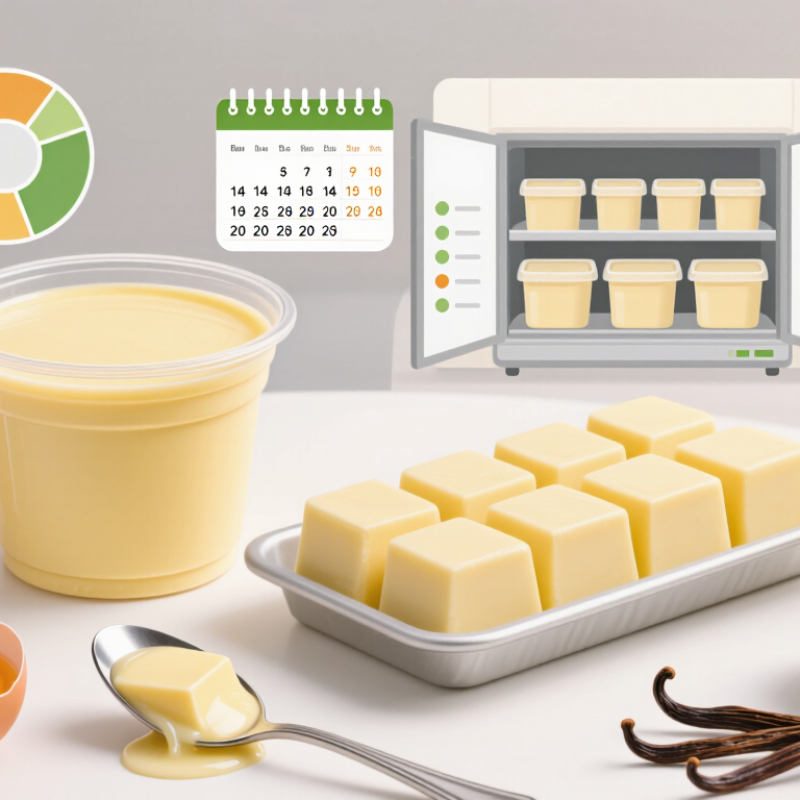
Custard jelly is a soft, spoonable dessert with a creamy flavor and a gentle set. It can work as a standalone cup dessert or as a layer in cakes, parfaits, and chilled drinks. Unlike a firm gelatin dessert, its texture is usually meant to yield easily under a spoon. That distinction affects both presentation and service.
Keep it simple.
For cafés, bakeries, and catering teams, custard jelly can add variety without requiring a complicated serving routine. A clear cup can show distinct layers of custard, fruit, and crumbs. In a bakery case, small portions may fit neatly beside cakes and puddings. Operators should check how the product behaves at the temperatures and holding times they actually use. A sample that looks smooth straight from refrigeration may soften or weep after sitting out.
When evaluating options, compare sweetness, firmness, portion size, ingredient information, and storage instructions. Ask for handling guidance and test a sample in the intended recipe, not just on its own. Record texture after chilling, transport, and a typical service period. Costs matter, but so do waste and preparation time. One easy-to-miss issue is compatibility with acidic fruit or crunchy toppings; the texture may change after assembly. A small trial can reveal that, though it will not predict every busy service day.
A custard jelly works best when it fits the people and occasions you serve. A café may need individual cups that can be chilled, displayed, and served quickly. A bakery might prefer a smooth filling that holds its shape between cake layers. Catering teams often value larger portions that can be cut cleanly and plated with fruit. Match texture and sweetness to the rest of the menu. A rich dessert may suit a small serving, while a lighter option can pair well with tea or lunch. Keep it simple. Before ordering in volume, check ingredient and allergen information, storage requirements, and serving instructions with the supplier.
Serving format affects cost, labor, and customer appeal. Single-serve cups offer portion control and a tidy grab-and-go option. Layered glasses show off distinct colors and textures, but they take more assembly time. Bulk tubs can make sense for busy kitchens, provided staff can portion them consistently. Test the jelly after chilling, not just at room temperature. Check whether a spoon cuts through easily and whether the texture stays pleasant after several hours of service. One easy mistake is choosing a format for appearance alone. It may look attractive in a photo, yet slow down the counter or create too much waste. Trial a small batch during a normal service period, then note what customers finish and what remains.
How to Choose the Best Custard Jelly for Your Business
Compare ingredient lists before judging appearance. Milk, eggs, starches, and stabilizers can affect richness, firmness, and consistency. Check whether the product suits your menu and preparation process. A dessert served in a chilled cup may need a smoother set than one layered with fruit. Taste a small sample, too. Vanilla should feel balanced, not overly sweet, and the custard should not leave a chalky finish.
Texture matters during serving and storage. Spoon through a chilled portion and notice whether it holds its shape or turns watery. If you plan to use it in cakes or drinks, test it in that exact setting. Flavor can change beside acidic fruit, coffee, or chocolate. Shelf life also deserves careful review: follow the supplier’s storage instructions, check the stated date, and record when each batch is opened. A longer date is not automatically better if the texture disappoints. There is no perfect choice; samples can still surprise you.
Tips: Request product specifications and a sample before ordering in bulk. Test portions at the temperature you will serve them, and compare them after a day in storage. Keep notes on sweetness, firmness, and portion cost. Small differences matter. I would revisit the choice after customer feedback, since a promising first tasting does not tell the whole story.
| Product Style | Typical Ingredients | Texture | Flavor Profile | Indicative Shelf-Life Profile | Business Considerations |
|---|---|---|---|---|---|
| Chilled egg-and-dairy custard | Milk or cream, egg or egg yolk, sugar; may include starch or a gelling agent. | Rich, smooth, and spoonable; firmness depends on the recipe and setting method. | Classic custard notes from egg and dairy, with sweetness adjustable to the recipe. | Requires refrigeration. Fresh or pasteurized versions generally have a shorter life than commercially sterile ambient products; use the validated product label for the exact period. | A good fit for refrigerated dessert counters. Account for cold storage, stock rotation, and egg and milk allergen declarations. |
| Starch-thickened dairy custard | Milk, sugar, and a starch such as corn or modified food starch; flavorings may be added. | Creamy and opaque, usually thicker and less elastic than a gel-set dessert. | Mild, creamy, and adaptable to vanilla, fruit, or other added flavors. | Storage life depends on processing and packaging. Chilled versions need refrigeration; shelf-stable versions require a suitable validated process and intact packaging. | Useful when a familiar, creamy spoon texture is preferred. Check whether the starch system holds its texture through the intended storage and serving conditions. |
| Gelatin-set custard jelly | Milk or cream, sugar, flavoring, and gelatin; some recipes also include egg or starch. | Soft, elastic, and gently wobbly; gelatin gels soften when warm. | Dairy-forward custard flavor with a clean, tender finish. | Typically sold and stored chilled unless a separately validated shelf-stable process is used. Follow the product’s storage instructions. | Suitable for refrigerated cups and plated desserts. Confirm the gelatin source meets dietary and labeling requirements for your market. |
| Agar-set custard jelly | Milk or a plant-based beverage, sugar, flavoring, and agar; other stabilizers may be used. | Firm and clean-cut, with a more brittle bite than gelatin-set jelly; agar gels remain set at typical room temperatures. | Can carry dairy, coconut, tea, or fruit flavors, depending on the base and recipe. | Agar does not determine food safety or shelf life. Storage life depends on the full recipe, production process, packaging, and whether the product is chilled or commercially shelf-stable. | Consider for portions that need to hold their shape during service. Test the finished product for firmness and syneresis (liquid release) over its intended storage period. |
| Plant-based custard jelly | A plant beverage such as soy, oat, or coconut, plus sugar, starch or hydrocolloid gelling agents, and flavorings. | Ranges from creamy to firm depending on the beverage and thickener system. | Varies by base: coconut can taste pronounced, while oat or soy may have distinct cereal or legume notes. | May be chilled or shelf-stable depending on the specific process and package. Do not infer shelf life from plant-based ingredients alone; check validated storage directions. | Can broaden menu options, but verify allergen statements, local labeling rules, and compatibility with the target texture. |
| Dry custard-jelly mix | A dry blend may contain sugar, starch or gelling agents, flavorings, and sometimes milk ingredients; preparation liquid is added by the user. | Depends on the mix and preparation method; can be creamy, firm, or gel-like. | Usually consistent between batches when measured and prepared according to instructions. | The unopened dry mix can have a longer ambient storage life than a prepared dessert, but the exact date and storage conditions are supplier-specific. Prepared product may require refrigeration. | Can reduce finished-product storage and transport needs. Factor in preparation labor, water or milk requirements, and staff training. |
| Shelf-life note: Shelf life is specific to the finished product and must be established for its formulation, manufacturing process, packaging, and storage conditions. Use the supplier’s validated date and handling instructions; refrigerate after opening when directed. | |||||
A reliable custard jelly supplier should provide clear ingredient specifications, allergen information, and batch records. Ask how ingredients are received, stored, and checked before production. Review food-safety procedures, including temperature controls and cleaning schedules. Documentation matters. It helps your team trace a concern to a specific delivery instead of guessing.
Test samples under your actual serving conditions. Chill them for the same period used in your shop, then check firmness, sweetness, color, and how cleanly each portion releases from its cup. Record the results across several batches, not just one tasting. A sample may look smooth on delivery but turn watery after refrigeration. That detail is easy to miss.
Consistency is practical, not merely visual. Compare batch dates and ask the supplier how it manages changes in ingredients or production settings. Request advance notice when specifications may shift. A tasting note can be subjective; ours sometimes is. Use simple measures, such as portion weight and a timed spoon test, alongside staff feedback. If a supplier cannot explain a variation clearly, pause before increasing order volume. Good answers should be specific, and records should match the product you receive.
Test custard jelly in the form customers will actually buy: chilled, portioned, and served with the intended toppings. A warm sample can hide weak texture, while a spoonful straight from a mixing bowl says little about a sealed cup’s performance. Run small batches, then record firmness, sweetness, aroma, and separation after preparation and storage. I would not trust one tasting session. People’s preferences vary, and the first batch may simply be lucky.
The International Food Information Council’s 2024 Food & Health Survey found that taste mattered to 85% of respondents, while price mattered to 76%. Treat those figures as broad consumer context, not proof of local demand. Ask target customers to rate blind samples, then compare results with your likely selling price. Calculate cost per saleable portion, including ingredients, cups, lids, labor, refrigeration, delivery, and discarded product. USDA’s Economic Research Service estimated that 31% of the U.S. food supply was lost or wasted at retail and consumer levels in 2010; that broad estimate is not specific to desserts, but it highlights why yield matters. Weigh the finished batch and count portions after filling. A few uneven cups can quietly distort the margin. Recheck your assumptions with a second production run.