How to Choose the Best Lightweight Down Sleeping Bag?
Choosing a lightweight down sleeping bag is a balance between warmth, packed size, comfort, and cost. A low number on the scale can look impressive, but it means little if the bag leaves your shoulders cold at 3 a.m. On a chilly campsite, details matter: the hood should sit comfortably, the zipper should not snag, and the footbox should leave room for your toes. Yet warmth depends on more than design. Your sleep habits, clothing, shelter, and expected weather all affect how a bag performs.
A Light Down Sleeping Bag can suit backpackers who want to reduce pack weight without giving up useful insulation. Compare fill power with the actual fill weight; these figures describe different things. Check the stated temperature rating and whether it follows a recognized testing standard, such as EN or ISO. Then examine the bag’s fit, shell fabric, zipper, and packed dimensions. Small details matter. Down compresses well, but damp conditions can reduce its loft, so consider your trip’s climate and storage plan. No single choice fits everyone. A narrow cut may save space, yet feel restrictive if you turn often. Before buying, compare the specifications with your own trips, not just a product’s headline claims. I would not treat any temperature rating as a personal guarantee; individual comfort varies. A little uncertainty is useful here. The right bag is the one whose tested warmth, fit, and weight match your real nights outdoors.
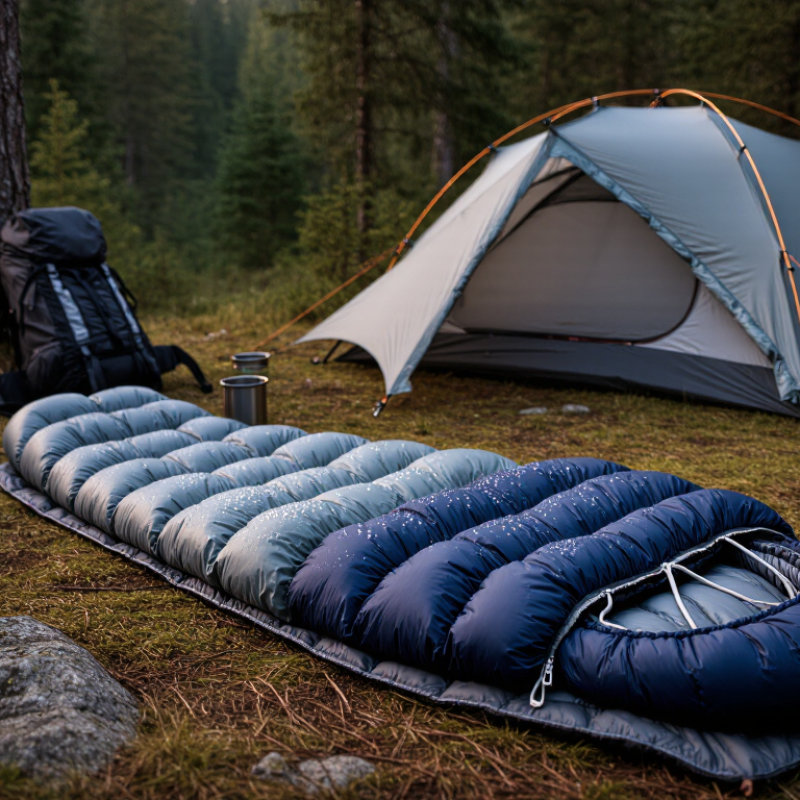
Identify Your Trip Conditions and Expected Temperatures
Choose a sleeping bag for the coldest conditions you realistically expect, not the warmest forecast. Check temperatures at your campsite’s elevation; a nearby town may sit much lower or higher. Valleys can collect cold air, while exposed ridges bring wind and less shelter. Compare seasonal weather records with the forecast, then leave room for an unexpectedly cold night. Forecasts miss.
Read the bag’s comfort rating, and check whether it follows a standardized testing method. The comfort rating is a useful starting point for many sleepers; a lower-limit rating is not a promise that everyone will sleep comfortably at that temperature. Your sleeping pad matters too. A thin pad can let ground chill drain warmth, even inside a suitable bag. Consider what you will wear, whether you tend to sleep cold, and how sheltered your pitch will be.
Moisture deserves attention with down insulation. In humid weather or a tent prone to condensation, drying opportunities may be limited, and damp insulation can lose loft. I would not choose a bag by temperature rating alone; I have to admit, weight figures can distract from the whole sleep system. Picture the actual night: a frosty tent wall, a damp base layer, or a pad packed for a different season. Those details may change which bag is sensible.
| How to Choose the Best Lightweight Down Sleeping Bag? — Identify Your Trip Conditions and Expected Temperatures |
| Trip Conditions | Expected Overnight Low | Suggested Bag Comfort Rating | Lightweight Design Priorities | Planning Notes |
| Warm-weather camping at low elevation | 10°C (50°F) or warmer | About 10°C (50°F) or warmer | Consider a light, less insulated bag with a full-length zipper for ventilation. | Check likely night-time lows, not daytime highs. A sleeping bag can often be opened as a blanket in warm conditions. |
| Mild three-season trips in generally dry conditions | About 0°C to 10°C (32°F to 50°F) | At or below the lowest forecast temperature; around 0°C (32°F) comfort is a common starting point. | Balance insulation, packed size, and total weight. A hood and draft collar can help retain warmth. | Allow extra warmth margin if forecasts are uncertain, campsites are exposed, or you tend to sleep cold. |
| Cool shoulder-season trips or high-elevation camping | About −5°C to 0°C (23°F to 32°F) | About −5°C (23°F) comfort or lower, depending on the expected minimum. | Prioritize a well-fitting hood, insulated draft features, and enough down insulation without compressing the bag. | Temperature can drop quickly at elevation or in clear, calm conditions. Verify the rating and consider a warmer sleep system. |
| Cold-weather trips with reliable forecasts and suitable equipment | Below −5°C (23°F) | Select a comfort rating at or below the expected low, with additional margin for personal needs and changing weather. | Warmth and dependable construction matter more than minimizing weight. Check zipper protection, hood coverage, and fit. | Use a sleeping pad appropriate for the conditions; a sleeping bag alone does not provide adequate insulation from the ground. |
| Humid, rainy, or damp environments | Any temperature range | Base the rating on the expected overnight low, then plan for moisture management. | Look for a durable, breathable shell and protect the down from rain and condensation with suitable shelter and storage. | Down insulation can lose loft when wet. Keep the bag dry and follow the care instructions for washing and storage. |
| Rating tip: When available, compare standardized EN/ISO temperature ratings. The comfort rating is a useful reference for many sleepers; the lower limit is not the same as a comfort temperature. Individual warmth, clothing, shelter, sleeping-pad insulation, fatigue, and weather all affect how warm a bag feels. |
Compare Temperature Ratings and Safety Margins
When comparing lightweight down sleeping bags, read the comfort rating before the lower-limit figure. The comfort rating estimates a temperature at which a typical sleeper can rest comfortably; the lower limit suggests a colder threshold for a curled-up sleeper. These are different guides, not interchangeable promises. Check whether the rating follows a recognized test standard, such as ISO 23537, and note the assumptions behind it.
Match the comfort rating to nights near your expected low, then leave a practical safety margin. For many trips, choosing a bag rated about 3–6°C colder than the forecast low can help account for changing weather and individual cold sensitivity. That range is only a starting point. A damp tent, thin sleeping pad, or tired body can make a rated bag feel colder. I once focused too much on the lowest number; it looked reassuring, but told me little about comfort. A warmer pad matters. So do dry base layers and a hat. If you sleep cold, widen the margin rather than relying on wishful thinking. Check the pad’s insulation rating, too, since ground chill can undermine a lofty bag. Real conditions vary, and that is easy to underestimate.
Evaluate Down Quality, Fill Weight, and Total Bag Weight
Down quality is commonly shown as fill power, which measures how much space one ounce of down can occupy. A higher figure can provide more loft for less down, but it does not guarantee a warmer bag. Construction, fit, and insulation placement matter too. Check whether the down is responsibly sourced and whether the seller explains its testing method. Small details count. If two bags have different temperature ratings, compare those ratings under the same testing standard before judging their fill power.
Fill weight tells you how much down is inside the bag; it helps explain warmth, but only alongside the bag’s shape and design. A roomy bag may need more insulation than a close-fitting one. Total bag weight includes more than down: shell fabric, zippers, baffles, and the stuff sack all add grams. Compare complete weights, not just insulation figures. On a kitchen scale, that difference can become clear. I would not choose the lightest option by default; a thinner shell or awkward fit may cost comfort on a cold night. Fit matters, too. Check that your shoulders and feet have room without leaving large gaps for heat to escape.
Check Fit, Construction, Materials, and Essential Features
A good lightweight down sleeping bag should fit without squeezing your shoulders or leaving a cold pocket around your feet. Try lying in your usual sleep layers, with knees slightly bent. Too much empty space takes extra body heat to warm; too little can compress the insulation. Small details matter. Check the temperature rating’s comfort range, not only its lowest limit, and compare ratings tested to a recognized standard.
Look at how the down is held in place. Box-wall baffles help reduce cold spots, while simpler sewn-through construction can save weight but may feel cooler along the seams. Check the fill-power and fill-weight figures together; fill power alone does not tell you how warm the whole bag will be. A smooth, tightly woven shell helps contain fine down. A hood, draft collar, and snag-resistant zipper add practical warmth. Still, extra features add grams, and some are less useful in mild weather.
Tips: Zip the bag fully and test the hood before a trip. Bring a dry sleep layer, since damp down loses loft. Compare packed size with your pack, too. I’d prioritize fit over the smallest advertised weight; a lighter bag that feels cramped may not earn its place.
Balance Packability, Durability, Care Needs, and Budget
How to Choose the Best Lightweight Down Sleeping Bag?
Balance Packability, Durability, Care Needs, and Budget
A lightweight sleeping bag can save space, but a tiny packed size is not the whole story. Compare the bag’s temperature rating, fit, and fill weight before judging its warmth by fill power alone. A narrow cut may feel efficient on paper, yet restrict movement when you turn or wear extra layers. Check the packed dimensions against your actual pack, not just a product photo. Small details matter.
Durability often comes down to fabric strength, stitching, and how carefully you use the bag. Thin shell fabric can reduce weight, but it may snag on rough tent floors or sharp gear. A simple groundsheet and careful packing help, though they do not make delicate fabric rugged. Down also needs sensible care: follow the washing instructions, dry it completely, and store it loosely rather than compressed. Damp down loses loft, and rushed drying can leave hidden moisture inside the baffles.
Budget for the bag and the care it needs. A less expensive option with a suitable temperature rating may be wiser than paying extra for the lightest model you rarely need. Compare repair options and warranty terms, too. I may be giving durability more weight than a gram-counter would, but a small tear can spoil a trip. Choose the trade-off you will actually live with.
How to Choose the Best Lightweight Down Sleeping Bag
Balance packability, durability, care needs, and budget. Temperature rating affects weight: colder-rated bags generally need more insulation and weigh more. The values below are approximate examples for adult, regular-length down bags; actual specifications vary by design and fit.
How to use this: Compare bags with similar comfort ratings, then check packed volume, shell fabric durability, and price. Higher fill power can provide the same warmth with less down, but often costs more. For care, follow the manufacturer’s instructions and dry down thoroughly after washing to help restore loft.
