Archives


How to Choose the Best Mens Watches for Wholesale?

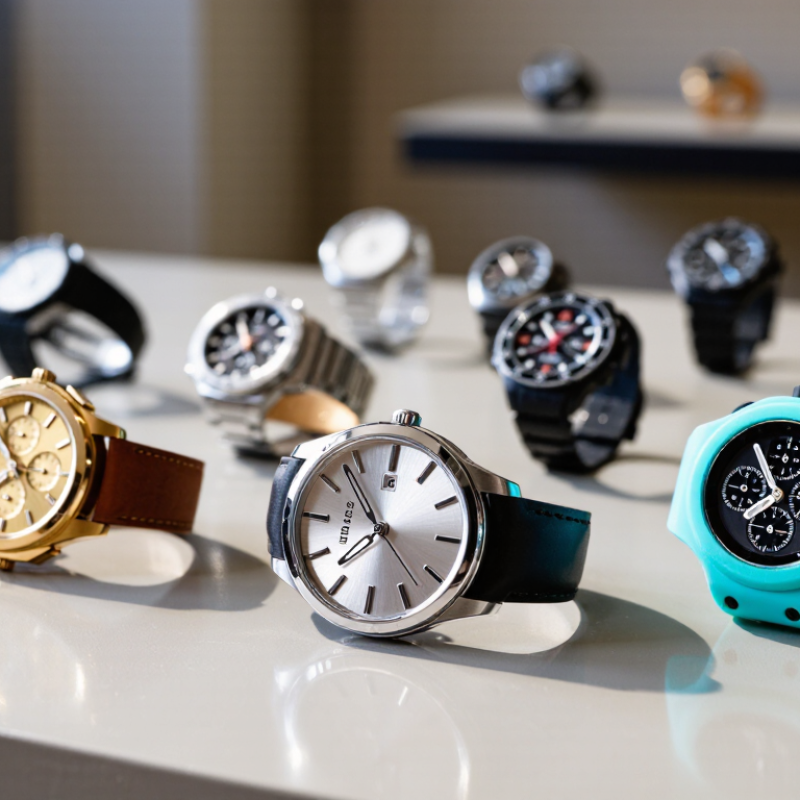
Choosing the right Mens Watches for wholesale requires more than comparing catalog prices. Buyers must connect market evidence with daily retail experience. A watch may look attractive online, yet remain unsold when its case feels too heavy or its packaging appears cheap.

The Federation of the Swiss Watch Industry reported Swiss watch exports of approximately CHF 26 billion in 2024. This figure confirms the sector’s scale, but it does not guarantee demand for every wholesale model. Deloitte’s Swiss Watch Industry Study also highlights changing consumer expectations, stronger digital research, and continued interest in brand trust. These trends matter when selecting suppliers, collections, and price points.

Start with your customer profile. A minimalist 40-millimeter steel watch may suit office professionals, while a colorful silicone model may perform better with younger buyers. Review movement type, case materials, water-resistance claims, warranty terms, and available replacement parts. Small details matter.

They affect returns.

Wholesale decisions should also examine minimum order quantities, production lead times, packaging quality, and sample consistency. Reliable suppliers should provide clear specifications and traceable business information. Independent testing or recognized quality documentation adds confidence, especially for watches using coated cases, mineral glass, or leather straps.

Industry reports provide direction, not certainty. A forecast can miss a sudden style shift, an exchange-rate change, or weak local purchasing power. Therefore, testing a small assortment before placing a larger order is often wiser. Track sell-through rates, customer questions, return reasons, and repeat orders.

The best choice is rarely the cheapest watch. It is the product that balances dependable quality, realistic margins, customer expectations, and long-term supplier communication.

How to Choose the Best Mens Watches for Wholesale?

Define Your Wholesale Market and Target Customer

Choosing the best men’s watches for wholesale starts with defining your market, not browsing random catalogs. A budget retailer needs different products from a premium menswear store. Grand View Research estimates that the global watches market could grow at a 5.1% compound annual growth rate from 2023 to 2030. This suggests opportunity, but broad demand does not guarantee fast inventory turnover.

Study your target customer closely. Is he buying for office wear, travel, gifting, or weekend outfits? A 38–42 mm case, clear numerals, and a durable strap may suit office professionals. Younger buyers may prefer lighter cases and stronger visual details. The Deloitte Swiss Watch Industry Study 2024 identifies changing consumer preferences and digital sales as important industry forces. Therefore, your wholesale assortment should support both physical retail and online presentation.

Use evidence before committing volume. Review search data, regional sales records, customer reviews, and competitor price ranges. Test a small order with three styles: classic, casual, and fashion-led. Keep the result measurable. My first assortment was too wide, and several attractive designs moved slowly. That mistake still matters. Wholesale buyers should also check movement reliability, water-resistance claims, packaging quality, and replacement support. The Federation of the Swiss Watch Industry reported strong export value in recent years, but export performance is not the same as local demand. Your customer may prefer affordable practicality over prestige. Listen carefully.

Compare Watch Movements, Materials, and Essential Features

Choosing the best men’s watches for wholesale starts with the movement. Quartz models usually offer stable accuracy, low maintenance, and predictable costs. Automatic movements add mechanical appeal, but service needs can complicate after-sales support. In my buying experience, retailers often underestimate this difference. A quiet quartz watch may sell faster than a beautiful automatic model.

Material affects both perceived value and return risk. Stainless steel cases resist daily wear and suit broad customer groups. Titanium feels lighter, but its surface may show marks differently. Mineral crystal lowers cost, while sapphire crystal provides stronger scratch resistance. The right choice depends on your target price, not the most impressive specification. It is easy to overbuy here.

Essential features should match real customer habits. Check water resistance, clasp strength, readable hands, battery access, and warranty terms. A 5 ATM rating can handle splashes, but it is not a promise for diving. ISO 6425 defines stricter requirements for diver’s watches. This distinction matters on product pages and sales floors. According to the Federation of the Swiss Watch Industry, exports reached CHF 25.99 billion in 2024, down 2.8% year on year. The figure suggests a competitive market, where inventory decisions need discipline. Deloitte’s 2024 Swiss Watch Industry Study also highlights changing demand and pricing pressure across the sector. Wholesale buyers should compare total ownership costs, not only unit prices. Some assumptions will be wrong. Test samples under normal retail conditions.

How to Choose the Best Mens Watches for Wholesale? - Compare Watch Movements, Materials, and Essential Features

Category Option Typical Accuracy / Performance Main Materials Essential Features Wholesale Advantages Points to Check Before Ordering Recommended Use
Movement Quartz Usually within approximately ±15 seconds per month; battery life commonly lasts about 1–3 years. Quartz crystal module, metal case, mineral or sapphire crystal. Central seconds hand, date window, low-maintenance battery operation. Accessible pricing, consistent timekeeping, broad customer appeal, and lower after-sales servicing needs. Battery type, replacement availability, hand alignment, module quality, and warranty terms. Large-volume fashion, uniform, business, and everyday watch collections.
Movement Automatic Mechanical Mechanical accuracy commonly ranges from about −20 to +40 seconds per day, depending on regulation and movement quality. Mechanical movement, stainless steel case, mineral or sapphire crystal. Self-winding rotor, transparent case back, date display, and hand-winding capability on many models. Higher perceived value, strong product storytelling, and premium positioning without battery replacement. Power reserve, winding efficiency, beat consistency, magnetic resistance, service access, and shock protection. Mid-range and premium collections for watch enthusiasts and gift buyers.
Movement Manual-Wind Mechanical Accuracy often falls within a similar mechanical range of approximately −20 to +40 seconds per day, with regular winding required. Mechanical movement, stainless steel or coated alloy case, mineral or sapphire crystal. Hand-winding crown, power-reserve indicator on selected models, and display case back. Slim case possibilities, traditional appeal, and distinctive mechanical positioning. Winding interval, crown durability, power reserve, movement finishing, and instructions for end users. Classic, vintage-inspired, and enthusiast-focused assortments.
Movement Solar Quartz Quartz-level timekeeping; rechargeable cells can often operate for several months in darkness when fully charged. Solar cell beneath the dial, rechargeable battery, stainless steel or resin case. Low-battery indicator, overcharge protection, date display, and light-powered charging. Reduced battery replacement frequency and an easy-to-market sustainability benefit. Charging performance, cell replacement policy, dial light transmission, and storage requirements. Everyday, travel, outdoor, and environmentally conscious product lines.
Case Material 316L Stainless Steel Strong corrosion resistance and good durability for regular daily wear. Low-carbon stainless steel case and case back; polished, brushed, or mixed finish. Screw-down case back, replaceable spring bars, solid lugs, and adjustable bracelet or strap. Reliable mainstream material with strong consumer familiarity and easy styling. Steel grade documentation, surface finishing, plating adhesion, clasp quality, and case-back sealing. Most wholesale segments, including business, casual, dress, and sports-inspired watches.
Case Material Titanium Lightweight, corrosion-resistant, and generally comfortable for extended wear. Titanium case, often with brushed or hard-coated surface treatment. Lightweight construction, anti-reflective crystal, secure clasp, and water-resistant seals. Creates a premium technical impression and differentiates the product by comfort. Surface scratching, coating durability, machining quality, clasp weight, and material certification. Outdoor, travel, performance, and lightweight premium collections.
Crystal Mineral Glass More scratch-resistant than acrylic and generally less costly than sapphire. Tempered mineral glass, optionally with surface coating. Basic glare reduction, flat or domed profile, and secure crystal gasket. Balanced cost and durability for high-volume wholesale programs. Edge impact resistance, coating performance, optical clarity, and replacement cost. Entry-level and mid-market everyday watches.
Crystal Sapphire Crystal Very high scratch resistance; can still chip or crack under a sufficiently hard impact. Synthetic sapphire crystal, often with anti-reflective coating. Anti-reflective treatment, beveled edge, secure gasket, and high-clarity dial view. Supports premium pricing and long-term appearance retention. Coating durability, edge protection, optical distortion, and crystal replacement procedure. Premium, formal, enthusiast, and long-wear collections.
Strap / Bracelet Stainless Steel Bracelet Durable and suitable for repeated daily use when links and clasp are properly constructed. Stainless steel links, pins or screws, fold-over clasp. Micro-adjustment holes, removable links, safety release, and solid end links where applicable. Perceived value, long service life, and easy pairing with business or casual styles. Sharp edges, clasp security, link tolerance, adjustment tools, and plating consistency. Business, dress, integrated-bracelet, and sports-inspired watches.
Strap / Bracelet Leather or Synthetic Leather Comfortable and versatile; moisture exposure can shorten service life, especially for untreated leather. Leather, coated leather, or polyurethane-based synthetic material; stainless steel buckle. Quick-release spring bars, replaceable strap, stitched edges, and buckle adjustment. Low shipping weight, broad color options, and simple style variation. Material composition, odor, edge finishing, stitching, sweat resistance, and replacement availability. Dress, office, gift, and fashion-oriented assortments.
Essential Feature Water Resistance Ratings indicate pressure-test conditions and should not be treated as direct guarantees for every real-world activity. Sealed case, gaskets, crown, case back, and crystal assembly. Clear rating on dial or case back, screw-down crown for higher ratings, and tested gaskets. Reduces customer confusion when specifications and care instructions are clearly supplied. Test standard, rating consistency, crown design, gasket replacement, and after-sales testing process. Choose the rating according to intended use; avoid unsupported swimming or diving claims.
Essential Feature Legibility Depends on dial contrast, hand shape, markers, lume quality, and crystal reflections. Printed or applied markers, luminous compound, metal hands, and coated crystal. High-contrast hands, readable indices, luminous markers, and anti-reflective coating. Improves customer satisfaction and reduces returns caused by difficult-to-read dials. Test in bright and low-light conditions; inspect hand-to-marker alignment and lume consistency. Everyday, travel, field, sports-inspired, and workwear watches.
Essential Feature Sizing and Comfort Comfort varies by wrist size, case diameter, thickness, lug length, and total weight. Case, lugs, bracelet or strap, buckle, and crown construction. Common case sizes around 38–42 mm, curved or short lugs, adjustable strap, and balanced weight. A versatile size range can serve more customers and simplify inventory planning. Measure case diameter, thickness, lug-to-lug length, strap width, and wrist-fit samples. General-purpose wholesale lines should prioritize adaptable, comfortable proportions.
Quality Control Pre-Shipment Inspection Quality should be verified against an agreed specification rather than appearance alone. Movement, case, crystal, dial, hands, strap, clasp, and packaging components. Timekeeping test, function check, visual inspection, water-resistance test where applicable, and packaging review. Helps control defect rates, returns, replacement costs, and customer complaints. Sampling plan, defect classification, tolerance limits, inspection records, and warranty responsibility. All wholesale orders, especially mixed styles and private-label production.

Evaluate Suppliers, Quality Standards, and Production Reliability

How to Choose the Best Men’s Watches for Wholesale?

For wholesale men’s watches, supplier evaluation should begin with documented production evidence. Request factory audit records, ISO 9001 certification, material declarations, and recent inspection reports. Quality standards must match the selling market. ISO 2859-1 supports statistically based sampling, while ISO 22810 defines water-resistance testing for ordinary watches. Ask for the actual test conditions, not only a printed certificate.

Small details matter.

A reliable supplier should explain movement sourcing, case tolerances, plating thickness, crystal hardness, and strap testing. In practical sampling, inspect crown alignment, hand clearance, clasp strength, and date-change performance. Record defect rates across several batches. One perfect sample proves little. The Deloitte Swiss Watch Industry Study 2024 highlighted continuing pressure from weaker demand and inventory control, making production consistency especially important. Slow replacement parts can turn minor defects into expensive wholesale returns.

Production reliability also requires measurable delivery data. Compare promised and actual lead times, minimum order quantities, rework percentages, and pre-shipment inspection results. The Federation of the Swiss Watch Industry reported Swiss watch exports of approximately CHF 26.0 billion in 2024, showing the sector’s scale but not guaranteeing every supplier’s performance. I would request three consecutive batch records before committing heavily. That approach is less exciting, and perhaps too cautious, but one overlooked tolerance can damage an entire shipment. Supplier communication should include written change-control procedures, especially for dials, coatings, packaging, and movement specifications.

Calculate Costs, Minimum Orders, and Expected Profit Margins

How to Choose the Best Mens Watches for Wholesale?

Wholesale watch selection should begin with numbers, not appearance. Grand View Research valued the global watches market at approximately $101.1 billion in 2023. It also projects a 4.7% compound annual growth rate from 2024 to 2030. Demand exists, but demand alone does not guarantee profit.

Calculate the landed cost per watch carefully. Assume a factory price of $18, packaging costs $1.50, and freight adds $2.50. Add $0.50 for inspection, $1.20 for payment fees, and $1.30 for returns or defects. The real cost becomes $25. If your wholesale price is $42, the contribution is $17. Your gross margin is about 40.5%. That is not net profit. Storage, samples, sales commissions, and unsold stock still reduce earnings.

Minimum order quantity should match your cash flow. A 500-unit order requires $12,500 before marketing or warehousing. If launch costs reach $3,400, you need 200 units to recover them at a $17 contribution. Small pilot orders may cost more per unit, but they limit inventory risk. Deloitte’s Swiss Watch Industry Study 2024 highlights continued pressure from changing consumer preferences and cautious purchasing. That matters for wholesale buyers. My first inventory model ignored slow-moving colors. It looked profitable on paper. It was not. Test two or three designs, review sell-through weekly, and revise the reorder point before committing to a larger MOQ.

Choose Styles, Test Samples, and Plan Your Wholesale Purchase

How to Choose the Best Mens Watches for Wholesale?

Choosing styles should begin with your customers, not personal taste. Study local buying habits, price expectations, and common wrist sizes. A balanced range may include clean dress watches, durable everyday models, and practical sport-inspired designs. Check case diameter, strap comfort, dial readability, and color coordination. A striking design can attract attention, but unusual colors may sell slowly.

Test samples before placing a large wholesale order. Inspect the watch under bright light and wear it for several hours. Check the crown, clasp, crystal, stitching, and time accuracy. Ask the supplier for movement details, material specifications, packaging information, and quality-control procedures. Compare several samples from the same production batch. Small differences matter. I once overlooked a stiff clasp because the dial looked excellent. That was a useful mistake.

Tips

Create a simple sample checklist. Record measurements, defects, comfort, and packaging quality. Ask for clear photos of final production pieces, not only showroom samples. Confirm minimum order quantities, lead times, payment terms, and replacement policies in writing. Plan your purchase around realistic sales data, available storage, and seasonal demand. Start with a controlled quantity. Wholesale savings can disappear when slow-moving inventory fills your shelves. Review customer feedback after launch, then adjust the next order instead of repeating assumptions.

Article Source:

Close
Enter your email address to receive special offers!
linkedin facebook pinterest youtube rss twitter instagram facebook-blank rss-blank linkedin-blank pinterest youtube twitter instagram