Choosing a Remote Control Car in 2026 requires more than comparing speed, price, and appearance. Buyers now face brushed and brushless motors, lithium-ion batteries, app controls, camera systems, and different drive layouts. The wrong combination may produce weak traction, short play sessions, or expensive replacement parts.
Industry evidence supports a more careful approach. Grand View Research’s remote control products market analysis identifies rising interest in technologically advanced vehicles and connected control features. Circana’s global toy research also shows that value, play durability, and product differentiation strongly influence modern toy purchases. These findings matter because a fast car is not always the best car. A child using a vehicle indoors needs manageable speed and soft bumpers. An adult driving on gravel may need four-wheel drive, sealed electronics, and replaceable suspension arms.
Look beyond the box.
Check battery charging time, operating range, spare-part availability, and controller ergonomics. Examine whether the manufacturer publishes clear safety instructions and battery guidance. A 2S lithium battery can deliver exciting acceleration, but it also demands responsible charging and storage. Read independent reviews carefully, especially long-term tests that show motor heat, gear wear, and steering performance after repeated use. Manufacturer specifications remain useful, yet they can favor ideal conditions. This guide cannot predict every failure. A neat specification sheet may still hide fragile plastics or costly parts. Consider skill level, terrain, maintenance ability, and total ownership cost before choosing. The most suitable Remote Control Car is reliable, repairable, and enjoyable for its intended driver—not merely the fastest model on a product page.
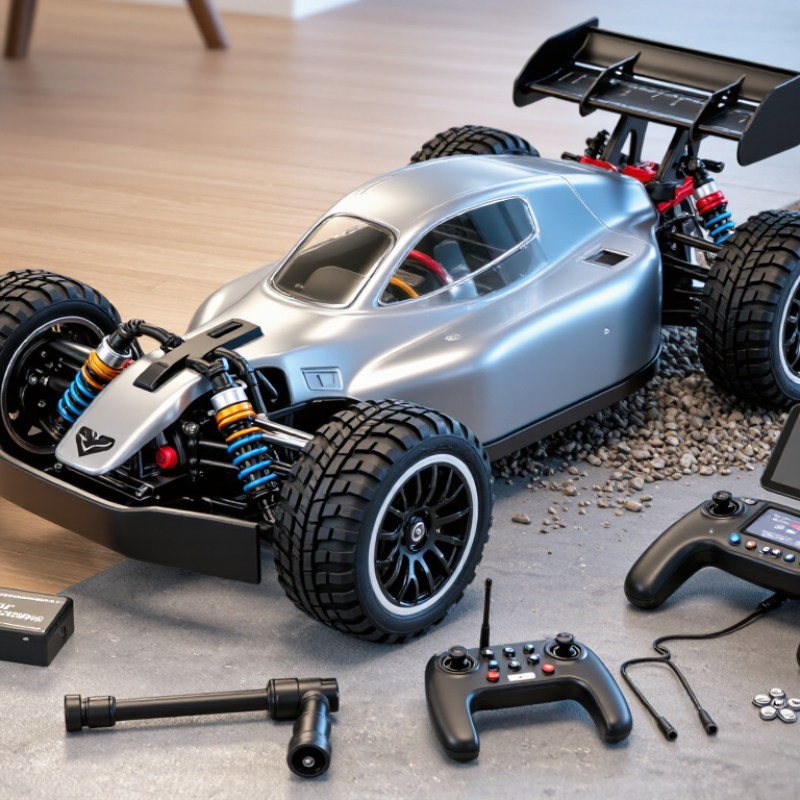
Choosing a remote control car starts with an honest question: where will you drive it? A smooth indoor floor needs different features from a gravel path or wet garden. Measure your usual space first. Tight rooms favor compact cars with gentle steering. Open ground allows larger wheels and stronger suspension. I once bought a fast model for a small apartment. It turned corners badly and damaged a table. That was my mistake.
Define the driving experience you want. Do you prefer racing, climbing, drifting, or relaxed practice? Racing requires responsive steering and predictable acceleration. Climbing needs ground clearance, tire grip, and a slow-speed control option. Drifting works best on clean, hard surfaces, not loose soil. New drivers may benefit from adjustable speed limits. Short practice sessions also protect the motor from overheating.
Study practical specifications, not just top speed. Check battery runtime, charging time, controller range, replacement parts, and the instruction manual. Water resistance is not the same as safe underwater use. Confirm the stated rating before driving near puddles. Keep fingers, pets, and bystanders away from moving wheels. Local rules may also limit where powered toys can be operated. I still misjudge battery life when the weather is cold. A small notebook can reveal your real driving time after several sessions. Notice the details. Then choose a car that fits your habits, surface, and patience.
| Driving Goal | Best Vehicle Format | Recommended Driving Environment | Typical Scale | Useful Performance Range | Key Features to Prioritize | Recommended Skill Level | Selection Guidance |
|---|---|---|---|---|---|---|---|
| Indoor casual driving | Compact touring car or mini buggy | Hard floors, smooth concrete, low-pile carpet, and open indoor areas | 1:28–1:18 | 8–20 km/h; approximately 10–20 minutes of runtime per battery | Small turning radius, proportional steering, low noise, lightweight body, and rechargeable battery | Beginner | Choose a compact model with adjustable speed. Large tires and high ground clearance are usually unnecessary indoors. |
| Backyard and mixed-surface driving | All-terrain buggy or short-course truck | Grass, packed dirt, pavement, gravel paths, and mildly uneven ground | 1:12–1:10 | 20–45 km/h; approximately 15–30 minutes of runtime per battery | Oil-filled or adjustable suspension, treaded tires, protected drivetrain, metal or composite suspension parts, and at least 15 mm of ground clearance | Beginner to intermediate | This is the most versatile category for general outdoor use. Confirm that replacement tires and batteries are readily available. |
| High-speed pavement driving | On-road touring car or street-focused sports car | Smooth asphalt, sealed concrete, and clean parking areas with sufficient run-off space | 1:10–1:7 | 35–80 km/h; approximately 10–25 minutes of runtime per battery | Low center of gravity, balanced chassis, grippy rubber tires, responsive proportional controls, effective motor cooling, and strong braking | Intermediate to advanced | Speed requires space and predictable traction. Avoid loose gravel and wet surfaces unless the vehicle is specifically designed for them. |
| Off-road climbing and rough terrain | Monster truck, rock crawler, or trail truck | Loose soil, rocks, roots, mud, slopes, and uneven trails | 1:10–1:8 | 10–35 km/h; approximately 20–40 minutes of runtime per battery | High ground clearance of about 25–60 mm, long-travel suspension, soft high-traction tires, sealed electronics, and low-speed torque | Intermediate | For climbing, torque and tire grip matter more than top speed. A crawler is preferable when precise control is more important than rapid driving. |
| Controlled drifting | Drift-focused road car | Clean, smooth, low-friction surfaces such as polished concrete or smooth asphalt | 1:10–1:18 | 15–40 km/h; approximately 10–25 minutes of runtime per battery | Rear-wheel drive or drift-optimized drivetrain, hard drift tires, adjustable steering angle, proportional throttle, and a low center of gravity | Intermediate to advanced | Drift tires reduce grip and braking performance. Practice in an open area away from pedestrians, vehicles, and fragile property. |
| Precision maneuvering and technical control | Rock crawler or scale trail vehicle | Rock gardens, narrow trails, obstacles, and low-speed technical courses | 1:10–1:12 | 3–15 km/h; approximately 30–90 minutes of runtime per battery | Low gearing, smooth throttle response, high steering articulation, soft suspension, axle protection, and a strong low-mounted battery | Beginner to advanced | Select a vehicle with precise low-speed control rather than a high-speed motor. Longer runtime is especially valuable for trail sessions. |
| Wet-weather and splash-resistant use | Sealed all-terrain truck or buggy | Damp grass, shallow puddles, wet pavement, and light mud | 1:10–1:12 | 15–40 km/h; approximately 15–30 minutes of runtime per battery | Clearly documented water resistance, sealed receiver box, protected motor, corrosion-resistant hardware, drain holes, and easy cleaning access | Beginner to intermediate | Water-resistant does not mean waterproof. Do not submerge the vehicle, and remove the battery and dry the electronics after wet driving. |
| Family use and shared driving | Speed-limited buggy or durable monster truck | Open parks, driveways, schoolyards, and flat lawns with clear boundaries | 1:12–1:10 | 10–25 km/h; approximately 15–30 minutes of runtime per battery | Beginner speed mode, impact-resistant bumpers, stable handling, simple battery charging, visible controls, and readily replaceable body parts | Beginner | Adjustable speed allows younger or less experienced drivers to learn safely before using the vehicle at full performance. |
| Long sessions and frequent practice | Modular off-road truck or buggy with replaceable battery packs | Large outdoor areas where charging access is limited | 1:10–1:8 | 15–45 km/h; approximately 20–40 minutes per battery | Quick-change battery compartment, brushless or efficient motor system, thermal protection, spare battery availability, and durable drivetrain components | Intermediate | Runtime depends on battery capacity, driving style, terrain, and vehicle weight. Carrying a second compatible battery is often more practical than choosing a heavier battery. |
