How to Choose Watch Display Cases for Your Business?
Choosing the right watch display cases is not merely a matter of appearance. It affects protection, customer confidence, sales conversations, and daily store operations. A case may look luxurious under bright showroom lights, yet perform poorly when fingerprints, glare, or unstable shelves become daily problems.
Eric Wind, a respected vintage-watch specialist, often stresses, “Condition is everything.” His point applies beyond the watch itself. A dusty acrylic panel, loose cushion, or harsh spotlight can weaken the perceived condition of a valuable timepiece. Even a small scratch on the glass may distract customers from the dial. That detail matters.
This guide explains how businesses can evaluate watch display cases with greater care. It considers materials, lock quality, lighting, humidity control, visibility, storage capacity, and maintenance requirements. Retailers should also examine their selling environment. A boutique with ten luxury watches needs different case proportions than a busy department store with fifty pieces. A traveling seller may value lightweight construction more than dramatic presentation.
There is no perfect case.
A polished wooden case can create warmth, but it may require more maintenance. Tempered glass offers confidence, though reflections can reduce visibility. LED lighting saves energy, yet poorly positioned strips can create bright spots on domed crystals. These compromises deserve honest attention.
The best choice balances security, presentation, durability, and budget. It should protect watches while inviting customers to look closer. More importantly, it must support real staff behavior, including frequent opening, cleaning, rearranging, and inventory checks. A beautiful case that slows down every sale is not truly efficient.
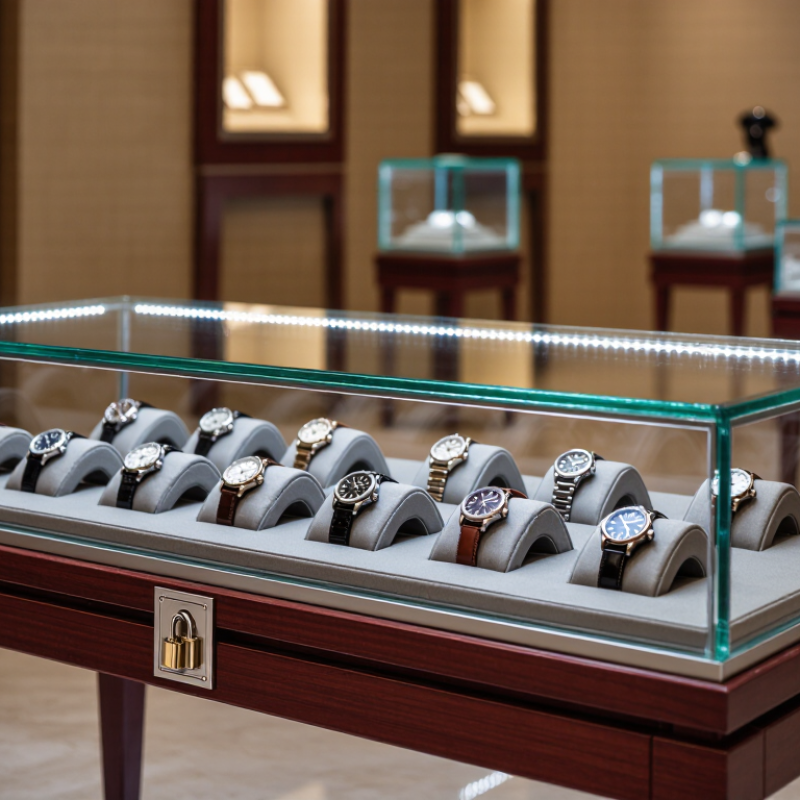
Define Your Business Needs and Display Objectives
How to Choose Watch Display Cases for Your Business?
Define Your Business Needs and Display Objectives
A watch display case should serve your selling process, not merely fill empty space. Start by defining your inventory, customer profile, and daily operating routine. A premium collection may need low-reflection glass, controlled lighting, and individual compartments. A high-volume counter may require faster access and stronger internal organization. I have seen attractive cases slow sales because staff needed too much time to open them. Measure it first.
Your display objective should be specific. Do you want customers to compare models, notice new arrivals, or understand technical details? POPAI’s Shopper Engagement Study reported that 76% of purchase decisions occur in-store, making visibility a practical sales tool.
However, this figure is older and should not become a shortcut for every retail setting. Test two layouts, record customer questions, and review which case receives more attention. Keep sightlines clear.
Personal relevance also matters. McKinsey’s 2021 Next in Personalization report found that 71% of consumers expect personalized interactions, while 76% feel frustrated when they do not receive them. A case can support this expectation with clear sections for occasion, movement type, size, or budget.
Use adjustable trays when your assortment changes often. Choose fixed layouts only when consistency matters more than flexibility.
PwC’s 2024 Voice of the Consumer Survey also found that 43% of consumers would pay more for sustainably produced products. Durable materials and replaceable lighting may therefore support both operational value and customer trust. Yet sustainability claims need evidence, not attractive wording.
Compare Watch Display Case Types and Materials
How to Choose Watch Display Cases for Your Business?
Choosing a watch display case starts with comparing its structure, material, and daily workload. Countertop cases suit small collections and allow quick customer viewing. Wall-mounted cases save floor space but need secure installation. Drawer cases protect less frequently shown pieces from dust and strong lighting. Rotating cases create movement, although their mechanisms may require more maintenance.
Glass offers excellent clarity and resists scratching. Tempered glass is a safer option for busy retail areas. Acrylic weighs less and is easier to move, but it can scratch during cleaning. Wood adds warmth and supports a premium interior design. Metal frames improve strength, while velvet or microfiber lining prevents small abrasions on watch backs. Materials still need inspection.
I once underestimated the importance of glare. A beautiful case became difficult to read under ceiling lights. Check reflections at different times of day. Test the lock, hinges, seals, and tray spacing before purchase. UV-filtering panels can help protect colors and delicate finishes near windows. However, they may increase the cost. Measure each watch with its cushion, not alone. Leave enough clearance for staff handling. A narrow case may look efficient, but crowded displays feel careless. The best choice balances visibility, protection, cleaning time, and the habits of your sales team.
Evaluate Security, Visibility, and Customer Accessibility
How to Choose Watch Display Cases for Your Business?
A strong watch display case must protect merchandise without making customers feel excluded. Start with security. Look for tempered glass, concealed hinges, reliable locks, and a stable base that resists tipping. The case should also fit your daily workflow. Staff need clear sightlines and quick access during customer consultations. A secure case that takes too long to open may reduce service quality.
Visibility matters just as much. Clean glass, balanced lighting, and low-reflection panels help customers inspect dial details and metal finishes. Avoid placing cases beneath harsh ceiling lights. Glare can hide the very features shoppers want to see. Keep display shelves at a comfortable viewing height, especially for customers using mobility aids. Leave enough space around the case for people to pause without blocking the sales area.
Accessibility is not only physical. Customers should be able to ask questions without reaching across a locked counter. Staff can open selected sections while keeping other products secured. In my experience, this creates a better balance between trust and protection. Still, every store has weaknesses. A beautiful case may collect fingerprints quickly, and a highly secure design may feel cold or inconvenient. Test the case during busy hours, not only in an empty showroom. Watch how staff unlock it, how customers move around it, and where visibility breaks down.
How to Choose Watch Display Cases for Your Business?
Evaluate security, visibility, and customer accessibility before selecting a display format.
Scores use a practical 1–5 evaluation scale based on common case characteristics: locking and controlled access improve security, clear unobstructed glazing improves visibility, and easy opening or reachable placement improves customer accessibility. Use the comparison to balance protection with the shopping experience.
Match Case Design With Your Brand and Retail Space
A watch display case should feel like part of your brand, not a separate object. Start with your visual language. Use warm wood, brushed metal, or matte glass to support the right mood. A formal brand may need clean lines and controlled lighting. A youthful business may benefit from lighter materials and open sightlines. Keep finishes consistent with your counters, signage, and packaging.
Retail space must guide the decision. Measure customer flow before choosing case length or height. Leave clear viewing angles near entrances and avoid placing tall cases beside narrow aisles. PwC’s 2024 Voice of the Consumer Survey covered more than 20,000 consumers across 31 territories. Its findings underline the continuing value of physical shopping experiences. Your case must therefore invite touch, conversation, and close inspection. Brightness matters too. The Illuminating Engineering Society recommends careful control of glare and contrast in retail lighting, especially around reflective surfaces.
I have seen attractive cases fail because their locks, cable access, or cleaning routines were ignored. That mistake is easy to repeat. Test the case at standing and seated eye levels. Check how fingerprints appear under evening lighting. A slightly imperfect prototype can reveal more than a polished showroom sample. Review the design with sales staff after one busy week. Their practical feedback may challenge your original concept, which is often useful.
