Floral Print Silk Fabric combines silk’s smooth hand with carefully placed botanical imagery. It may feature roses, peonies, wildflowers, or oversized tropical leaves. Each design changes how light moves across the cloth. A cream background can soften a dress, while deep navy can make the same petals look dramatic. The material suits blouses, scarves, evening dresses, robes, linings, and decorative cushions.
Industry data shows why this fabric remains valuable. Textile Exchange’s 2024 Materials Market Report recorded 124 million tonnes of global fiber production in 2023. Silk represented less than one percent of that volume. Its small share highlights its specialist position, rather than weak relevance. The report also stresses the importance of traceability and responsible fiber production. These concerns matter when buyers compare mulberry silk, recycled silk, and blended constructions. A beautiful surface is not enough.
Fashion designer Oscar de la Renta famously said, “Silk does for the body what diamonds do for the hand.” His words explain silk’s lasting appeal. Still, the comparison is incomplete. Print quality, fabric weight, colorfastness, and finishing determine real performance. A vivid floral design may fade under harsh sunlight. Fine silk may snag against rough jewelry. This article examines how Floral Print Silk Fabric is made, selected, styled, and maintained. It also considers where its elegance meets practical limits. That tension deserves attention.
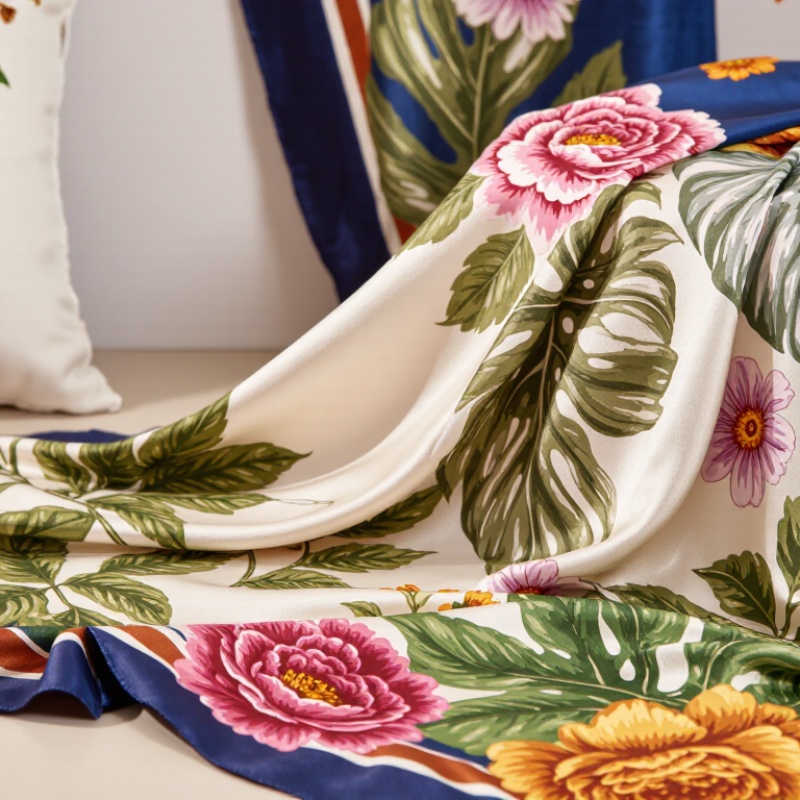
Floral print silk fabric is silk woven from natural protein fibers and decorated with flower-based patterns. The design may be applied through digital printing, screen printing, or traditional resist methods. Its surface usually has a soft sheen, smooth touch, and graceful drape. These features make it different from floral polyester, which often feels firmer and less breathable.
The fabric can feel cool against the skin, especially in warm weather. It is commonly used for blouses, dresses, scarves, sleepwear, and lightweight robes. Some heavier floral silk fabrics also suit cushions, decorative panels, or lined jackets. The print should follow the fabric’s movement instead of looking stiff. Good silk often shows fine, even fibers and balanced color depth. However, a bright surface does not always prove high quality. I have seen attractive prints with weak weaving, so appearance needs careful checking.
Tips: Touch the fabric before buying. Look for a smooth surface, clean edges, and clear floral details. Hold it near light to inspect uneven threads or thin patches. Always check the care label, because heat, rough washing, and strong sunlight can damage silk. A test on a hidden area is wiser than trusting assumptions. Even careful handling may not prevent every crease.
| Data Dimension | Verified Fabric Information |
|---|---|
| Definition | Floral print silk fabric is a silk textile decorated with printed flower, leaf, vine, or botanical motifs. The design is applied to the surface after the silk fabric has been woven. |
| Primary Fiber | Its main fiber is natural silk, a protein-based fiber produced by silkworms. Common silk bases include silk crepe, satin, chiffon, twill, habotai, and georgette. |
| Typical Weave Structures | Plain weave is common in chiffon, georgette, and habotai; satin weave creates a smoother and more lustrous surface; twill weave gives the fabric a subtle diagonal structure and increased body. |
| Design Characteristics | Floral patterns may range from small scattered blossoms and ditsy prints to large-scale botanical illustrations, watercolor effects, stylized petals, and repeating floral layouts. |
| Printing Methods | Depending on the production process, floral motifs may be created through digital textile printing, screen printing, or rotary printing. Digital printing is well suited to detailed artwork and many colors. |
| Surface Appearance | The appearance varies by silk construction: satin is typically glossy, crepe has a softly pebbled surface, chiffon is sheer and airy, while twill has a fine diagonal texture and moderate sheen. |
| Hand Feel | Silk generally feels smooth, soft, and comfortable against the skin. The exact hand feel depends on the weave, yarn size, finishing treatment, and fabric weight. |
| Drape and Movement | Most floral print silk fabrics drape fluidly and respond well to movement. Lightweight chiffon and georgette create a floating effect, while silk twill and heavier satin provide more structure. |
| Breathability and Comfort | Silk can absorb moisture vapor and feel comfortable across a range of temperatures. Lightweight constructions are especially suitable for garments worn close to the body. |
| Typical Weight Range | Common apparel weights are approximately 25–120 grams per square meter, although the actual weight varies significantly by silk type, weave, thickness, and finishing. |
| Common Apparel Uses | It is used for dresses, blouses, shirts, skirts, scarves, neckwear, camisoles, lingerie, robes, kimonos, and lightweight eveningwear. |
| Home and Decorative Uses | Heavier floral silk can be used for decorative cushions, lampshades, wall panels, accent furnishings, and other interior details. It is generally selected for visual impact rather than heavy-duty upholstery. |
| Distinctive Advantages | Key advantages include natural luster, fluid drape, soft hand feel, visual depth in printed colors, lightweight comfort, and an elegant appearance suitable for both casual and formal designs. |
| Potential Limitations | Silk can be sensitive to abrasion, perspiration, prolonged sunlight, water spotting, and strong alkaline chemicals. Lightweight versions may also snag or fray more easily than dense fabrics. |
| Color and Print Performance | Print clarity and color durability depend on the dye or pigment system, printing method, fabric preparation, and finishing. Dark or vivid colors may require more careful washing and light exposure management. |
| Recommended Garment Construction | Fine needles, sharp cutting tools, stable seam finishes, and careful handling are recommended. Sheer versions may require lining, French seams, or narrow rolled hems. |
| Care Guidance | Care instructions depend on the specific fabric and print. Professional dry cleaning is often recommended; if washing is permitted, use cool water, a mild silk-safe detergent, gentle handling, and air drying away from direct sunlight. |
| Ironing and Storage | Press on the reverse side using low to moderate heat and a pressing cloth when appropriate. Store clean silk in a cool, dry, well-ventilated place and avoid prolonged compression or direct sunlight. |
| Best Selection Criteria | Choose according to intended use, fabric weight, opacity, drape, print scale, colorfastness requirements, seam behavior, care instructions, and compatibility with lining or interfacing. |
