Archives


How to Buy Bulk Sunflower Seeds from China Manufacturers

Buying sunflower seeds in bulk from China can offer more choice in varieties, packaging, and order volumes. But a competitive price alone proves little. Buyers should compare seed type, grade, moisture specifications, cleaning standards, packaging, minimum order quantities, and delivery terms. Details matter.

Quality-management expert W. Edwards Deming wrote, “Quality comes not from inspection, but from improvement of the process.” For sunflower seed purchasing, that principle points buyers toward consistent production controls, clear specifications, and traceable quality checks—not just a final inspection. Ask for proof. Request current product specifications, representative samples, and relevant food-safety and export documentation. Confirm that the sample matches the product and packaging described in the quotation.

This guide explains how to identify and assess Buy Bulk Sunflower Seeds Manufacturers in China, compare quotations, and check supplier capabilities before placing an order. It also covers sample evaluation, contract details, production timelines, shipping coordination, and practical ways to reduce misunderstandings. A factory visit may help, but it is not always practical; a video call and independently verifiable records can still answer important questions. Not always. Buyers should also verify destination-market requirements with qualified professionals, since rules and documents can vary. One imperfect point remains: photographs and polished certificates do not guarantee every shipment will match expectations. A careful process cannot remove all risk, but it can make decisions clearer and problems easier to address.
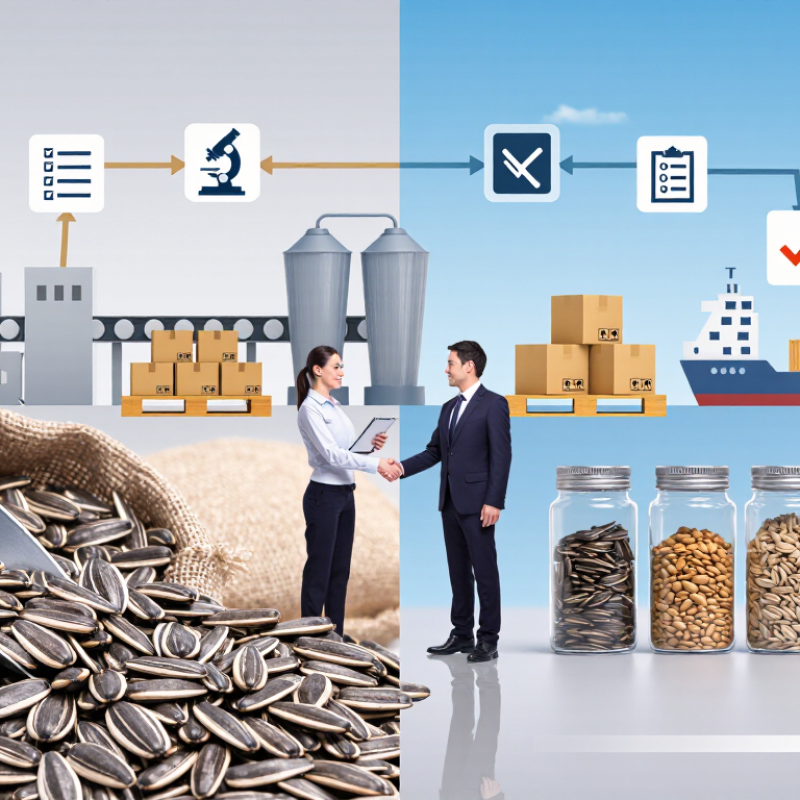
How to Buy Bulk Sunflower Seeds from China Manufacturers

Define Your Sunflower Seed Type, Grade, and Order Requirements

Before requesting quotations, define the seed’s intended use. Confectionery sunflower seeds are selected for eating, while oilseed varieties are usually purchased for pressing. Specify whether you need hulled or in-shell seeds, raw or roasted, and any preferred size or color. Details matter. A bag of striped in-shell seeds looks very different from a uniform batch of hulled kernels.

Grade needs measurable limits, not just a label such as “premium.” State acceptable moisture, purity, broken-kernel percentage, foreign matter, and size range. Ask the manufacturer how each figure is tested and whether an independent pre-shipment inspection is possible. Keep samples. Compare them with the agreed specification, then record any differences; a sample can look excellent while a full shipment varies. I would not assume every supplier uses the same grading method.

Set out the order details in writing: target quantity, packaging weight, bag material, labels, delivery destination, and preferred shipping window. For example, a buyer may request 25-kilogram food-grade bags, palletized for container loading. Share any required documents or destination-market specifications before production begins. Confirm the production lead time and how shortages or rejected lots will be handled. Small omissions can become expensive. Recheck the final specification sheet before approving the order.

Find and Compare Qualified Chinese Manufacturers

Finding qualified Chinese sunflower seed manufacturers starts with a precise product brief. Specify hulled or in-shell seeds, intended use, size range, moisture limits, acceptable broken kernels, and packaging weight. Request a current specification sheet and a sample linked to a production lot. Small details matter.

Check the company’s business registration, processing capacity, export experience, and storage conditions. Ask how seeds are cleaned, sorted, and protected from moisture or pests. A polished showroom tells little. Request a live video of the production area, or arrange an independent factory inspection. Supplier questionnaires can look complete while details remain outdated, so verify key claims directly.

Compare quotations using the same grade, packaging, order quantity, and delivery terms. Ask for recent test reports and confirm which tests suit your destination market, such as checks for moisture, foreign matter, or relevant contaminants. Test a representative sample before placing a large order. Compare response times, too; clear answers often reveal more than a low price. Even careful checks cannot remove every risk, and sample quality may differ from a later shipment. Keep the agreed specifications and inspection results in writing.

Verify Supplier Credentials, Samples, and Quality Standards

How to Buy Bulk Sunflower Seeds from China Manufacturers

When buying bulk sunflower seeds from China, verify the supplier before negotiating price. Request current business registration details, the production or packing facility address, and references for comparable export orders. Check that names and addresses match across documents. Paperwork can look complete and still leave practical questions unanswered. Ask who handles cleaning, grading, and packing, and whether those steps happen at the stated facility.

Review a product specification sheet before ordering. It should identify seed variety, harvest year, moisture level, purity, foreign-material limits, and packaging. Request a quality report tied to a specific lot; a generic certificate may not describe the goods you will receive. If available, arrange independent testing against your written requirements.

Tips: Request samples from the intended lot when possible. Inspect a measured portion for broken seeds, dust, and inconsistent size. Keep a record. Store the sample in a sealed bag and compare it with the shipment on arrival. Small details matter.

Agree on acceptance criteria, packaging, and inspection timing in writing. Keep photos, reports, and correspondence with the order records. If a sample looks good, that is useful—but it does not guarantee every bag will match. Recheck the first shipment, note any differences, and discuss corrections before placing a repeat order.

Agree on Pricing, Packaging, Payment, and Production Terms

When requesting a bulk sunflower seed quote from a Chinese manufacturer, define the product before comparing prices. Specify seed variety, kernel size, moisture target, cleaning level, and order volume. Ask whether the price includes sorting, inner liners, cartons, and inland transport. Confirm the currency and delivery term in writing. A low price can hide a different grade or an incomplete cost. Small details matter.

Agree on packaging by size and material, not by vague descriptions. For example, request a sample of a 25-kilogram woven bag with a food-grade inner liner, then check its seams and label area. Confirm whether custom printing changes the price or lead time. Set payment milestones clearly, such as a deposit and balance after agreed inspection documents are available. Keep it written. Avoid sending funds based only on a chat message.

Production terms should state the order quantity, acceptable weight variation, inspection method, and shipment window. Ask for a pre-production sample and dated updates during processing. Clarify what happens if inspection finds excess broken seeds, foreign material, or damaged bags. A polished quote can still hide a weak assumption, so ask who pays for rework or replacement. Leave a little schedule buffer; harvest timing and port congestion can shift plans.

How to Buy Bulk Sunflower Seeds from China Manufacturers

Packaging affects the number of units to order and should be agreed alongside price, payment milestones, and production terms. This chart shows the bag counts for a hypothetical 10,000 kg order; counts are calculated by dividing the order weight by bag size.

Example: A 10,000 kg order requires 400 bags at 25 kg per bag. Confirm bag material, labeling, product specifications, delivery schedule, and payment terms in the written contract.

Arrange Shipping, Customs Clearance, and Final Quality Checks

How to Buy Bulk Sunflower Seeds from China Manufacturers

Arrange Shipping, Customs Clearance, and Final Quality Checks

Before loading, confirm the shipping term, named port, cargo insurance, and who pays destination charges. UNCTAD’s Review of Maritime Transport 2024 reports that over 80% of world trade by volume moves by sea. A delay can affect delivery dates and seed condition. Ask the supplier for the vessel schedule, container details, and loading photos. Keep a time buffer; schedules can shift.

Prepare the commercial invoice, packing list, bill of lading, and certificate of origin. Confirm the correct product classification and required import documents with a customs broker in your destination country. Requirements can differ by seed type and intended use. The World Bank’s Logistics Performance Index 2023 evaluates customs efficiency and shipment timeliness, both relevant to planning clearance. Small delays matter. Check that every document shows matching weights, quantities, and consignee details before dispatch.

At arrival, inspect seals before opening the container, then check bags for tears, moisture, pests, and unusual odors. Compare the lot number and net weight with the purchase order. Keep a sealed sample from each lot for independent testing if the contract requires it. Ask for test results covering the agreed quality measures, such as moisture, purity, and foreign matter. Photos help, but they cannot replace sampling. I would allow time for a second check; in practice, paperwork and physical counts do not always match perfectly.

How to Buy Bulk Sunflower Seeds from China Manufacturers - Arrange Shipping, Customs Clearance, and Final Quality Checks

Stage What to Arrange Documents or Records Key Checks Timing or Responsibility
1. Define the product Specify whether the seeds are intended for human consumption, bird feed, oil processing, or planting. State whether they are raw, roasted, hulled, or otherwise processed, plus the required packaging and quantity. Product specification, intended-use statement, packaging requirements Confirm variety, size or grade, processing status, foreign-matter limits, and any destination-market requirements before requesting quotations. Buyer, before supplier comparison
2. Confirm the supplier and order terms Request a written quotation and verify production capacity, export experience, sample availability, lead time, payment terms, and the agreed trade term under the current Incoterms rules. Quotation, purchase order, sales contract, agreed product specification Make the contract consistent on product description, quantity, tolerances, packaging, inspection method, delivery point, and responsibility for freight and insurance. Buyer and supplier, before deposit or production
3. Approve a representative sample Review a sample from the intended product and production specification. Record its appearance, odor, size, packaging, and any agreed laboratory results. Sample approval record, test report if agreed Use measurable acceptance criteria in the contract. Any required microbiological, chemical, or contaminant testing should reflect the product and destination rules. Buyer, before mass production where practical
4. Plan production and pre-shipment inspection Agree a production schedule and arrange inspection before dispatch if required. Inspection may include packaging, lot identification, quantity, visual condition, and sampling against the contract specification. Inspection instructions, lot and batch records, inspection report Set sampling and acceptance criteria in advance. A visual inspection does not replace laboratory testing where testing is required. Supplier and buyer or appointed inspector, before shipment
5. Prepare export and shipping documents Confirm that shipment details match across the commercial invoice, packing list, transport document, and purchase order. Obtain any additional certificates required for the product and destination. Commercial invoice, packing list, bill of lading or air waybill; certificate of origin or phytosanitary certificate when applicable Document requirements depend on the destination, product use, processing, and import rules. Ask the destination customs broker or competent authority to confirm requirements before dispatch. Supplier, freight forwarder, and buyer, before departure
6. Select transport and protect the cargo Choose sea freight for many large, non-urgent consignments or air freight for smaller, time-sensitive shipments. Agree the booking, cargo insurance where applicable, and delivery arrangements. Booking confirmation, transport document, insurance certificate if purchased Use clean, dry, odor-free packaging and cargo space. Protect bags or liners from moisture, condensation, pests, and damage during handling and transit. Buyer and freight forwarder, after cargo readiness
7. Prepare customs clearance Have the importer or customs broker check the product classification, customs value, duties, taxes, and any food, feed, seed, or agricultural import controls in the destination country. Import declaration, commercial invoice, packing list, transport document, and required permits or certificates Do not assume one tariff code or duty rate applies everywhere. Classification and border controls depend on the exact product, processing, intended use, and destination. Importer or customs broker, before arrival
8. Track arrival and release Monitor the shipment, provide requested documents promptly, and coordinate any customs inspection, agricultural inspection, or sampling required by the destination authorities. Arrival notice, customs release, inspection or sampling records if issued Check free-time deadlines, storage charges, and delivery appointments with the carrier, terminal, and broker. Importer and broker, during arrival and clearance
9. Complete receiving checks Inspect the delivered cargo before signing off where possible. Compare the received quantity and lot markings with the order and shipping documents. Receiving report, photographs of damage, delivery receipt, retained sample if appropriate Check for wet, torn, contaminated, or pest-damaged packaging; unusual odor; visible foreign matter; and discrepancies in quantity or batch identification. Follow the contract process for claims. Buyer or receiving warehouse, immediately after delivery
10. Close out quality records Retain the approved specification, sample record, inspection results, certificates, and receiving report. Arrange additional testing if required by the contract or applicable regulations. Quality file, laboratory report where applicable, supplier corrective-action record if needed Compare results with the agreed specification and relevant destination requirements. Report non-conformities promptly and preserve evidence and samples where appropriate. Buyer’s quality team, after receipt
Important planning note Transit times, customs procedures, duties, permits, and certificate requirements vary by route, destination, product classification, intended use, and current regulations. Confirm them with the carrier, customs broker, and relevant destination authorities before shipment.
Close
Enter your email address to receive special offers!
linkedin facebook pinterest youtube rss twitter instagram facebook-blank rss-blank linkedin-blank pinterest youtube twitter instagram