Archives


How to Choose the Right Hockey Jersey for Your Team?

Choosing the right Hockey Jersey means balancing fit, durability, comfort, and a clear team identity. Wayne Gretzky’s famous line, “You miss 100% of the shots you don’t take,” is about taking action, not choosing uniforms. Still, it offers a useful reminder: make a considered choice rather than defaulting to the first design you see.

Start with how the team will use its jerseys. Practice tops face repeated washing, rink-board contact, and long sessions under equipment. Game jerseys need room over shoulder pads without hanging so loosely that sleeves catch or numbers disappear. Check the size chart against actual player measurements. Then compare fabric weight, mesh placement, stitching, and crest construction. Small details matter. A nameplate that puckers after washing can make a sharp-looking jersey feel like a poor buy.

Color and personalization should also work in real rink conditions. Test number contrast under bright arena lights, and confirm that every player’s name and number are correct before production. Ask about sample jerseys, reorder timelines, and care instructions. These checks take time. They can prevent costly surprises. Team budgets differ, and the most expensive option is not always the best fit. A practical choice may still involve trade-offs, especially between price, custom details, and expected wear. This guide will help you compare those factors and choose a Hockey Jersey your team can wear with confidence.
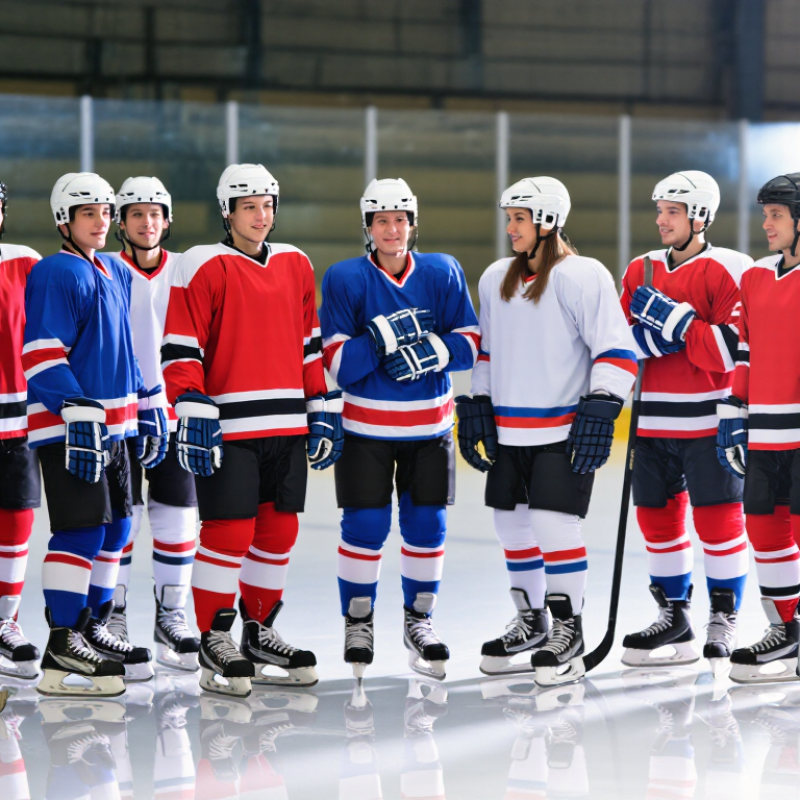
How to Choose the Right Hockey Jersey for Your Team?

Identify Your Team’s Needs and Playing Conditions

Before choosing a hockey jersey, define who will wear it and where they will play. A youth team in weekly practices has different needs from adults playing frequent games. USA Hockey’s 2023–24 annual report recorded more than 567,000 members, reflecting a wide range of ages and playing levels. That variety makes one-size-fits-all decisions risky. Fit matters.

Ask players to try jerseys over their usual shoulder pads and elbow pads. Check that sleeves reach the wrists without catching on gloves, and that the hem stays tucked during skating. Goalies may need extra room across the chest and arms. If possible, test a sample during a short practice. A jersey can feel comfortable standing still, then pull tightly when a player reaches for the puck.

Consider the rink and schedule, too. The IIHF’s 2024–25 Official Rule Book specifies rink lengths from 56 to 60 metres, with widths from 26 to 30 metres. Rink size does not dictate jersey fabric, but it can shape how much a team moves and how often players sit on the bench. For warm indoor sessions, prioritize breathable, lightweight fabric; for colder rinks, leave room for a base layer. Choose clear, contrasting colors and readable numbers for teammates and officials. I would not rely on color alone; rink lighting can make a shade look different than expected.

How to Choose the Right Hockey Jersey for Your Team? — Identify Your Team’s Needs and Playing Conditions

Factor Team Needs or Playing Conditions What to Look For Why It Matters
Level of play Recreational, youth, school, or competitive team Choose a construction suited to how often the jerseys will be worn, washed, and handled. For frequent use, prioritize durable seams and fabric. Teams with heavier use may need jerseys that better withstand repeated wear and laundering.
Protective equipment Players wear shoulder pads and other protective gear beneath the jersey Check sizing over the shoulder pads, with enough room through the chest and shoulders for comfortable movement. A jersey sized only over a T-shirt may feel restrictive when worn with hockey equipment.
Fit and mobility Players need to skate, reach, and handle their sticks freely Look for a hockey-specific cut with room to move. Test arm raises and skating positions while wearing the usual equipment. Comfortable mobility helps prevent the jersey from pulling or restricting movement during play.
Indoor rink conditions Regular practices and games in a cooled indoor arena Consider lightweight, breathable fabric and ventilation features, while leaving room for the player’s normal base layers. Players generate heat during intense activity even when the rink itself is cool.
Outdoor play and variable weather Games or practices in changing temperatures and weather Allow room for suitable layers underneath. Choose a jersey that remains comfortable over those layers without limiting movement. Outdoor conditions can change, and layering needs may differ from those in an indoor arena.
Fabric and ventilation High activity, frequent practices, or warm conditions Compare breathable synthetic fabrics and ventilated panel placement. Check the care instructions before ordering. Breathability can support comfort during play, while care requirements affect team maintenance.
Team colors and visibility Two teams share a rink or play in a league with uniform requirements Select colors that are easy to distinguish from opponents and confirm any league rules for jersey color or numbering. Clear visual contrast helps players, officials, and spectators identify teams during play.
Numbers and names Players need individual identification on the ice Confirm the required number size, placement, color contrast, and name format with the league before production. League rules and legible identification can affect whether jerseys are suitable for games.
Sizing and ordering Players have a range of ages, builds, or equipment sizes Use the size chart for the specific jersey style, measure players wearing their protective gear, and order a sample when possible. Sizes can vary between garment cuts, so measurements are more reliable than assuming a usual shirt size will fit.
Care and replacement Jerseys are shared, washed often, or stored between seasons Review washing and drying instructions, label jerseys clearly, and consider keeping a small number of replacement jerseys. Consistent care and a replacement plan can help teams keep uniforms usable throughout the season.

Compare Jersey Materials, Construction, and Durability

A hockey jersey must move freely over shoulder pads while surviving contact, sweat, and repeated washing. Compare fabric weight, knit, and ventilation rather than relying on appearance alone. Polyester is common because it dries relatively quickly, while mesh zones can improve airflow. Feel it first. A stiff sample may restrict a player’s reach, but an overly light fabric can feel less substantial during frequent use.

Construction often reveals more than the fabric label. Inspect shoulder seams, sleeve openings, and the area around the collar, where pulling can strain stitching. Reinforced seams and neatly finished edges are useful signs, though they do not guarantee long wear. Turn the jersey inside out. Check for loose threads, uneven stitching, and rough patches that could catch on equipment. I would not judge durability from one tug alone; that test can mislead.

Consider how the team will use and care for the jerseys. Frequent practices may call for breathable fabric and stitching that withstands regular laundering. Ask for a sample, then try it over full pads and move through a skating stance, a reach, and a shot. If possible, wash the sample according to its care instructions and check for distortion, fading, or seam changes. One detail is easy to miss: a durable jersey is still a poor choice if players find it hot or restrictive.

How to Choose the Right Hockey Jersey: Fiber Moisture Regain

Typical moisture regain is the percentage of a fiber’s dry weight absorbed as moisture under standard conditions. Polyester’s low value helps explain its common use in hockey jerseys; knit structure and mesh openings also affect ventilation, while stitching and fabric weight influence durability. These are general fiber figures, not performance ratings for finished jerseys.

Choose the Right Fit and Sizing for Every Player

Choose the Right Fit and Sizing for Every Player

A hockey jersey must fit over shoulder pads, not just a T-shirt. Measure each player’s chest while wearing their usual base layer, then compare it with the size chart. Height alone can mislead: two players of equal height may have very different shoulders or torsos. The U.S. Army’s ANSUR II anthropometric technical report recorded 93 body measurements across 6,068 adults, showing why fit relies on more than one dimension. It is not a hockey sizing guide, but it reinforces a useful principle: measure the body, not the guess.

Check the jersey over the full equipment setup. The shoulder seams should sit near the shoulder-pad edge, and the sleeves should cover the elbow pads without restricting a bent arm. The hem should stay tucked while the player skates. Fit matters. Ask each player to raise both arms, crouch, and reach forward; watch for fabric pulling across the back or bunching at the wrists. When choosing between sizes, consider layering and mobility, not just a roomy look. For growing players, leave practical space, but avoid excess fabric that can snag or hide protective gear. One fitting can still miss a player’s needs, so record measurements and recheck after equipment changes.

Select Colors, Graphics, and Customization Options

Choosing jersey colors starts with visibility under rink lighting. Compare the main color with the numbers, name lettering, and sleeve details. A bright accent can help players stand out, but too many colors make the design feel busy. Keep it readable. Check contrast on a printed or digital mockup, not just on a phone screen. Dark navy and black, for example, may look distinct in a design file but blend together from the stands.

Graphics should support team identity without crowding the jersey. Place a crest where it stays clear when the fabric stretches, and keep sleeve patterns away from number areas. Ask for a proof showing the front, back, and sleeves at realistic scale. Small details can disappear in production. Customization also needs practical checks: confirm name spelling, number size, and placement before approving the order. If players have different builds, review the size chart and ask how lettering behaves across sizes. A first mockup may look polished yet feel too crowded once every detail is added. Less can work. Leave enough space for clear numbers and easy movement, even if that means removing a graphic you liked.

Review Costs, Production Timelines, and Supplier Quality

Compare quotes by landed cost, not the price per jersey. Include artwork setup, numbers, name lettering, sample fees, freight, and replacement terms. A low unit price can become expensive when shipping or decoration is excluded. Ask suppliers to itemize every charge.

Production schedules should show sample approval, bulk sewing, decoration, inspection, and delivery dates. Build in slack. A late sample can push a team past its opening game. Request written updates at each milestone, and clarify how delays are handled. For quality, specify fabric weight, size tolerances, seam strength, and colorfastness. Ask for a pre-production sample and test it after washing. Check lettering for lifting and seams for puckering. Small details matter.

Supplier transparency deserves scrutiny, too. Fashion Revolution’s 2023 Fashion Transparency Index reported an average disclosure score of 26% across 250 major fashion brands and retailers. That measures disclosure, not jersey quality, but it shows why vague assurances are weak evidence. Ask for factory details, inspection records, and test results tied to your actual fabric and decoration. A polished sample is not proof of consistent bulk production. I still find timelines easy to underestimate; leave time to inspect delivered jerseys before distributing them.

Close
Enter your email address to receive special offers!
linkedin facebook pinterest youtube rss twitter instagram facebook-blank rss-blank linkedin-blank pinterest youtube twitter instagram