Archives


Top Travel Bag Manufacturer for Global Buyers?

Choosing the right travel bag manufacturer can shape product quality, delivery reliability, and long-term customer trust. Global buyers need more than attractive samples. They need a supplier that understands fabric performance, stitching pressure, zipper durability, packaging, and changing market expectations.

A dependable manufacturer should show practical experience with different travel bag styles, including duffels, backpacks, trolley bags, and lightweight organizers. Ask for clear material specifications, production photographs, sample details, and quality inspection records. These details reveal more than a polished catalog. They show how the factory works when real orders become complicated.

Consistency matters.

An experienced supplier should explain its sampling process, production capacity, lead times, and corrective actions. Strong communication is also essential when measurements, colors, labels, or packaging requirements change. Responsible manufacturers should follow applicable product, labor, environmental, and import requirements in each target market. Buyers should verify relevant documents independently.

No supplier is flawless. Even a capable factory may face fabric shortages, equipment issues, or unexpected inspection delays. The important question is how openly it responds and how quickly it provides a workable solution. That point is easy to overlook.

This guide examines what global buyers should evaluate before selecting a travel bag manufacturer. It considers product development, factory capability, material choices, quality control, customization, logistics, and after-sales support. The goal is not to promote the loudest supplier, but to identify a reliable production partner through evidence, careful questions, and realistic expectations.

Top Travel Bag Manufacturer for Global Buyers?

Defining the Qualities of a Top Travel Bag Manufacturer

A top travel bag manufacturer should prove quality through real production experience, not polished promises. Experienced teams understand crowded trains, wet sidewalks, airport handling, and overpacked luggage. They test shoulder straps, wheel housings, zippers, and stitching under repeated stress. Small details matter.

Professional manufacturers explain material choices clearly. They can discuss fabric weight, coating performance, lining strength, and load-bearing construction. They should provide samples before large orders and document inspection steps. Reliable suppliers also maintain stable production records, clear communication, and traceable quality checks. Independent testing and honest references can strengthen their authority. Still, no factory gets every detail right. A sample may look excellent but reveal weak seams after practical use. That is why buyers should question, test, and review instead of trusting attractive photographs.

Tips: Request a working sample. Pack it heavily. Check the handle after several pulls. Rub the fabric against rough surfaces. Ask how defects are recorded and corrected. Confirm production timelines in writing. Review the final sample before approval. A dependable manufacturer welcomes these questions, even when they expose uncomfortable weaknesses.

Evaluating Materials, Design Standards, and Product Durability

For global buyers, a travel bag manufacturer should prove material performance, not merely display attractive fabric swatches. Textile Exchange’s Materials Market Report 2024 recorded global fiber production at 124 million tonnes in 2023. That scale makes traceability essential. Ask for fiber composition, recycled-content verification, coating details, and supplier records. Recycled polyester can reduce dependence on virgin feedstock, but it is not automatically stronger or safer. The full construction matters.

Design standards reveal manufacturing discipline. Zippers should survive repeated opening cycles, while shoulder straps need reinforced bartacks at stress points. Buyers can request testing against ISO 13937 for tear strength and ISO 811 for resistance to water penetration. Those tests do not recreate every airport conveyor belt. Still, they create comparable evidence.

Small details matter. A sharp seam can damage clothing after several trips.

In factory evaluations, I inspect loaded bags, not empty samples. A 15-kilogram test load exposes weak handles, distorted panels, and uneven wheels quickly. The American Society for Testing and Materials publishes relevant methods for luggage handle and wheel durability, but testing conditions still vary between laboratories. That is a weakness worth acknowledging. Durable products need documented results, production-line inspections, and sample testing after mass production begins. A perfect prototype proves little. Errors happen. Reliable manufacturers record them, investigate root causes, and revise patterns before shipment.

Comparing Manufacturing Capacity, Customization, and Private Label Services

Top Travel Bag Manufacturer for Global Buyers?

Comparing Manufacturing Capacity, Customization, and Private Label Services

Global buyers should assess more than a factory’s product catalog. Grand View Research estimates the global luggage market reached about USD 22.1 billion in 2023, with continued growth through 2030. Demand is expanding, but supplier performance remains uneven. A large factory is not automatically the right factory.

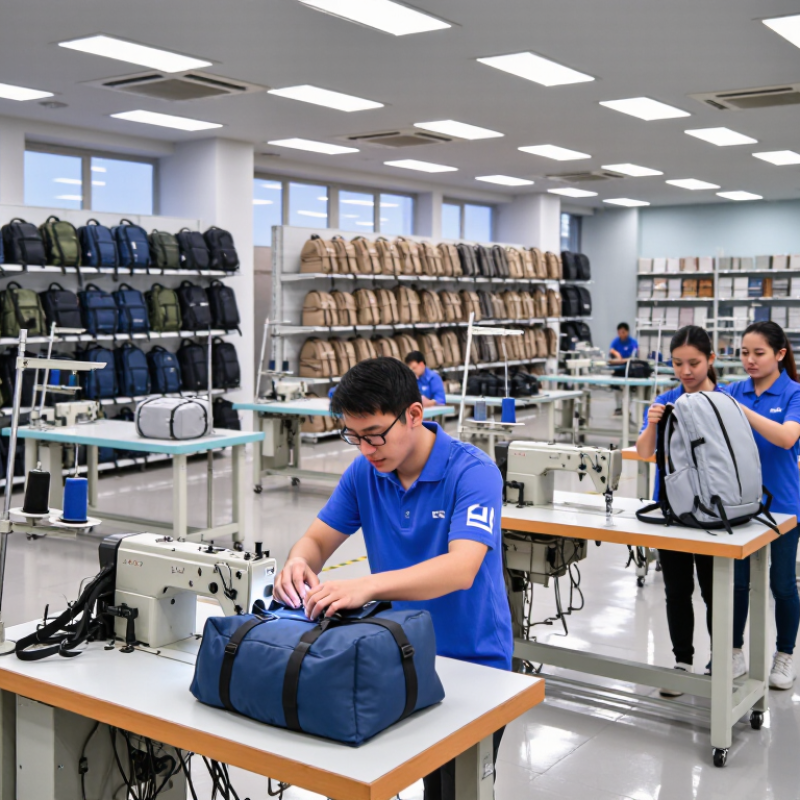
Manufacturing capacity should include verified monthly output, workforce stability, equipment, and production records. Ask for capacity by bag type, not one impressive total. A practical audit should review cutting rooms, stitching lines, inspection points, and shipment history. Check whether sample approval delays affect mass production. They often do. Private label work also requires reliable labeling, packaging, barcode control, and document management.

Customization is more than changing a color. Buyers should confirm material options, compartment layouts, hardware, lining, logo methods, and sample revisions. The supplier should explain minimum order quantities and tooling costs clearly. For quality control, request test records for zippers, handles, wheels, fabrics, and load-bearing seams. ISO 9001 certification can support process consistency, but it cannot replace product inspection. WTTC reported that travel and tourism contributed approximately USD 9.9 trillion to global GDP in 2023, increasing pressure for dependable travel products. Still, buyers should leave room for improvement. Forecasts change, samples fail, and communication may break down. A transparent manufacturer admits these risks and documents corrective actions.

Top Travel Bag Manufacturer for Global Buyers? - Comparing Manufacturing Capacity, Customization, and Private Label Services

Evaluation Dimension What Global Buyers Should Check Practical Industry Reference Why It Matters Recommended Verification
Manufacturing Capacity Production lines, sewing capacity, workforce, monthly output, and peak-season availability. Capacity varies by facility size, product complexity, material, and order mix. Helps reduce delays when launching large retail, corporate, or seasonal orders. Request recent production records, line photographs, capacity statements, and a factory audit.
Product Categories Experience with backpacks, duffel bags, weekender bags, luggage, toiletry bags, and travel accessories. A broader product range may indicate more versatile sourcing and development capabilities. Supports product-line expansion while reducing the number of manufacturing partners. Review technical specifications, approved samples, and comparable previous projects.
Customization Depth Ability to modify dimensions, compartments, fabrics, trims, hardware, zippers, handles, and packaging. Customization is normally subject to material availability, tooling, testing, and minimum order requirements. Allows buyers to create products aligned with target users, price points, and retail positioning. Confirm which elements are standard, semi-custom, or fully custom before sampling.
Private Label Services Woven labels, printed logos, rubber patches, hangtags, care labels, barcodes, cartons, and branded packaging. Label and packaging methods depend on artwork, material, placement, color count, and order volume. Enables brand-ready goods without requiring the buyer to manage separate labeling suppliers. Approve artwork files, branding samples, packaging drawings, and labeling placement.
Minimum Order Quantity Minimum quantities for stock designs, custom designs, custom colors, fabrics, trims, and packaging. MOQ often increases when custom fabric production, special hardware, or exclusive packaging is required. Determines whether the supplier is suitable for testing, small launches, or high-volume programs. Obtain a written MOQ schedule for each customization level.
Sampling Process Prototype development, sample revisions, material approval, pre-production samples, and approval control. A documented approval process is a common safeguard against production deviations. Reduces the risk of incorrect dimensions, colors, construction details, or branding. Require a signed or digitally approved reference sample before bulk production.
Materials and Construction Fabric composition, denier, coating, lining, webbing, foam, stitching density, reinforcement, and hardware quality. Material performance depends on fiber type, weave, coating, weight, finishing, and intended use. Directly affects durability, appearance, weight, water resistance, and product cost. Request material specifications, test reports where applicable, and physical swatches.
Quality Control Incoming material inspection, in-line inspection, final inspection, defect classification, and corrective actions. Quality systems commonly combine internal inspections with buyer-defined acceptance criteria. Improves consistency across large production runs and reduces claims after shipment. Use an approved inspection checklist and define acceptable quality limits in the purchase contract.
Compliance and Testing Product safety, restricted substances, colorfastness, seam strength, packaging rules, and destination-market requirements. Requirements differ by destination, product composition, intended use, and applicable regulations. Helps prevent customs issues, retailer rejection, recalls, and compliance-related costs. Identify destination-market requirements and request relevant third-party test documentation.
Production Lead Time Time required for materials, sampling, production, inspection, packing, and shipment preparation. Lead time is affected by order size, custom materials, approval speed, holidays, and production load. Supports accurate launch planning, replenishment, and inventory management. Ask for a stage-by-stage timeline with approval deadlines and delay procedures.
Material Traceability Ability to identify fabric lots, trim suppliers, production batches, inspection records, and shipment cartons. Traceability depth depends on the supplier’s quality-management and record-keeping systems. Facilitates investigation, corrective action, and repeat-order consistency. Check whether batch records and inspection documents can be provided on request.
Sustainability Documentation Recycled-content claims, responsible material certifications, chemical-management controls, and packaging reduction. Environmental claims should be supported by valid, scope-appropriate documentation. Helps buyers meet retailer policies and communicate product claims responsibly. Verify certificate validity, certified scope, transaction records, and claim wording.
Packaging and Logistics Individual packing, carton dimensions, carton markings, palletization, container loading, and export documents. Packaging configuration affects product protection, freight efficiency, and warehouse handling. Reduces transit damage and improves landed-cost planning. Approve packing instructions, carton artwork, carton tests where needed, and shipping documents.
Communication and Project Management Response speed, technical English, sample tracking, change control, and escalation procedures. Clear written records are especially important for multi-stage custom developments. Minimizes misunderstandings between design, purchasing, quality, and production teams. Use a written specification sheet, milestone calendar, and documented change approvals.
Commercial Reliability Quotation clarity, payment terms, tooling charges, material validity, warranty policy, and after-sales support. Total cost includes product price, development, packaging, inspection, freight, duties, and possible rework. Provides a more accurate comparison than unit price alone. Compare itemized quotations and define responsibilities for defects, delays, and replacement goods.
Overall Selection Priority Balance capacity, customization, private labeling, quality, compliance, communication, and total landed cost. Best-fit supplier The most suitable manufacturer is the one that can repeatedly meet the buyer’s technical, commercial, and delivery requirements. Combine sample evaluation, factory verification, reference checks, and a controlled pilot order.

Note: The reference points above are general sourcing guidelines. Actual capacity, minimum order quantities, lead times, testing requirements, and certification scope should be confirmed in writing for each project and destination market.

Assessing Quality Control, Certifications, and Ethical Production

Top Travel Bag Manufacturer for Global Buyers?

Choosing a travel bag manufacturer requires more than comparing prices or glossy product photos. Quality control should be visible on the factory floor. Inspect fabric weight, seam strength, zipper alignment, and handle stitching during production. A reliable supplier records inspection results for each batch, not only finished samples. Small defects matter. A loose thread can become a torn handle after one crowded airport transfer.

Certifications can support trust, but buyers must check their scope, validity, and issuing body. Quality management certification may show controlled procedures, while material or safety certificates can verify specific components. Ask for recent reports and match them with the actual factory address. Ethical production also needs evidence. Review worker safety measures, working hours, wage practices, and subcontracting policies. Factory visits and independent audits often reveal details that documents miss. My own assessment would never rely on paperwork alone.

Tips: Request a pre-production sample, a mid-production inspection, and a final random check. Test bags with realistic loads, repeated zipping, and rough handling. Ask how rejected materials are managed. Do not accept vague answers. A manufacturer may meet technical standards yet still need improvement in waste reduction or worker communication. That weakness deserves honest discussion, not convenient silence.

Travel Bag Manufacturer Assessment Framework

This evidence-based scoring framework helps global buyers compare manufacturers without relying on brand names. The 100-point model covers quality control, recognized certifications, traceability, and ethical production evidence.

Reviewing Pricing, Logistics, and Support for Global Buyers

Choosing a top travel bag manufacturer requires more than comparing a unit price. In my sourcing reviews, the lowest quote often excludes sampling, custom packaging, or inspection fees. Ask for tiered pricing at 500, 2,000, and 5,000 units. Confirm fabric weight, zipper grade, lining, logo method, and carton dimensions. Small details change landed cost. A professional supplier explains these changes before production begins. That transparency matters.

Logistics can decide whether a competitive factory remains competitive. Request a written lead-time plan covering material purchasing, production, inspection, and dispatch. For a standard order, I prefer milestone updates over one vague delivery promise. Check carton measurements carefully; bulky bags can raise freight charges even when they are light. Air freight suits urgent samples, while sea or rail transport may reduce larger-order costs. Transit estimates are not guarantees. Port congestion, customs reviews, and seasonal capacity can still cause delays. Build a buffer.

After-sales support reveals operational maturity. A reliable team should answer within an agreed time, share inspection photos, and document defects by batch. Ask how replacements, credits, or rework are handled before signing. Written records are safer than friendly verbal assurances. Yet careful evaluation has limits. A polished sample may hide inconsistent stitching in mass production. Independent inspection adds cost, but skipping it can cost more. My own judgment is not perfect, so every order deserves fresh evidence.

Close
Enter your email address to receive special offers!
linkedin facebook pinterest youtube rss twitter instagram facebook-blank rss-blank linkedin-blank pinterest youtube twitter instagram