Archives


7 Tips for Buying Alpha Arbutin Powder in Bulk

Buying Alpha Arbutin Powder in bulk can reduce unit costs, but it also increases quality and storage responsibilities. A bright quotation is not proof of a reliable ingredient.

Grand View Research estimates that the global skincare products market reached approximately USD 155.7 billion in 2023. Its report also projects continued growth through 2030, driven partly by demand for targeted skincare solutions. This trend is encouraging. However, growing demand can attract inconsistent suppliers and unclear documentation.

The following seven tips focus on practical purchasing decisions. They cover supplier experience, product identity, assay testing, certificates of analysis, packaging, storage, and total landed cost. Each detail matters.

Check the assay method.

A professional supplier should provide batch-specific results, not a recycled template. Look for HPLC data, appearance, moisture, microbiological limits, and traceable lot numbers. ISO 22716 guidance also supports controlled manufacturing and documented quality practices for cosmetic products.

Inspect the packaging closely. A sealed, moisture-resistant container should arrive clean, intact, and clearly labeled. Alpha Arbutin Powder can be sensitive to unsuitable storage conditions, so temperature and humidity records deserve attention.

Price still matters. It is not everything.

A cheaper batch may create hidden expenses through failed testing, delayed production, or reformulation. I have seen procurement plans focus heavily on MOQ while overlooking lead time and release testing. That approach can look efficient on paper, yet perform poorly in a real warehouse.

Use recognized supplier audits and independent verification whenever possible. No checklist is perfect, but a careful comparison improves confidence, protects product consistency, and supports responsible purchasing decisions.
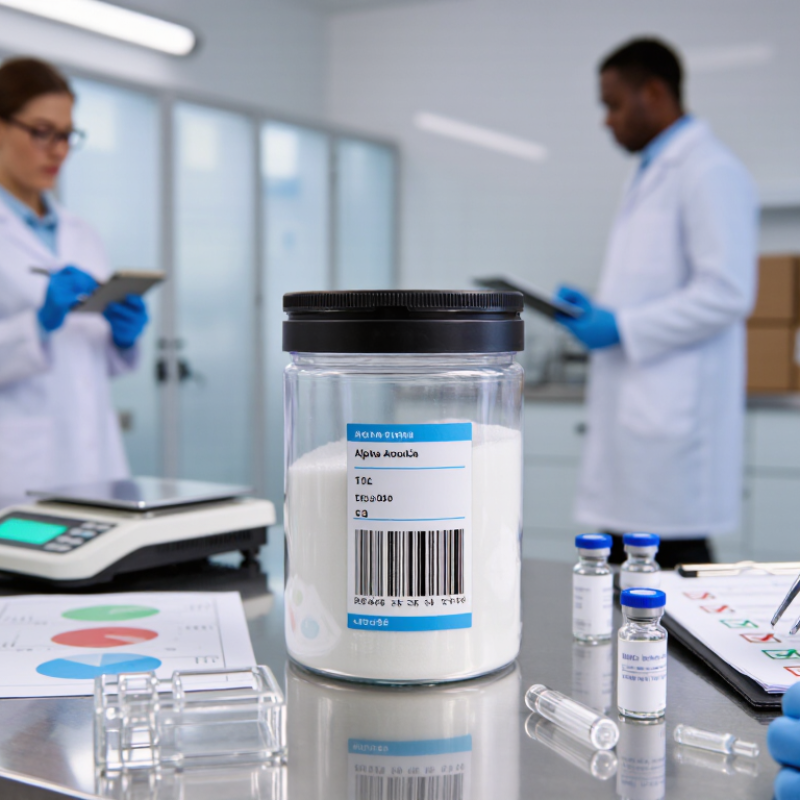
7 Tips for Buying Alpha Arbutin Powder in Bulk

Confirm Identity: CAS 84380-01-8 and Molecular Weight 272.25 g/mol

Identity checks should anchor every bulk purchase of alpha arbutin powder. Confirm that the product is identified as alpha arbutin, CAS 84380-01-8, with a molecular weight of 272.25 g/mol. These details help distinguish the requested material from similarly named ingredients. They do not prove purity on their own. A tidy label is not enough.

Tip: Compare the CAS number and molecular weight across the product specification, certificate of analysis, and safety documentation. Ask the supplier to explain any mismatch before ordering. Check that the documents refer to the same product and batch, not just a general sample. Small inconsistencies matter.

For a practical review, inspect a recent batch certificate and confirm that its identity-testing method and results are stated clearly. Look for a batch number that matches the packaging records. Request a sealed sample when possible, then compare its label and paperwork with the bulk quotation. Keep the records. Paperwork can still be incomplete, and that deserves a pause, not a guess.

7 Tips for Buying Alpha Arbutin Powder in Bulk - Confirm Identity: CAS 84380-01-8 and Molecular Weight 272.25 g/mol
Tip What to Check Useful Evidence or Specification Bulk-Buying Action
1. Confirm the chemical identity Check that the material is alpha-arbutin, not beta-arbutin or a different ingredient. Alpha-arbutin is identified by CAS 84380-01-8, molecular formula C12H16O7, and molecular weight 272.25 g/mol. Make the name, CAS number, formula, and molecular weight part of the purchase specification and batch documentation.
2. Request batch-specific identity testing Confirm the analytical identification applies to the lot being purchased. Request a certificate of analysis (CoA) with the batch or lot number and an identity test. Ask for the test method and results where available. Match the CoA lot number to the label and shipping documents before accepting the shipment.
3. Define purity and assay requirements Determine how content is measured and reported, including whether results are on an as-is or dry basis. Set a written assay specification with a stated analytical method and reporting basis. A purity value should be supported by batch data, not only a product description. Agree on acceptance limits before ordering; do not assume that purity claims use the same method or basis across offers.
4. Review related substances and impurities Check for specified impurities and relevant degradation products. Request the impurity profile, test methods, and limits applicable to the intended cosmetic use and local regulatory requirements. Include required impurity limits in the purchase specification and ask how out-of-specification results are handled.
5. Check moisture and appearance Assess whether physical quality is consistent with the agreed product specification. Request batch results for water or loss on drying if specified, plus a description of appearance. Do not treat appearance alone as proof of identity or purity. Set measurable limits where needed and inspect the received powder for signs of moisture exposure, discoloration, or damaged packaging.
6. Evaluate packaging and storage controls Confirm the powder is protected from moisture and contamination during storage and transport. Review the product’s storage instructions, packaging configuration, seal integrity, and stated shelf life or retest period. Specify pack size, protective packaging, transport conditions, and required remaining shelf life at delivery.
7. Verify documentation and sample consistency Check that the documents, pre-purchase sample, and delivered batch are traceable to the same specification. Request a current specification sheet, batch CoA, safety data sheet (SDS), and a retained or pre-shipment sample where appropriate. Approve a written specification and sampling plan before placing a bulk order; retain records and a sample for incoming quality checks.

Set Purity Targets: Require HPLC Assay Results of at Least 99%

When buying alpha arbutin powder in bulk, set a clear purity target before comparing prices. Request an HPLC assay report showing at least 99% alpha arbutin. HPLC helps separate the target compound from related substances, but the number alone does not tell the whole story. Ask for the batch number, test date, and testing laboratory, then confirm they match the material being offered.

Look closely at the report’s method and results. A useful certificate of analysis states the assay basis, such as whether results are calculated on an as-is or dry basis. Moisture can affect comparisons between lots, so request water-content data too. Check whether the report lists related substances or only the main assay. If the documents are vague, ask for clarification before placing a large order. Small details matter.

Request a sample from the same production lot, if available, and compare its label with the paperwork. Keep a sealed portion for your own reference. This is not a substitute for independent testing, but it can help reveal mismatched documents or changes in appearance. A 99% claim sounds precise; still, it deserves verification. I would not rely on a polished certificate without traceable batch details.

Verify Testing: Review COA Data for Water, Residual Solvents, and Heavy Metals

A clean-looking powder proves very little. For bulk alpha arbutin, request a batch-specific certificate of analysis (COA), then check its test methods, results, units, and laboratory details.

Water content matters because excess moisture can encourage caking during storage. Look for a stated method, such as Karl Fischer titration, rather than a vague “pass.” USP General Chapter <921> describes established methods for measuring water in materials; the supplier should identify the method used and provide the actual result.

Residual-solvent results need the same scrutiny. ICH Q3C lists Option 1 concentration limits of 3,000 ppm for methanol and 890 ppm for toluene, based on pharmaceutical exposure assumptions—not automatic acceptance limits for every cosmetic ingredient. Ask which solvents were tested and whether the limits fit your intended use.

Heavy metals deserve specific numbers, too. ICH Q3D sets daily exposure limits for pharmaceutical products, including 5 µg/day for lead and 15 µg/day for arsenic; these are useful risk-assessment references, not universal powder specifications. Request elemental results in ppm, the analytical method, and the lab’s accreditation details.

Check the lot number against the packaging.

Tiny mismatch? Pause.

I once treated a neat COA as reassuring; the missing method mattered more than the polished table. A second review is worthwhile.

Audit Suppliers: Check ISO 22716 GMP, Batch Traceability, MOQ, and Lead Time

When buying alpha arbutin powder in bulk, treat supplier checks as part of product evaluation, not paperwork. Request evidence of an ISO 22716 GMP quality system and confirm that the documents apply to the site handling your order. A certificate alone cannot show how every batch was made. Ask who reviews deviations, how samples are retained, and what happens when a result falls outside specification. Good questions matter.

Batch traceability should connect the powder in each sealed container to its production and testing records. Request a batch number, a certificate of analysis, and clear identification of the test methods used. Check that the supplier can trace incoming materials, processing dates, and dispatch records without gaps. If answers are vague, pause. A neat document is useful, but it is not proof of a well-controlled process; I would still verify a sample against your own requirements.

Confirm the minimum order quantity before requesting a quotation. A low price may depend on a volume that exceeds your storage capacity or demand forecast. Ask whether the MOQ refers to one batch, one shipment, or a standard package size. Then get the lead time in writing, including production, testing, and shipping estimates. Build in a buffer for delays. Suppliers may quote optimistically, and buyers sometimes underestimate review time. Compare the same terms across suppliers, and record any unanswered questions before committing.

Confirm Compliance: Follow SCCS Limits of 2% for Face and 0.5% for Body Products

When buying alpha arbutin powder in bulk, check how the supplier supports safe, consistent formulation. The SCCS has assessed alpha arbutin as safe at concentrations up to 2% in face creams and 0.5% in body lotions. These figures refer to finished products, not raw powder. Keep that distinction clear. Ask for a current certificate of analysis, identity testing, and impurity data, including information on hydroquinone. A neat label is not enough.

Tip: Match the limit to the product type. A face cream and a body lotion are not interchangeable. Confirm the intended use with a qualified cosmetic chemist, and check current regional requirements before production. SCCS assessments are important scientific guidance, but they do not replace checking applicable rules. Keep batch records and document the calculation from powder weight to final concentration. Small weighing errors can matter in a large production run, too.

Request a sample before placing a bulk order. Compare its appearance, solubility, and performance in your actual formula; a white powder can still behave differently between batches. Store it in a tightly closed container, away from heat and moisture. I would not rely on supplier assurances alone—though, admittedly, paperwork can look convincing. Review it carefully, and ask questions when details are missing.

Alpha-Arbutin: SCCS Maximum Concentrations

The SCCS recommended maximum concentrations are 2% for face creams and 0.5% for body lotions. Confirm applicable requirements for your product and market before purchasing or formulating.

Close
Enter your email address to receive special offers!
linkedin facebook pinterest youtube rss twitter instagram facebook-blank rss-blank linkedin-blank pinterest youtube twitter instagram