Archives


China Top 10 Tofu Cat Litter Manufacturers?

Tofu Cat Litter buyers need more than an attractive product photo. They need clear specifications, consistent quality, and a supplier that communicates reliably. This guide explores ten Chinese manufacturers and the practical questions worth asking before requesting a quote. Details matter.

The comparison should consider production capacity, ingredient disclosure, clumping performance, dust levels, packaging options, and export experience. Ask for recent product samples and check how the litter performs in an ordinary tray: Does it form firm clumps? Does it scatter around the mat? Is the texture comfortable for a cat’s paws? Small differences can affect repeat purchases.

A manufacturer’s website can offer useful clues, but marketing claims are not the same as verified performance. Buyers should request current specifications, relevant quality documents, and written confirmation of custom-product requirements. Samples help. So do direct, specific questions about lead times and batch consistency. This article is intended as a starting point, not a substitute for independent checks or supplier discussions.

“Top 10” rankings can be imperfect, since factory capabilities and buyer needs change. A company suited to a large retail order may not fit a smaller trial shipment. The profiles ahead are best read as a shortlist for further evaluation, with attention to evidence rather than promises. No list is perfect. Compare the details, test the product, and choose a supplier whose claims hold up under closer review.
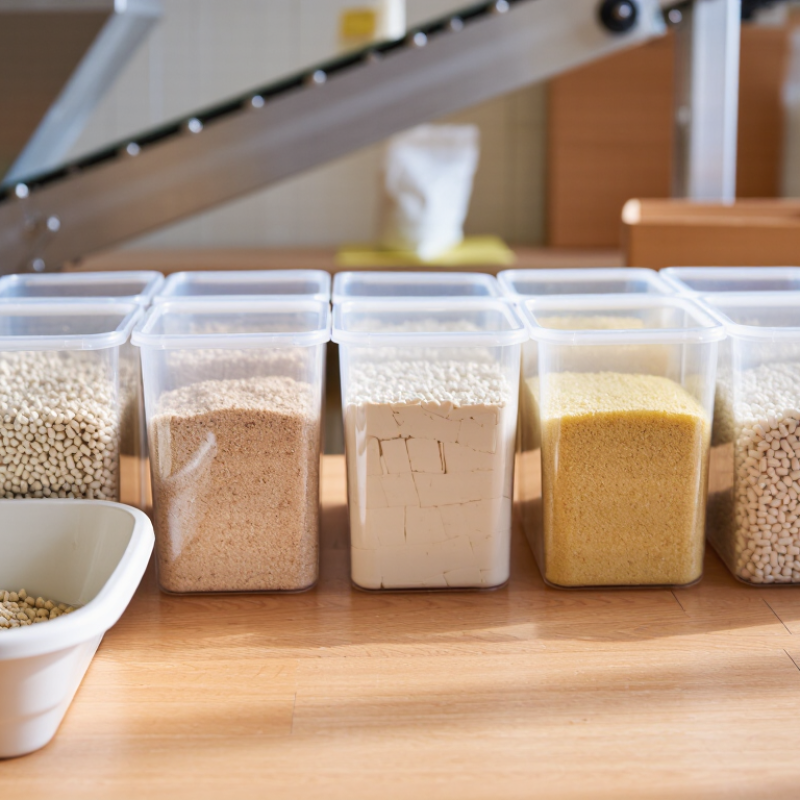
China Top 10 Tofu Cat Litter Manufacturers?

Tofu Cat Litter Explained: Ingredients, Production Steps, and Key Quality Metrics

Tofu cat litter is commonly made from soy pulp, a by-product of tofu production. Manufacturers dry and mill it, then mix it with plant-based starches and water. Some formulas include charcoal or deodorizing agents, so check the ingredient list rather than assuming every product is identical. The pellets should feel firm, not damp or crumbly. Small differences matter.

Production typically involves blending, extrusion into narrow strands, cutting, drying, and screening. Drying needs close control: excess moisture can weaken pellets, while overly dry material may create more fines during handling. Screening removes fragments and dust before packing. The process sounds simple, but consistency is difficult. A batch can look fine and still break down differently in a litter tray.

Useful quality checks include moisture content, pellet size, fines, absorption, and clump strength. Ask how these are measured and whether results are tested across multiple batches. A basic home check can help: add a measured amount of water, then observe clumping, odor, and residue after several minutes. It is not a laboratory test. Dust levels and tracking also deserve attention, since lightweight pellets may scatter beyond the tray. No single metric tells the whole story; performance depends on the formula, storage conditions, and how often the litter is changed.

How to Rank China’s Top 10 Manufacturers by 2024 Capacity and Export Data

China Top 10 Tofu Cat Litter Manufacturers?

How to Rank China’s Top 10 Manufacturers by 2024 Capacity and Export Data

A credible 2024 ranking should compare verified production capacity with actual export performance. Capacity means usable annual output, not simply a factory’s largest advertised figure. Check production lines, operating shifts, and documented output where available. A site visit or independent audit can help confirm whether equipment is running. Numbers need context.

Export data adds another useful measure, but customs descriptions may group tofu litter with other plant-based products. Compare shipment records with company disclosures and confirm that the exporter is also the manufacturer. If the records cannot be matched, mark the evidence as uncertain rather than presenting an exact rank. No dataset is perfectly clean. That matters.

Tips: Use the same period and units for every supplier. Separate installed capacity from reported production, and record each source and its date. Give greater weight to independently verified figures. A ranking built from incomplete records may need revision; that is a limitation worth stating openly.

Comparing Product Specs: Moisture, Dust, Clumping Time, and Absorption Rate

A useful comparison of China’s tofu cat litter manufacturers starts with four numbers, not packaging claims. Grand View Research estimated the global cat litter market at about US$11.1 billion in 2023, but its market report does not provide comparable moisture or clumping results by product. That gap matters. Ask suppliers for batch-level test sheets, including the test method and sample size.

For moisture, compare results measured on the same basis; excess water can make pellets feel soft and encourage mold during storage. For dust, request a measured percentage or a defined sieve test, rather than “low dust.” Check clumping time with the same liquid volume and litter depth. A quick bench test can reveal whether a wet patch forms a firm scoop or breaks into damp crumbs. Absorption rate should also state the liquid volume absorbed per gram of litter and the time allowed. Small details matter.

Keep the comparison fair. Use equal weights, identical trays, and repeat each test across several samples. Record the numbers. Then check them against the supplier’s published claims. One test is not enough. Household humidity, pellet size, and storage can change results, so even a tidy spreadsheet has limits. I would treat missing methods as a warning, not proof of poor quality.

Factory Verification: Certifications, Testing Records, and Annual Production Volume

For any “top 10” tofu cat litter comparison, factory claims need more than a polished brochure. Request current certificates and check the issuing body, product scope, factory address, and expiry date. A certificate may cover a quality system, not every litter formula. That distinction matters.

Ask for recent test records tied to identifiable production batches. Useful checks can include moisture, particle size, dust, absorbency, and clumping performance. Look for test dates, methods, sample details, and actual results—not just a pass stamp. Ask whether tests were performed in-house or by an independent laboratory. Then compare the records with a sample from the same batch. Small differences can happen. Repeated gaps deserve questions.

Numbers need context. Ask for annual production volume in tonnes, the reporting period, and how much capacity is already committed. Compare the stated output with equipment, shifts, warehouse space, and shipping records where available. A large figure alone proves little. Request supporting documents, while respecting confidential information. I would not treat one successful factory visit as final proof; conditions can change between visits. Keep a simple verification log, note missing evidence, and revisit claims before placing a large order.

Buyer Checklist: Match Package Size, MOQ, Lead Time, and Price per Tonne

When comparing tofu cat litter manufacturers, treat package size as a purchasing variable, not a label detail. A 6-liter bag and a 10-liter bag may use different film, filling settings, and carton counts. Ask for the net weight per bag, bags per carton, and pallet configuration. Check whether the quoted sample matches the bulk specification. Small mismatch, big cost.

Set the minimum order quantity against your actual storage space and sales pace. A low unit price can become expensive if stock sits for months or moisture reaches opened cartons. Ask for production lead time and shipping readiness separately; they are not always the same date. Request a written schedule for the first order and repeat orders. Delays happen.

Compare price per tonne on the same basis. Confirm whether it covers packaging, inland transport, and export preparation, then calculate freight and handling separately. Also compare moisture content, particle size, dust level, and absorbency using the same test method where possible. A cheaper tonne is not automatically better value. I may be overlooking a detail, so keep a sample from each quoted batch and record its weight, odor, and clumping after use.

China Top 10 Tofu Cat Litter Manufacturers? — Buyer Checklist: Match Package Size, MOQ, Lead Time, and Price per Tonne

Supplier-level MOQ, lead time, and pricing are not standardized and should be confirmed with current written quotations. Use this checklist to compare ten shortlisted manufacturers without treating unverified figures as supplier data.

No. Comparison item Buyer checklist / data to collect How to compare Evidence to request
01 Package size Record the offered net weight for each pack, such as 2 kg, 2.5 kg, 5 kg, or 10 kg. Treat these as package-size options, not as a universal industry standard. Compare the same net weight and product grade across all shortlisted suppliers. Current product specification sheet and pack photos.
02 Packaging format Specify bag material, closure type, handle requirement, printing, carton configuration, and whether private-label artwork is needed. Separate standard packaging from custom packaging when comparing MOQ and unit cost. Packaging specification, dieline, and sample confirmation.
03 Minimum order quantity (MOQ) Request the MOQ for bulk product, finished retail bags, printed packaging, and each SKU. These quantities may differ. Compare MOQ by identical SKU, pack size, packaging, and order type. Written quotation stating MOQ and any setup or artwork charges.
04 Production lead time Ask for the number of calendar or working days from approved artwork, deposit, and final specifications to goods-ready date. Compare the same starting point and confirm whether peak-season capacity changes the schedule. Written production schedule with stated assumptions.
05 Price per tonne Collect the quoted currency, price basis, product grade, packaging inclusion, order quantity, and Incoterm for each quote. For a net product price per kilogram, multiply by 1,000 to calculate price per tonne. Keep freight, duties, and other charges separate unless included in the quote. Dated quotation with price basis, quantity tier, and Incoterm.
06 Product specifications Record ingredient declaration, particle form, stated absorbency or clumping claims, fragrance options, and any applicable test methods. Compare like-for-like specifications; do not assume that similarly named grades perform identically. Technical data sheet, ingredient list, and relevant test reports.
07 Sample and approval process Confirm sample availability, sample cost, shipping responsibility, and the approval steps for product and packaging. Agree on the approved sample and written specifications before placing a production order. Sample record and signed or otherwise documented approval.
08 Quality control Ask how incoming materials, production batches, finished goods, and packaging are inspected, and how nonconformities are handled. Compare documented inspection procedures and acceptance criteria rather than general quality claims. Inspection plan, batch records, and defect-resolution terms.
09 Shipping configuration Collect units per carton, cartons per pallet if applicable, gross and net weights, carton dimensions, and estimated loading quantity. Compare logistics using the same pack configuration and shipment basis. Packing list format, carton specification, and loading estimate.
10 Payment and quote validity Record payment terms, accepted payment methods, quotation validity date, and any conditions that could change the price. Compare the full commercial terms alongside price per tonne and lead time. Pro forma invoice terms and a dated, itemized quotation.
Close
Enter your email address to receive special offers!
linkedin facebook pinterest youtube rss twitter instagram facebook-blank rss-blank linkedin-blank pinterest youtube twitter instagram