Archives


China Top Aluminum Magnesium Alloy Suitcase Suppliers?

Choosing among China’s top Aluminum-Magnesium Alloy Suitcase suppliers requires more than comparing prices. Buyers must examine alloy composition, shell thickness, corner protection, wheel systems, and factory consistency. A suitcase may look strong under showroom lighting, yet fail after repeated drops or rough airport handling. Small details matter.

Dr. Jürgen Hirsch, a respected aluminum-alloy researcher, has stated, “Alloy performance depends on composition, processing, and application.” This principle applies directly to luggage manufacturing. A reliable supplier should explain its material grade, forming process, welding method, surface treatment, and quality inspection standards. Factory experience also matters. Suppliers serving international brands often maintain clearer production records and stronger process controls.

This guide explores leading Chinese manufacturers of Aluminum-Magnesium Alloy Suitcase products. It considers product design, customization capability, certification practices, production capacity, and after-sales support. We will also examine practical signs of quality, such as smooth telescopic handles, reinforced rivets, balanced wheels, and evenly finished edges.

No ranking is perfect.

Supplier information can change. Some factories advertise broad capabilities but outsource important processes. That detail deserves verification. Buyers should request samples, audit production facilities, and test zippers, locks, handles, and wheel assemblies before placing large orders. A lower quotation is not always a lower total cost. Rework, delayed delivery, and inconsistent batches can quickly erase the savings.

The strongest suppliers combine material knowledge with disciplined manufacturing. They do not merely sell a metal shell. They build luggage designed for repeated movement, storage, impact, and everyday uncertainty.
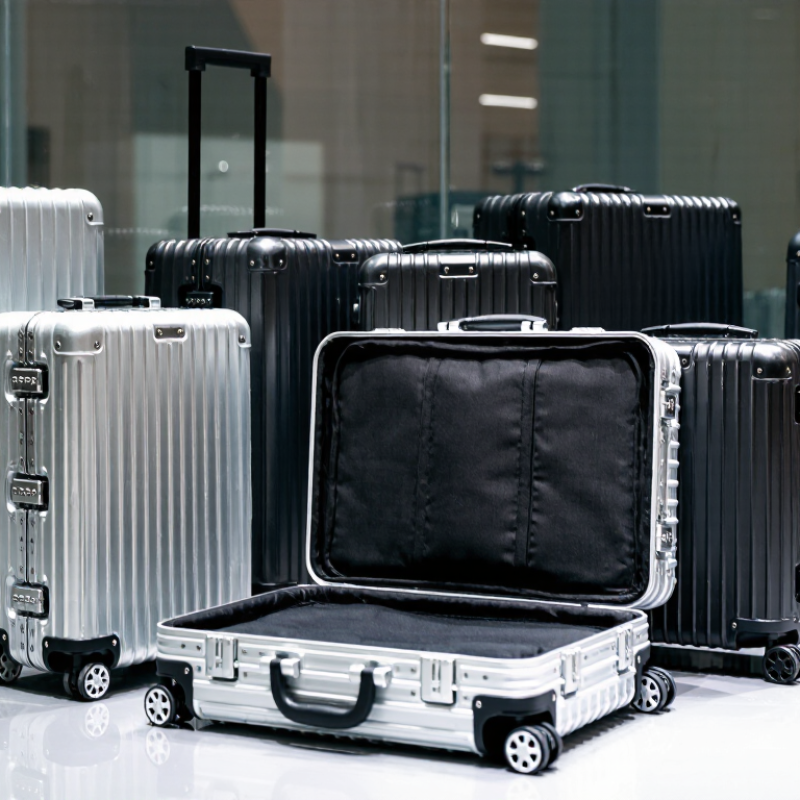
China Top Aluminum Magnesium Alloy Suitcase Suppliers?

Aluminum-Magnesium Alloy Suitcases: Materials and Core Features

Aluminum-magnesium alloy suitcases combine a rigid shell with relatively low material weight. Aluminum provides impact resistance, while magnesium can improve stiffness and reduce density. A typical aluminum alloy has a density near 2.7 g/cm³. The final weight still depends on shell thickness, frame design, wheels, and hardware. “Lightweight” is not automatic.

The International Aluminium Institute reports that recycled aluminum requires about 5% of the energy used for primary production. This supports better material efficiency, although recycling performance depends on coatings and mixed components. Core features should include reinforced corners, replaceable wheels, stable telescopic handles, and corrosion-resistant fasteners. ISO 7170 luggage tests examine durability, handle strength, and wheel performance. Suppliers should provide test records, not only attractive product photos. Some claims look too polished.

Tips: Ask for the exact alloy grade, shell thickness, and empty-case weight. Check whether the frame stays aligned after repeated opening. Request ISO 7170-related testing evidence where available. Inspect wheel noise on tile and pavement. Small details matter. A thick shell may survive impacts, but poor hinges can still fail first. Also review recycled-content claims carefully, because “aluminum-magnesium alloy” does not prove responsible sourcing.

China’s Main Aluminum-Magnesium Suitcase Supplier Categories

China Top Aluminum Magnesium Alloy Suitcase Suppliers?

China’s Main Aluminum-Magnesium Suitcase Supplier Categories

China’s aluminum-magnesium suitcase suppliers generally fall into several practical categories. OEM factories produce cases from a buyer’s drawings, samples, or specifications. They can adjust shell thickness, corner protection, lining, wheels, and telescopic handles. ODM suppliers offer existing designs with moderate customization. This option often reduces development time and tooling expenses.

Specialized shell manufacturers focus on aluminum-magnesium panels and frame construction. Their strength is usually material forming, riveting, welding, and surface finishing. Full-case manufacturers combine shells with locks, wheels, handles, interiors, and packaging. Trading companies may coordinate several factories and support smaller orders, but their technical control can vary. Some suppliers serve premium luggage projects, while others focus on cost-efficient hotel, business, or travel cases. The categories overlap.

Tips: Ask for material details, not only “aluminum alloy.” Request alloy grade, panel thickness, frame structure, load testing, wheel durability, and corrosion resistance records. Review a physical sample under bright light. Small gaps around the frame can reveal weak assembly. Confirm whether replacement wheels and handles remain available after production. Factory audits, independent inspections, and clear quality standards improve reliability. I have found that attractive samples can hide inconsistent interior stitching or uneven corner alignment. That deserves a second check. Also compare quotations carefully, because low pricing may exclude tooling, packaging, testing, or export preparation. A reliable supplier should answer technical questions clearly and provide measurable production evidence.

How to Compare Supplier Quality, Manufacturing, and Certifications

China Top Aluminum Magnesium Alloy Suitcase Suppliers?

Comparing suppliers requires more than reviewing product photos. Request pre-production samples with identical shell thickness, corner guards, wheels, locks, and lining. Measure the shell with calipers. Small differences matter. Check whether the alloy remains straight after opening and closing the case repeatedly. A reliable factory should provide material specifications, incoming inspection records, and batch traceability.

Manufacturing capability becomes clearer during a factory audit. Observe sheet forming, CNC cutting, riveting, welding, polishing, and final assembly. Ask how workers control scratches, uneven gaps, loose rivets, and wheel alignment. Request drop-test, handle-cycle, wheel-cycle, and load-test records. The testing method must be documented, not simply described as “passed.” Production capacity also needs proof through recent schedules and defect-rate reports.

Certifications require careful verification. Review the certificate number, issuing organization, scope, expiry date, and factory address. ISO 9001 can indicate a quality-management system, but it does not guarantee every suitcase is durable. Product test reports should match the exact model and materials. Some certificates look impressive. They may not cover your order. A third-party inspection before shipment can check dimensions, appearance, function, packaging, and carton quantity. No audit is perfect. A clean showroom may hide weak process control. Repeated sampling and clear acceptance criteria reduce that risk.

Customization, Minimum Orders, Pricing, and Production Timelines

China Top Aluminum Magnesium Alloy Suitcase Suppliers?

China’s aluminum-magnesium alloy suitcase suppliers usually quote after reviewing dimensions, shell thickness, lining, wheels, locks, and surface finish. Customization may include corner geometry, handle height, engraved logos, interior dividers, and color matching. Ask for material certificates and a pre-production sample. A polished sample proves little if the hinge feels loose. Request drop, wheel-roll, and handle-pull test records. This is practical.

Pricing changes with alloy costs, tooling, packaging, and order volume. A basic sample may cost 80–200 USD, while tooling can add 300–1,500 USD. These figures guide planning, not promises.

Many factories set minimum orders around 100–500 pieces per size or color. Smaller orders may receive higher unit prices or limited customization. Compare quotations line by line.

Some low offers exclude molds, freight, inspection, or replacement parts. That omission matters.

A realistic production schedule often includes three to seven days for drawings, seven to fifteen days for samples, and thirty to sixty days for bulk production after approval. Busy seasons can extend delivery. Confirm alloy specifications, tolerances, packaging, payment stages, and inspection points in writing. One common mistake remains approving a sample without checking packed carton dimensions. It can increase shipping costs unexpectedly.

Shipping, Warranty Policies, and Final Supplier Selection Criteria

China Top Aluminum Magnesium Alloy Suitcase Suppliers?

Shipping performance deserves more attention than a low factory quote. UNCTAD’s Review of Maritime Transport reports that ships carry over 80% of global merchandise trade. Delays can therefore affect launch dates and cash flow. Ask suppliers for recent FOB, CIF, or DDP quotations, carton dimensions, loading photos, and tracking procedures. The World Bank’s 2023 Logistics Performance Index gave China an overall score of 3.7, but performance still varies between ports and inland routes. Confirm the departure port, sailing schedule, insurance responsibility, and customs documents in writing.

Warranty terms reveal supplier reliability. Request a clear 12- or 24-month policy covering frame cracks, handle failure, wheel separation, and manufacturing defects. It should state response time, replacement procedures, evidence requirements, and spare-part availability. Ask for warranty claim records from the previous twelve months. A supplier that only promises “lifetime support” may provide little practical help. That promise sounds good, but it needs proof.

Before selection, compare factory audit reports, alloy specifications, salt-spray results, zipper-cycle tests, and pre-shipment inspection data. Request samples from the same production line, not showroom pieces. Check wheel noise on tile, handle wobble, corner dents, and empty-case weight. I would also score shipping reliability, claim handling, quality consistency, and communication separately. My own mistake would be trusting a polished sample too quickly. The cheapest offer often hides packaging damage, replacement delays, or unclear Incoterms.

China Aluminum Magnesium Alloy Suitcase Supplier Selection Criteria

A practical 100-point evaluation model for comparing shipping performance, warranty policies, product quality, landed cost, and supplier compliance without relying on brand-specific data.

Product quality receives the highest weighting because alloy composition, frame strength, wheel durability, and testing directly affect returns and long-term use. Landed cost and shipping reliability follow, while warranty coverage and compliance documentation help reduce commercial and regulatory risk.

Close
Enter your email address to receive special offers!
linkedin facebook pinterest youtube rss twitter instagram facebook-blank rss-blank linkedin-blank pinterest youtube twitter instagram