Top 10 Compostable Packaging Materials for Global Buyers?
The rising demand for sustainable solutions has put "Compostable Packaging Materials" in the spotlight. According to a recent market report by Smithers Pira, the global compostable packaging market is expected to reach $6.3 billion by 2024, growing at a CAGR of 12%. This indicates that industries are starting to recognize the benefits of eco-friendly packaging.
Experts assert that transitioning to compostable options is not merely a trend but a necessity. Dr. Jane Harrison, a leading authority in sustainable materials, emphasizes, "The shift towards compostable packaging will redefine how manufacturers approach sustainability." This statement reinforces the idea that adoption is critical for future growth and environmental health.
Despite positive trends, challenges remain. Not all compostable materials decompose fully under home conditions. Many consumers still lack awareness about proper disposal methods. As the industry grows, education on compostable practices must evolve as well. Addressing these issues is crucial for meaningful progress in utilizing "Compostable Packaging Materials" effectively.
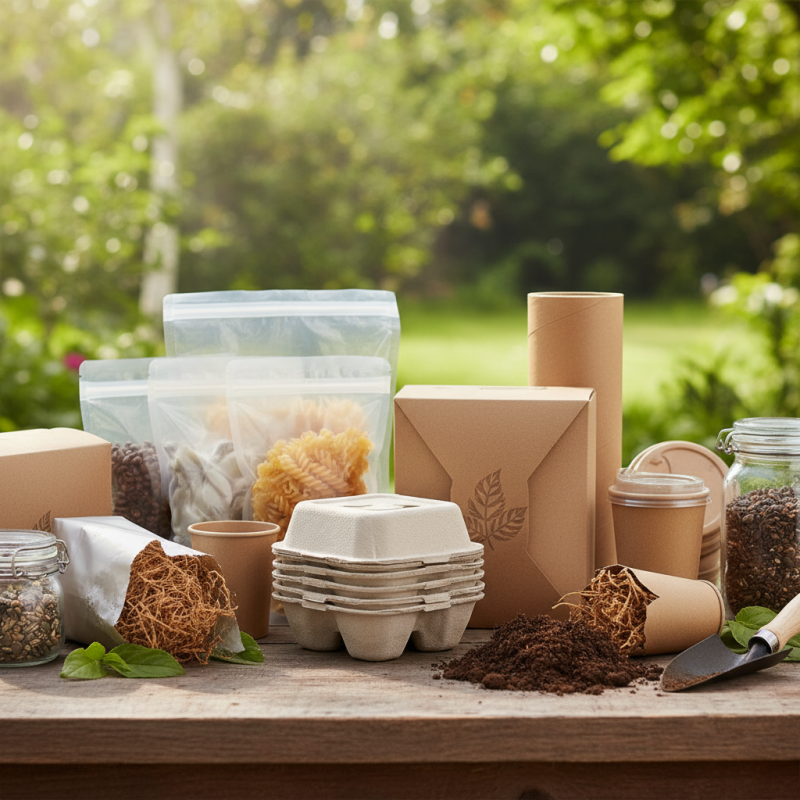
Overview of Compostable Packaging and Its Importance
Compostable packaging plays a crucial role in reducing waste. As consumers become more eco-conscious, demand for sustainable materials rises. Compostable options break down naturally, minimizing landfill waste. They return nutrients to the soil, promoting a healthier environment.
Many businesses are exploring this transition. However, transitioning to compostable materials isn’t always straightforward. Some materials may not decompose effectively in certain conditions. It's essential to understand local composting facilities and their requirements. Awareness of how different materials behave is key.
Tips: Look for certifications that indicate a product's compostability. Conduct tests in your local composting environment to see how materials perform. Additionally, educate your team about composting guidelines to maximize the benefits of using these materials. Continuous improvement and adapting to challenges foster better sustainability practices.
Top 10 Compostable Packaging Materials for Global Buyers
| Material | Source | Biodegradation Time | Applications | Benefits |
| PLA (Polylactic Acid) | Corn Starch | 6 months - 2 years | Food packaging, bags | Renewable, low carbon footprint |
| PBAT (Polybutylene Adipate Terephthalate) | Petrochemical | 6 months - 1 year | Waste bags, films | Good flexibility, compostable |
| PHA (Polyhydroxyalkanoates) | Microbial fermentation | 3 - 6 months | Packaging, medical devices | Biodegradable in marine environments |
| Cellulose | Wood pulp | 3 - 4 months | Wraps, films, bags | Natural, compostable |
| Mushroom Packaging | Mushroom mycelium | 30 - 90 days | Protective packaging, cushioning | Renewable, biodegradable |
| Bagasse | Sugarcane waste | 3 - 6 months | Food containers, plates | Waste-to-resource, compostable |
| Corn Starch | Corn grain | 3 - 6 months | Disposable utensils, packaging | Biodegradable, low emissions |
| CPLA (Crystalline PLA) | Corn starch | 6 months - 1 year | Hot cups, food service items | Superior thermal properties |
| Wheat Straw | Wheat byproduct | 3 - 6 months | Food containers, bowls | Sustainable, compostable |
Criteria for Evaluating Compostable Packaging Materials
When evaluating compostable packaging materials, several key criteria come into play. The biodegradability of a material is paramount. It should decompose efficiently in a composting environment, returning nutrients to the soil. Materials that take years to break down may not meet the eco-friendly promise they sell. Consider the organic content; it should be primarily derived from renewable resources, enhancing its sustainability profile.
Another essential factor is the certification and testing behind the materials. Reliable certifications indicate that a product meets specific compostability standards. Look for labels that confirm compliance with regulatory guidelines. Transparency in sourcing and manufacturing processes also matters. Packaging produced in ethical conditions typically signals a commitment to sustainability.
While many materials make bold claims, not all live up to them. Identifying genuine compostable options takes effort. Some products can mislead consumers through ineffective marketing. Scrutinizing the details can avoid being swayed by attractive packaging alone. As consumers and businesses navigate this evolving market, intentional decision-making will enhance positive environmental impact.
Top Natural Fibers Used in Compostable Packaging Solutions
Natural fibers are gaining traction as ideal materials for compostable packaging solutions. Research indicates that the global market for biodegradable packaging is expected to reach $400 billion by 2025. This growth is driven by increasing consumer awareness of environmental issues. Natural fibers, such as jute, hemp, and bamboo, stand out for their sustainability. Jute, for example, boasts a low carbon footprint and is biodegradable within a few months.
Hemp is another strong contender, known for its durability and high yield per acre. The USDA reports that hemp can produce twice as much fiber as cotton on the same land. Bamboo, with its rapid growth rate, can be harvested annually without replanting. These fibers not only decompose but also enrich the soil, enhancing the circular economy.
Tips: When selecting compostable packaging, prioritize fibers sourced from sustainable farms. Look for certifications to ensure that the materials meet compostability standards. Furthermore, consider the end-of-life options for your packaging to maximize environmental benefits. Always stay informed about new materials and innovations in this evolving field. Keeping abreast of industry reports can help in making informed decisions that align with eco-friendly practices.
Innovative Bioplastics Leading the Compostable Packaging Market
Innovative bioplastics are transforming the compostable packaging market. The global market for bioplastics is projected to reach $28 billion by 2026, growing at a CAGR of 15% from 2021. This growth indicates increased consumer demand for sustainable options. Many companies are now turning to materials like polylactic acid (PLA) and polyhydroxyalkanoates (PHA) as alternatives to traditional plastics.
Research highlights that compostable packaging reduces landfill waste. In 2022, it was reported that compostable packaging could reduce greenhouse gas emissions by up to 50% compared to conventional plastic. Moreover, 60% of consumers prefer products with eco-friendly packaging. Brands that adopt biodegradable materials resonate better with environmentally-conscious customers. Yet, there is a notable gap in consumer understanding. Many still equate compostable and recyclable packaging.
Despite advancements, challenges remain. The infrastructure for industrial composting is lacking in several regions. This creates confusion about proper disposal methods. Moreover, bioplastics can be more expensive to produce, hindering widespread adoption. As the market continues to evolve, addressing these issues will be crucial for the future of compostable packaging.
Top 10 Compostable Packaging Materials
Future Trends and Challenges in Compostable Packaging Materials
Compostable packaging has emerged as a vital solution in the fight against plastic pollution. According to a recent report by Smithers, the global market for compostable packaging is projected to reach $12 billion by 2027. This growth stems from increased awareness of environmental issues among consumers and companies alike. However, challenges still loom large.
The production process of compostable materials often requires significant resources. Materials like PLA and PBAT are popular, but sourcing them sustainably can be hard. A significant portion of compostable packaging ends up in standard waste streams. Such mismanagement complicates composting efforts. In fact, only about 20% of compostable products are effectively processed in industrial composting facilities.
Moreover, the lack of consumer knowledge on the proper disposal of these materials remains a barrier. Research by the Biodegradable Products Institute shows that only 50% of consumers understand compostable packaging correctly. This indicates a clear need for better education and clear labeling. Companies must prioritize transparency to enhance consumer trust and participation.
