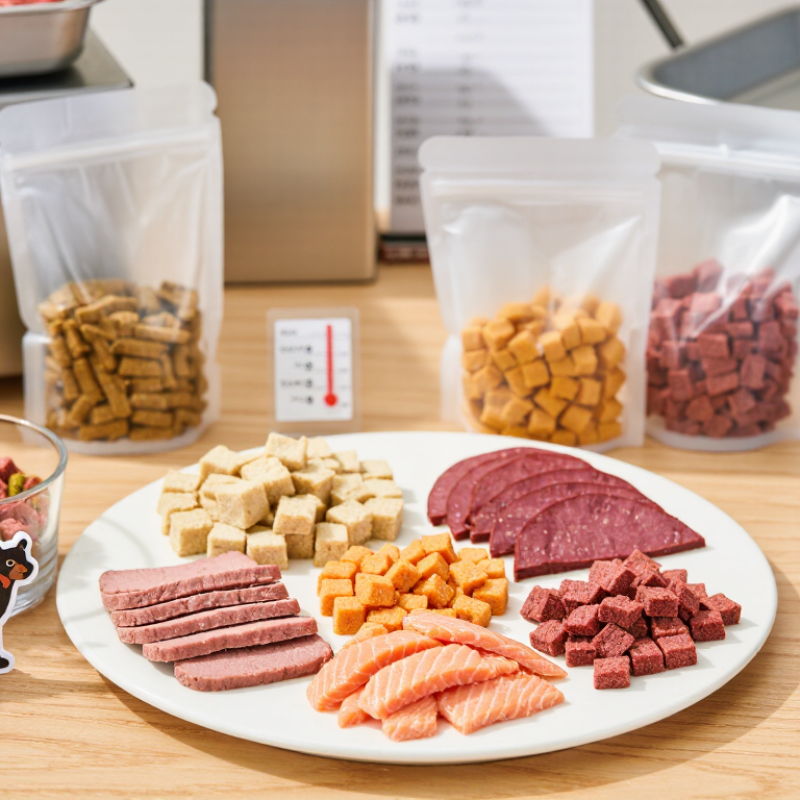
| Raw Material Quality | Uses clearly identified animal proteins or single-source ingredients with documented supplier controls. | Ingredient specifications, supplier approval records, certificates of analysis, and lot-level documentation. | Supports consistent taste, nutrition, traceability, and product safety. |
| Freeze-Drying Technology | Controls freezing, vacuum drying, shelf temperature, drying time, and final moisture throughout production. | Process records, equipment calibration logs, moisture or water-activity test results, and batch-release procedures. | Proper lyophilization helps preserve product structure while reducing available water for microbial growth. |
| Food Safety Management | Operates a documented preventive food-safety system based on hazard identification and critical control management. | HACCP plan, GMP procedures, sanitation records, corrective-action reports, and internal audit documentation. | Reduces biological, chemical, and physical risks during processing and packing. |
| Third-Party Certification | Maintains certifications relevant to the target market rather than relying only on self-declared claims. | Current certificates, issuing-body information, audit scope, facility address, and validity dates. | Independent audits provide additional assurance that documented systems are implemented. |
| Microbiological Testing | Tests finished products and, where appropriate, raw materials for relevant microbial hazards. | Recent laboratory reports covering indicators such as total plate count, yeast and mold, Salmonella, and other market-specific requirements. | Confirms that products meet defined safety specifications before shipment. |
| Nutritional Accuracy | Uses formulation controls and laboratory verification for declared analytical components. | Guaranteed-analysis specifications and laboratory results for protein, fat, fiber, moisture, and ash where applicable. | Helps buyers create accurate labels and assess suitability for different feeding programs. |
| Additive and Allergen Control | Clearly identifies preservatives, flavorings, processing aids, and potential cross-contact allergens. | Full ingredient declarations, allergen-control procedures, change-control records, and product specifications. | Improves label transparency and helps manage dietary sensitivities. |
| Traceability and Recall Readiness | Links finished goods to ingredient lots, production dates, packaging materials, and shipment records. | Batch codes, one-step-back and one-step-forward records, mock-recall results, and retention-sample procedures. | Enables faster investigation and targeted action if a quality issue occurs. |
| Packaging and Moisture Protection | Uses packaging designed to limit moisture and oxygen exposure after freeze-drying. | Packaging specifications, seal-integrity checks, barrier-material details, storage instructions, and transport testing. | Protects texture, palatability, shelf stability, and product appearance. |
| Shelf-Life Validation | Bases the expiry period on documented stability work rather than an unsupported marketing claim. | Real-time or accelerated stability data, storage conditions, retained samples, and expiry-date methodology. | Helps distributors and retailers plan inventory with lower quality risk. |
| Private-Label Capability | Can manage formulation, packaging, labeling, sampling, and production under a documented approval process. | Sample-development workflow, artwork approval records, minimum-order information, and change-notification procedures. | Supports customized products while reducing errors during commercialization. |
| Export and Regulatory Support | Provides documentation aligned with the destination country’s pet-food, labeling, import, and customs requirements. | Product dossiers, ingredient statements, health or veterinary documents where required, export records, and compliant label files. | Reduces customs delays and helps buyers meet local market obligations. |
| Quality Consistency | Controls piece size, color, odor, texture, net weight, and batch-to-batch variation using defined specifications. | Finished-product inspection records, sampling plans, nonconformance reports, and corrective-action effectiveness checks. | Consistent products improve customer confidence, retail presentation, and repeat purchasing. |