Archives


Top 10 Garlic Powder Packet Suppliers for Global Buyers

Garlic Powder Packets look simple, but reliable sourcing depends on details buyers can verify. A sachet must protect aroma, pour cleanly, and stay consistent across thousands of servings. The right supplier can support all three. The wrong one may leave buyers chasing batch records or unclear specifications.

This guide compares ten suppliers for global buyers, focusing on product consistency, packaging options, documentation, production capacity, and communication. “A dependable packet starts with dependable process control,” says fictional procurement specialist Mara Chen, whose quote is included as an illustrative editorial comment, not a sourced industry statement. Buyers should still request current specifications, sample packets, and relevant quality records before making a decision.

Small details matter. Check the net weight printed on each sachet. Ask how suppliers manage moisture and protect the powder during storage. Compare lead times, minimum order quantities, and the clarity of export documents. A glossy product sheet is not proof of consistent production. And a low price can hide costs in freight, delays, or rejected batches.

There is no universal best supplier. Needs vary by market, serving format, and purchasing volume. This ranking is a starting point, not a substitute for due diligence. A few questions may expose gaps. That is useful. The following list helps buyers identify promising partners and make comparisons with practical evidence, rather than packaging claims alone.
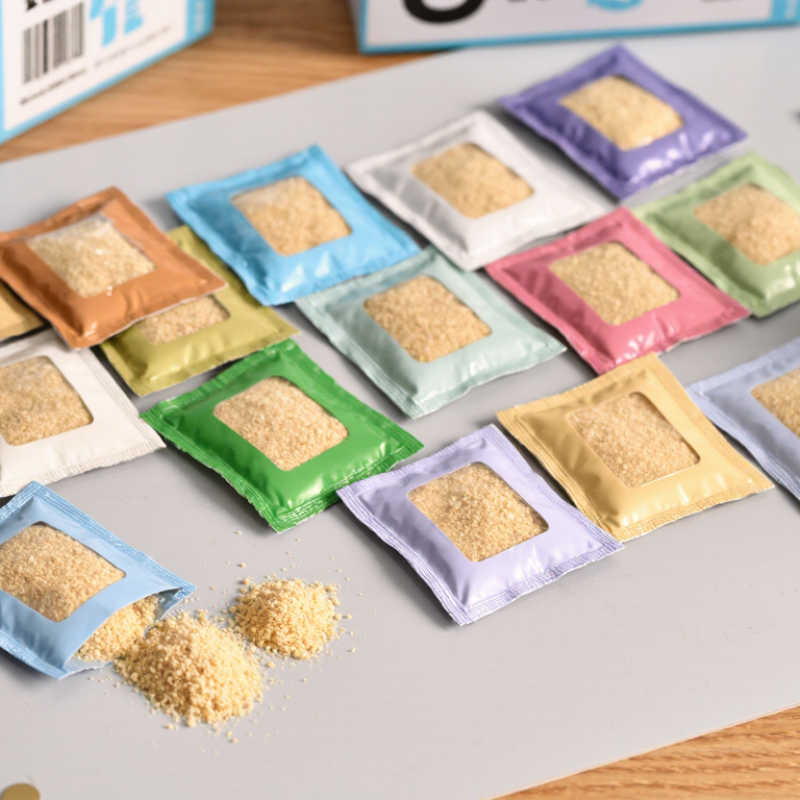
Top 10 Garlic Powder Packet Suppliers for Global Buyers

Garlic Powder Packets: Product Types, Uses, and Packaging Formats

Garlic powder packets are available in fine, standard, and coarse grinds. Fine powder disperses quickly in sauces and dressings, while coarser granules add visible texture to rubs and seasoning blends. Some suppliers also offer roasted garlic powder, which brings a mellower, toasted flavor. Check the ingredient specification and grind size; “garlic powder” alone may not tell you how it performs.

Small portions. Less measuring. Single-use sachets suit restaurant counters, meal kits, and travel food, while larger packets work for kitchens preparing several servings. The powder can season soups, marinades, vegetables, or snack mixes. Flavor strength varies with garlic quality and drying conditions, so test a sample in the actual recipe before setting a standard dose. Aroma is useful, but it is not a complete quality check.

Common formats include pillow sachets, slim stick packs, and multi-serving pouches. Foil or other barrier laminates can help limit moisture exposure, while carton packs make individual packets easier to store and dispense. Ask suppliers about fill-weight consistency, seal integrity, batch details, and recommended storage conditions. A neat packet is not proof of a good product. The packaging and powder both deserve a close look.

How to Evaluate Global Garlic Powder Packet Suppliers

When evaluating global garlic powder packet suppliers, look beyond the quoted price. Ask for a recent product specification showing particle size, moisture range, ingredients, and shelf life. Check whether the powder’s color and aroma stay consistent across samples. Small differences matter. A sharp, toasted smell in one batch and a flat smell in another may signal uneven raw material or processing.

Request sample packets and compare the stated fill weight with a scale. Inspect seals after gently squeezing each sachet; powder around the seam can indicate weak packaging controls. Ask how the supplier tracks lots and handles customer complaints. Clear batch records make it easier to investigate quality issues. Request relevant test reports and confirm that their dates and product details match the item being quoted. For long-distance shipments, discuss moisture barriers, carton strength, and storage conditions, not just the packet design. Ask for evidence.

Communication is part of the evaluation, too. Send a short list of technical questions and note whether answers are specific, timely, and supported by documents. A polished brochure is not proof of consistent production. If possible, review the facility through an independent audit or a live production tour. These checks take time, and they may still miss a problem. Begin with a manageable trial order, compare incoming packets against the approved sample, and record any variation before scaling up.

Top 10 Garlic Powder Packet Suppliers for Global Buyers - How to Evaluate Global Garlic Powder Packet Suppliers

No. Evaluation factor What to verify Buyer’s practical check Suggested weight
1 Food-safety management A documented food-safety system, hazard controls, sanitation procedures, and records for the facility handling the product. Review current audit or certification documents, confirm the site and product scope, and check corrective-action records. 15%
2 Product specification Written specifications for garlic content, appearance, aroma, flavor, particle size, moisture, and any permitted processing aids or additives. Compare the specification with your application and destination-market requirements; agree on test methods and acceptance limits before ordering. 15%
3 Microbiological controls Risk-based microbiological testing and preventive controls appropriate for a dried spice, including control of pathogens and hygiene indicators where applicable. Request recent, lot-linked results from a qualified laboratory and confirm that limits and methods meet your legal and customer requirements. 13%
4 Traceability and recall readiness Lot identification linking incoming garlic and processing records to finished product, shipment documents, and customers. Ask for a sample traceability record and evidence of a documented mock-recall or traceability exercise. 12%
5 Certification and audit scope Applicable food-safety certifications or independent audit reports, with valid dates and a scope covering the relevant production or packing site. Verify documents with the issuing organization where possible. Treat regulatory registrations as registrations, not as product endorsements. 10%
6 Batch testing and COA A certificate of analysis (COA) linked to the lot, with results for agreed quality and safety parameters and clear analytical methods. Check that the COA identifies the product, lot, test date, laboratory, methods, and results; define any independent verification testing. 10%
7 Sachet and outer packaging Food-contact packaging suitable for dry seasoning, with an appropriate moisture barrier, secure seals, and agreed sachet weight and case configuration. Review packaging specifications and samples; confirm food-contact compliance documents, seal integrity, and protection during shipping. 8%
8 Export and labeling readiness Ability to provide accurate commercial and shipping documents and to support labeling requirements for the destination market. Confirm required certificates, origin information, lot coding, ingredient declarations, language, and importer-specific documentation before production. 7%
9 Capacity and delivery reliability Available production and packing capacity, realistic lead times, order minimums, and a process for communicating delays or supply disruptions. Request a production schedule for the requested format and volume; check delivery performance using references or shipment records. 5%
10 Commercial terms and support Transparent pricing, payment terms, Incoterms, sample policy, complaint handling, and documented procedures for product changes. Compare like-for-like quotations, clarify who bears freight and inspection costs, and agree on response times and change-control requirements. 5%
Total suggested evaluation weight 100%

Suggested weights are a buyer’s evaluation framework, not supplier ratings. Set product limits and documentation requirements according to the intended use and destination market.

Profiles of Ten Garlic Powder Packet Suppliers for International Buyers

A practical review of garlic powder packet suppliers should compare manufacturing roles, not just quoted prices. An origin processor may offer strong traceability from dried cloves to powder, while a seasoning factory can blend consistent particle sizes for sachets. A private-label co-packer suits buyers who need custom artwork and pack weights. Check whether its sealing line handles your chosen film. Small details matter.

A foodservice packer may specialize in single-use portions for restaurants and meal kits. An organic-focused supplier should provide current certificates and clear batch records. A bulk exporter can coordinate larger shipments, though packet production may be subcontracted. Ask who controls the final inspection. A regional miller may offer fresher production and direct communication, but its export experience can vary. A spice-house often carries several grades, making sample comparisons useful.

Contract packers can adapt formats, yet setup charges and minimum orders may be higher. A trading distributor may combine products from several factories, which can simplify purchasing but blur responsibility for defects. Request a recent specification sheet, allergen statement, sample packets, and production lead time from each candidate. Taste the powder in a simple broth, too. One limitation: samples cannot prove long-term consistency. Check how suppliers handle complaints, retain batch samples, and protect sachets from moisture during transit.

Garlic Powder Packet Suppliers: Product Benchmark

Macronutrient content in generic garlic powder per 100 g (grams). This product benchmark is not supplier-specific.

Values are from the USDA FoodData Central entry for garlic powder. Total carbohydrates include fiber and sugars, so these categories are not additive.

Comparing Supplier Capabilities, Certifications, and Minimum Orders

Choosing among the top garlic powder packet suppliers means checking more than price. Ask whether each supplier can provide consistent particle size, a clear garlic aroma, and sealed packets that resist moisture. Request samples from a recent production lot, not only a polished presentation sample. A 1-gram sachet may suit restaurant tables, while retail packs often need different artwork and case quantities. Small details matter.

Compare food safety certifications by checking their current validity, issuing body, and coverage of the actual production site. A certificate alone does not confirm that every packet meets your needs. Ask for lot-specific test records, ingredient specifications, allergen handling details, and traceability procedures. Also compare packaging options, print quality, lead times, and how suppliers handle defects. Minimum orders can vary by packet size, film, and custom printing; get separate written quotes for standard and customized packs. Some capable suppliers may still be impractical for a first order. That tradeoff deserves a second look.

Tips: Send every supplier the same checklist and target volume. Confirm whether samples, printing plates, and freight count toward the minimum order. Keep one sealed sample from each approved lot for comparison. If answers are vague, pause. A lower quote is not automatically a better fit.

Global Sourcing, Shipping, and Quality Control Considerations

Global buyers comparing garlic powder packet suppliers should begin with a written specification, not a price sheet. Define garlic origin, particle size, flavor profile, packet weight, and acceptable variation. Ask for recent lot documentation and a sealed sample from the same production line. A sample can look convincing, yet differ after storage. Small details matter.

Shipping conditions can quietly change product performance. Garlic powder absorbs moisture and may cake inside thin or poorly sealed sachets. Request packaging-layer details, seal-integrity checks, and carton dimensions before booking freight. For long sea routes, review container cleanliness, humidity exposure, transit time, and any use of desiccants with the supplier. Keep a retain sample from each lot. It helps when arrival results differ from pre-shipment checks. Routes change, and estimates are not guarantees.

Quality control should connect supplier records with independent checks where risk justifies the cost. Compare batch codes, net weights, sensory results, and microbiological reports against agreed limits. Confirm labels and import documents match the destination market’s requirements; these vary by country and product format. A pre-shipment inspection may catch carton damage, but cannot prove every sachet is sound. I would not treat one clean report as proof of consistent production. Ask how deviations are recorded, who approves corrective action, and whether replacement stock can be traced to a new lot. The paperwork is useful, but it is not the product.

Close
Enter your email address to receive special offers!
linkedin facebook pinterest youtube rss twitter instagram facebook-blank rss-blank linkedin-blank pinterest youtube twitter instagram