Choosing a Lace Brassiere can give your brand a distinctive balance of elegance, comfort, and commercial appeal. Delicate floral patterns create an immediate visual impression, while carefully selected fabrics support daily wear. Customers notice the difference in details. Soft elastic, clean stitching, and smooth lining can shape their entire experience.
For brands, lace offers broad design flexibility. It can create romantic, modern, minimal, or luxurious collections. Experienced product teams usually evaluate lace density, stretch recovery, cup support, and colorfastness before production. These details matter more than attractive sketches. A beautiful sample may still feel uncomfortable after several hours. That is an important lesson.
Practical testing should guide every decision. Check the brassiere under natural light, during movement, and after repeated washing. Inspect the edges closely. Rough seams can irritate skin. Loose threads can damage customer trust. Reliable suppliers should provide material information, consistent sizing, and clear quality records. Brands should also verify labeling and safety requirements in every target market.
A Lace Brassiere is not automatically premium. Design must work with construction. Fit remains personal, and one pattern may not suit every body shape. This limitation deserves honest attention. Offering adjustable straps, varied cup sizes, and thoughtful support can improve confidence and reduce returns. With careful development, lace becomes more than decoration. It becomes a recognizable product signature, supported by comfort, quality control, and responsible brand decisions. Small improvements may seem ordinary, yet customers often remember them.
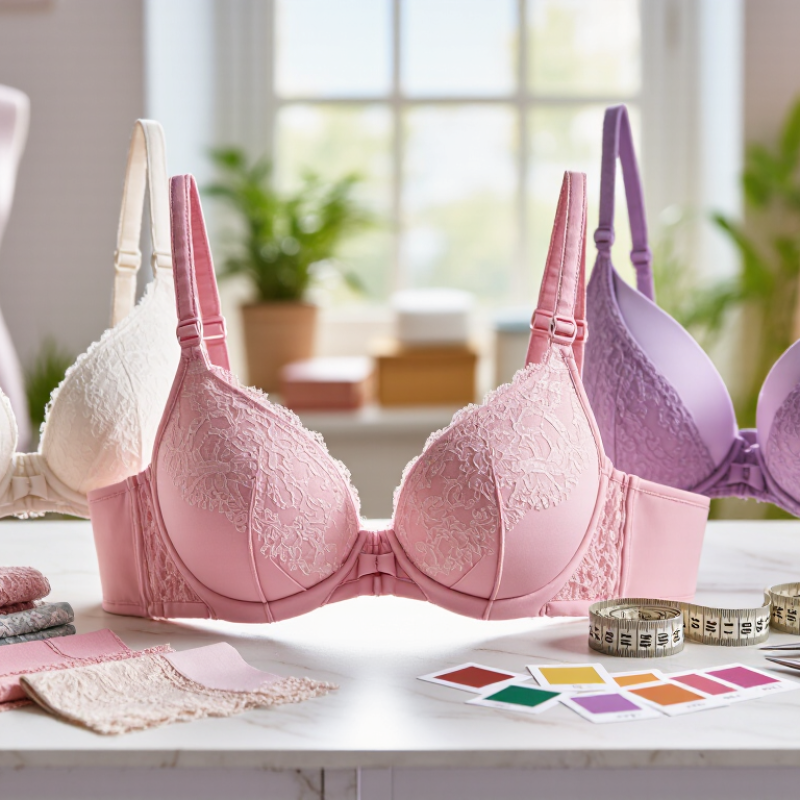
A lace brassiere combines a supportive bra structure with decorative lace coverage. It may use stretch lace, rigid lace, or layered textiles. The lace creates texture, while the internal construction determines comfort and stability. In product development, I treat lace as a design surface, not the entire support system. That distinction matters.
Its structure usually includes cups, a center bridge, a cradle, side wings, straps, and a fastening system. Cups may contain lining, seams, padding, or an underwire. Soft elastic along the underband helps the brassiere stay close to the body.
Side boning can improve shaping, but it may feel restrictive for some wearers. Fit testing is essential. A beautiful sample can still press, shift, or lose support after movement.
Key design features include lace scale, motif placement, edge finishing, and controlled transparency.
Large floral motifs can flatter fuller areas, while narrow scalloped edges suit necklines and arm openings. Designers should check lace stretch in several directions. They should also test recovery after washing and repeated wear. Small details count.
Rough seams, weak strap adjusters, or poorly graded cups can reduce trust quickly. I have seen delicate lace look impressive in photographs but fail during basic fitting. That is a useful warning. Reliable development requires size-set samples, skin-contact checks, and clear measurements before production.
Lace brassieres respond to changing preferences around comfort, expression, and everyday versatility. Shoppers often want delicate details without sacrificing support. Soft stretch lace can follow body movement, while adjustable straps help create a more personal fit. However, lace alone does not guarantee comfort. Rough seams, unstable bands, or weak lining can quickly disappoint during a full day of wear.
Current fashion trends favor lingerie that feels visible, adaptable, and less restricted by old styling rules. A lace brassiere can work beneath a loose shirt, under a sheer layer, or as part of a coordinated homewear look. Neutral shades suit quiet wardrobes, while rich colors create stronger visual interest. Small details matter. A clean edge, balanced cup shape, and secure hook closure can change the entire wearing experience.
Fit testing should include sitting, walking, and lifting the arms. These simple checks reveal pressure points that a studio photograph may hide. Fabric recovery also deserves attention after repeated washing. A beautiful sample can still lose its shape too soon. That is an easy mistake to make. Product teams should compare lace softness, breathability, opacity, and support across different body sizes. Not every consumer wants a romantic appearance; some prefer practical coverage with only a hint of lace. Listening to that difference makes the design more credible and useful.
Lace brassieres can give a product line a softer, more considered character. Their texture adds visual depth, even when displayed beside simple jersey or cotton styles. In my product development experience, shoppers often notice the fabric before they inspect the construction. That first impression can support a higher perceived value. It can also create useful variation across a coordinated collection.
The business benefit is flexibility. Lace can appear on everyday silhouettes, occasion pieces, or lightly lined designs. Different patterns allow a brand to serve several preferences without changing the entire product structure. A narrow floral lace may suit minimal packaging, while a wider geometric design can feel more directional. Comfort still matters. Check the edge finish, lining, strap adjustment, and fiber composition during sampling. A beautiful cup that scratches the skin will not build repeat sales. Not every sample works.
Reliable development also requires testing. Review stretch recovery after repeated wear and washing. Inspect seams under tension, especially near the underband and hook area. Ask suppliers for clear material details and consistent color references. Small shade differences can become obvious across a retail display. Fit testing should include varied body shapes, not only one model size. This step takes time, but it reveals pressure points that photographs cannot show. Lace may snag more easily than plain fabric, so packaging and care instructions deserve attention. That detail is easy to overlook. A thoughtful lace brassiere line balances appearance, comfort, durability, and realistic production costs.
| Product Dimension | Verified Product Fact | Potential Brand Benefit | Recommended Product-Line Application | Evidence Basis |
|---|---|---|---|---|
| Visual differentiation | Lace is an openwork textile structure that can create decorative patterns, texture, and partial transparency. | Helps create a more distinctive appearance than plain, fully covered fabric styles. | Use lace panels, lace overlays, scalloped edges, or coordinated lace details across multiple silhouettes. | Basic textile-construction terminology and established lace-design characteristics. |
| Material versatility | Lace can be produced from different fibers, including polyamide, polyester, cotton, and elastane-containing blends. | Allows product developers to balance appearance, stretch, softness, durability, and price targets. | Offer separate constructions for everyday comfort, fashion-led collections, and high-stretch fits. | Common fiber classifications used in apparel labeling and textile manufacturing. |
| Stretch and fit support | Elastane is a highly extensible fiber commonly blended with other fibers to provide stretch and recovery. | Supports closer fitting designs when pattern engineering, elastics, and sizing are correctly developed. | Use stretch lace in wings, side panels, back bands, or flexible cup overlays, with fit testing across sizes. | Fiber-performance properties of elastane and standard lingerie construction practices. |
| Comfort engineering | Comfort depends on fiber content, fabric weight, seam placement, elastic pressure, edge finishing, and garment fit—not on lace alone. | Creates an opportunity to position lace products around comfort when supported by tested construction details. | Pair lace with soft linings, smooth elastics, bonded edges, or strategically placed opaque panels. | Apparel fit and comfort depend on the complete garment system and wearer evaluation. |
| Breathability potential | The open structure of many lace fabrics can allow more air exchange than dense, non-openwork constructions, although performance varies by design and lining. | Can support lightweight product concepts and warm-weather assortments without making unsupported universal claims. | Use lighter lace constructions for selected panels and validate air permeability on finished garments. | Fabric air-permeability principles; actual results require laboratory testing. |
| Collection coordination | Lace patterns, colors, and trims can be repeated across bras, briefs, slips, camisoles, and complementary garments. | Makes it easier to build coordinated capsule collections and matching-set offers. | Develop shared lace, color, and trim specifications across core and seasonal styles. | Standard product-development and merchandising practice for coordinated apparel collections. |
| Design flexibility | Lace is available in varied pattern scales, widths, edge finishes, densities, and stretch levels. | Supports multiple visual directions within one material family, from minimal to decorative. | Create a tiered assortment using different lace scales, coverage levels, and construction details. | Common lace specifications used in apparel sourcing and product development. |
| Care and durability planning | Durability and care requirements vary with fiber type, lace construction, dyes, elastics, trims, and finishing processes. | Encourages clear care communication and quality testing before commercial launch. | Test dimensional stability, colorfastness, snag resistance, stretch recovery, and laundering performance. | Textile-care labeling principles and standard apparel quality-control procedures. |
| Responsible-material options | Lower-impact material choices may include certified recycled fibers or preferred natural fibers, subject to certification and supply-chain verification. | Provides an opportunity to develop more responsible options without treating lace itself as proof of sustainability. | Specify verified fiber content, approved certifications, traceability documents, and material-level claims. | Certification and chain-of-custody requirements vary by material and standard. |
| Quality and compliance control | Finished brassieres require checks for fiber labeling, colorfastness, dimensional stability, component safety, fit, and restricted substances according to the target market. | Reduces avoidable quality and compliance risks while protecting the intended product positioning. | Create a pre-production checklist covering materials, trims, testing, labeling, and size-set approval. | Applicable textile-labeling rules, restricted-substance requirements, and apparel testing practices differ by market. |
Note: Product performance depends on the complete garment construction, material specification, manufacturing quality, and care instructions. Validate all functional or sustainability claims through appropriate testing and documentation before publication.
Lace brassieres can give a product line a softer, more detailed appearance. Their value depends on more than visual appeal. In sample reviews, I check lace recovery, edge softness, and how the fabric reacts after washing. Nylon, polyester, and elastane blends offer different results. Nylon lace often feels smooth, while elastane supports stretch and shape retention. A breathable lining can reduce irritation against sensitive skin. Metal sliders and hooks should have smooth edges and secure attachment points.
Quality needs measurable checks. Suppliers should provide fiber content records and test reports for colorfastness, seam strength, dimensional stability, and restricted substances. These documents improve traceability, although paperwork alone cannot guarantee a comfortable garment. Physical fitting remains essential. I inspect pressure beneath the band, cup coverage, strap adjustment, and lace placement. A beautiful sample may still pinch after several hours. That part is easy to miss.
Tips: Test the brassiere on different body shapes, not only one model. Wash samples repeatedly and compare stretch recovery. Run a gentle finger test along every seam and closure. Keep notes with measurements, fabric batches, and wearer feedback. Some early assumptions will be wrong. That is useful. A revised pattern may improve comfort more than a higher-cost lace.
Choosing lace brassieres can give a brand tactile appeal, but sourcing needs more than attractive swatches. Begin with a written product brief covering lace composition, stretch recovery, lining, wire shape, and size range. Request production samples, not only photographs. Check each garment after repeated gentle washing. Look for curled edges, loose threads, fading, and reduced support. Ask suppliers about fiber percentages, dye processes, factory capacity, and inspection procedures. A small pilot order can reveal inconsistent cup shaping or delayed trims before a larger commitment. Keep test records with dates, measurements, and approval notes. This makes supplier decisions easier to defend.
Customization should solve a customer problem. A softer lining may improve comfort, while reinforced side panels can stabilize fuller bust sizes. Adjusting strap width, hook spacing, and cup depth often matters more than adding decoration. Request graded samples across several sizes. One successful fit sample is not enough. It can hide problems in the size curve. Market positioning should connect design, quality, and price. Delicate eyelash lace may suit occasion-led collections, while durable stretch lace supports everyday wear. Use clear product claims supported by material records and wear testing. Avoid calling every style luxurious. Premium? Not always. Show close-up lace texture, seam finishing, packaging details, and realistic fit information. Review returns and customer comments after launch. They may expose a gap between the intended image and actual comfort. Fit matters.
Sourcing, customization, and market positioning benchmarks for planning a lace-brassiere collection.
Lace-brassiere programs typically require more development time than standard basic styles because of lace placement, cup construction, trims, and fit approval. The benchmark ranges below support sourcing decisions: allow approximately 2–4 weeks for sample development, 6–10 weeks for bulk production, and 4–8 weeks for repeat orders after materials and specifications are approved. Exact timing depends on order quantity, material availability, customization level, and supplier capacity.
Planning benchmark ranges for apparel production; actual supplier lead times and minimum order quantities should be confirmed during quotation.