Archives


Why Choose Reusable Canvas Tote Bags for Your Business?

Choosing the right packaging can shape how customers remember your business. Reusable Canvas Tote Bags offer a practical, visible way to carry products while extending your brand beyond the checkout counter. Unlike disposable packaging, a well-made canvas bag may return to the market, office, gym, or weekend trip.

Their value depends on thoughtful details. A sturdy cotton canvas, reinforced handles, and clean stitching can support regular use. Handle length matters too. Short handles suit hand-carrying, while longer ones rest more comfortably on the shoulder. Printing also deserves professional attention. A simple logo usually remains clearer than a crowded design, especially after repeated washing and folding.

Small choices create real differences.

Businesses should examine fabric weight, colorfastness, production quality, and supplier communication before ordering. Samples can reveal loose threads, uneven seams, or ink that feels too heavy. These problems are easy to overlook in digital proofs. They become obvious when a customer holds the finished bag.

Reusable Canvas Tote Bags can support promotional campaigns, retail packaging, event materials, and customer loyalty programs. However, they are not automatically sustainable. A bag used once does not deliver its full environmental potential. Businesses should encourage repeat use through practical sizing, durable construction, and clear care instructions.

There is room for improvement.

A careful purchasing decision balances brand appearance, customer comfort, expected usage, and realistic budgets. With credible suppliers and transparent product information, canvas totes can become useful brand assets rather than short-lived promotional items.
Why Choose Reusable Canvas Tote Bags for Your Business?

What Are Reusable Canvas Tote Bags?

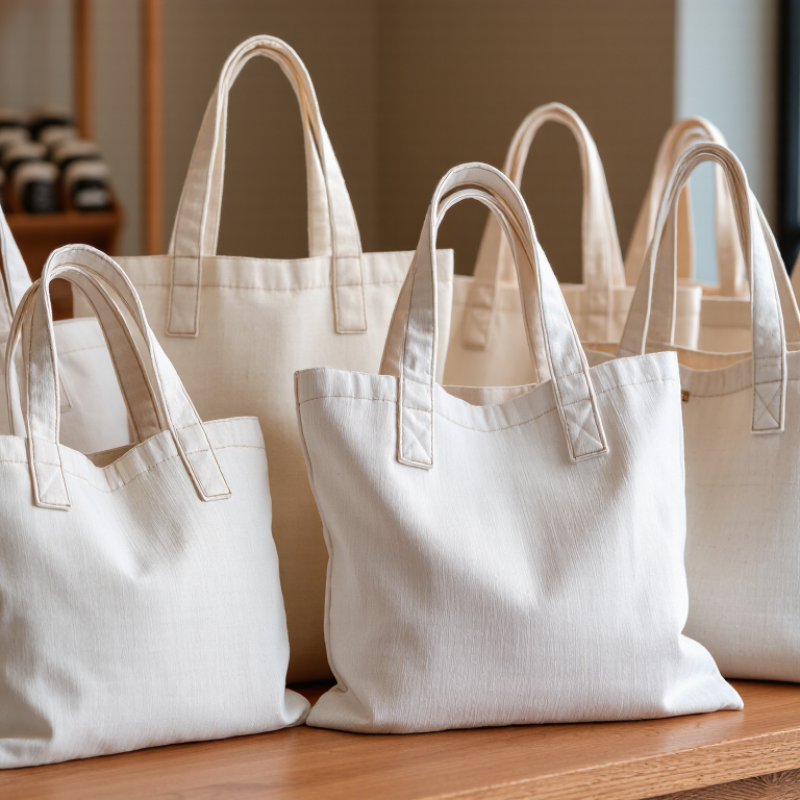
Reusable canvas tote bags are sturdy carry bags made from woven cotton or other durable fibers. “Canvas” describes the fabric’s dense, plain weave. It feels thicker than ordinary shopping cloth and usually has reinforced handles, boxed corners, and a broad base.

In daily business use, a canvas tote can carry books, clothing, packaged food, or event materials without feeling flimsy. Its flat surface also provides space for a simple logo, message, or seasonal design. Customers often fold these bags beside a desk or keep them in a car for regular errands. That repeated use is the main difference from a thin, single-use bag.

Still, canvas is not automatically sustainable. Cotton farming can require substantial water, and producing a heavy bag may use more material. A tote needs repeated use to justify its environmental cost. It may also collect dust, shrink after hot washing, or become uncomfortable when overloaded. Those details are easy to overlook. Businesses should check fabric weight, stitching quality, handle length, and cleaning instructions before ordering. Clear information about fiber content and production standards also supports more trustworthy purchasing decisions. A practical bag is useful, but only when customers actually want to carry it again.

Why Choose Reusable Canvas Tote Bags for Your Business? - What Are Reusable Canvas Tote Bags?

Data Dimension Typical Reusable Canvas Tote Bag Business Relevance Practical Consideration
Definition A reusable carry bag made from woven canvas, commonly cotton or a cotton blend. Provides a durable alternative to disposable shopping and promotional bags. The exact strength and finish depend on the fabric weight, stitching, handles, and construction.
Common Fabric Weight Approximately 8–16 oz per square yard for many everyday tote designs. Heavier fabric generally supports a more structured appearance and repeated use. Fabric weight is only one indicator; seams and handles also affect load performance.
Typical Capacity Approximately 10–20 liters for common medium-sized tote formats. Suitable for apparel, books, packaged goods, groceries, event materials, and personal items. Actual capacity varies with bag dimensions, gussets, closure design, and handle length.
Expected Reuse Pattern Designed for repeated use rather than one-time disposal. Repeated customer use can extend the visibility of a printed business message. Actual service life depends on load, washing, moisture, abrasion, and storage conditions.
Typical Handle Length Approximately 20–30 inches, including short-handle and shoulder-carry styles. Longer handles improve carrying comfort and allow hands-free shoulder use. Handle attachment and reinforcement should be checked when selecting a high-load design.
Customization Options Common options include screen printing, embroidery, heat transfer, labels, pockets, and gussets. Supports promotional campaigns, retail packaging, event merchandise, and employee kits. Artwork durability depends on the decoration method, ink, thread, and care instructions.
Care and Cleaning Many cotton canvas bags can be spot-cleaned or washed according to the care label. A cleanable bag is more suitable for recurring use than packaging intended for disposal. Cotton may shrink or change shape; air drying and following the care label can reduce damage.
Brand Visibility Large, printable fabric panels provide visible space for logos, slogans, illustrations, or campaign messages. Customers can carry the bag in public places, creating additional exposure beyond the original transaction. Visibility depends on design quality, customer adoption, carrying frequency, and print durability.
Material Consideration Canvas is typically a woven textile; some products use conventional cotton, recycled fibers, or blended materials. Material selection can support packaging, merchandising, and sustainability communication goals. Environmental performance depends on fiber production, manufacturing, transport, use frequency, and end-of-life handling.
End-of-Life Options Depending on fiber content and local facilities, the bag may be reusable, repurposed, donated, or textile-recycled. A planned take-back or repurposing program can reinforce responsible-use messaging. Recycling availability differs by location, and mixed materials may limit textile-recycling options.
Best-Fit Business Uses Retail checkout bags, trade-show giveaways, conference kits, subscription packaging, and promotional merchandise. Combines functional packaging with a reusable promotional item. Choose size, fabric weight, decoration, and handle design according to the intended product and audience.

Note: Specifications are typical ranges for general-purpose canvas tote bags. Actual measurements, capacity, durability, care requirements, and environmental impacts vary by product design, material composition, manufacturing process, and use conditions.
How Do Canvas Tote Bags Support Business Branding?

Why Choose Reusable Canvas Tote Bags for Your Business?

Canvas tote bags turn everyday movement into repeated brand exposure. Customers carry them through offices, markets, campuses, and public transport. The logo appears in real situations, not only on a screen. According to the Advertising Specialty Institute’s 2023 Global Advertising Specialties Impressions Study, bags generated approximately 3,300 lifetime impressions on average. That reach can support brand recognition when the design remains clear and useful.

Branding works best when the bag reflects the customer’s routine. Use a readable logo, two or three brand colors, and a short message. Add a QR code only when it leads to a helpful page. Heavy canvas, reinforced handles, and an interior pocket can encourage longer use. Practical details matter. A beautiful bag may still fail if it tears after one shopping trip.

Canvas is not automatically a perfect environmental choice. Cotton cultivation requires water, energy, and transportation. The United Nations Environment Programme emphasizes that reuse must happen repeatedly to reduce environmental impact. Businesses should therefore explain care instructions and encourage continued use. They should also measure results, such as QR scans, event inquiries, and repeat visibility. This part is often overlooked. A logo alone cannot prove branding success.

What Environmental Benefits Do Reusable Tote Bags Provide?

Why Choose Reusable Canvas Tote Bags for Your Business?

What Environmental Benefits Do Reusable Tote Bags Provide?

Reusable canvas tote bags can reduce dependence on single-use shopping bags. One sturdy bag may serve customers through weekly errands, office commutes, and market visits. That repeated use keeps many disposable bags away from landfills, streets, and waterways.

The environmental value depends on actual behavior. A tote used once has limited benefit. A tote carried dozens of times performs much better. Durable stitching, strong handles, and washable fabric can support longer use. Businesses can encourage this habit by offering practical sizes and reminding customers to bring bags back.

Canvas also requires resources during production, including water, energy, and raw materials. It is not automatically a perfect green choice. Organic or recycled fibers may reduce certain impacts, but suppliers should provide clear material information. Printing methods matter too, especially when large designs use unnecessary ink. Choosing responsible production and avoiding excessive inventory can reduce waste before the bag reaches a customer.

Businesses can measure progress in simple ways. Track how many bags are distributed and ask whether customers reuse them. Some may prefer lighter bags, while others need reinforced bottoms for heavier goods. That feedback is useful. Environmental progress is rarely flawless, but careful design and repeated use can make each purchase more responsible.

How Can Businesses Choose the Right Canvas Tote Bag?

Choosing the right canvas tote begins with the job, not the artwork. A grocery retailer may need a wide base, reinforced seams, and handles that fit comfortably over a coat. An event organizer may prioritize compact folding and clear printing. Measure the intended load before requesting samples. Then test the bag with real products, not empty boxes.

Industry data adds caution. UNEP’s 2020 report on single-use plastic bags says cotton alternatives may require 50–150 uses to offset their impacts, depending on assumptions. That makes durability essential. Ask suppliers for fabric weight, stitching details, fiber content, and documented production information. Heavy canvas often lasts longer, but it also uses more material and may increase shipping weight. Bigger is not automatically better.

Textile Exchange’s Materials Market Report 2024 states that global fiber production reached about 124 million tonnes in 2023, with cotton representing roughly one-fifth. Businesses should therefore examine material efficiency, not only the word “reusable.” Request a pre-production sample and check handle attachment, seam strength, colorfastness, and shrinkage after washing. A simple load test helps: fill the bag with the heaviest items customers typically carry, then lift it repeatedly. It may fail. That is useful evidence, not wasted effort. Also compare the supplier’s minimum order, replacement policy, packaging, and delivery distance. Certifications can support credibility, but they do not replace physical testing or clear product records.

What Factors Affect Tote Bag Cost and Performance?

Reusable canvas tote bags can support business visibility, but cost and performance depend on several technical choices. Fabric weight matters. A 280 GSM cotton canvas feels stronger than a 140 GSM version, yet it requires more material, labor, and shipping space. Stitch density, reinforced handles, and boxed corners also increase durability and production costs.

Material selection deserves careful review. Textile Exchange’s Materials Market Report 2024 estimated global fiber production at 124 million tonnes in 2023. It projects production may reach 160 million tonnes by 2030. This growth makes fiber efficiency increasingly important. Conventional cotton is familiar and printable, while recycled fibers may reduce virgin-material demand. However, recycled content does not automatically guarantee better performance. Testing still matters.

Printing affects both price and daily usability. One-color screen printing usually costs less than full coverage or multiple placements. Dark fabric may require an underbase layer, adding ink and curing time. Bag size, order quantity, packaging, and delivery distance also change the final quotation. The U.S. Environmental Protection Agency reported 14.5 million tons of plastic bags, sacks, and wraps in municipal waste in 2018. Reuse can reduce replacement demand, but only when the bag survives repeated use. A weak handle defeats the purpose. A very cheap bag may look efficient on paper, yet fail after several shopping trips. That assumption needs testing. Requesting wash tests, load tests, material certificates, and print-rub evaluations creates more reliable purchasing decisions.

Why Choose Reusable Canvas Tote Bags for Your Business?

How fabric weight affects indicative unit cost, carrying capacity, and expected reuse potential

Heavier canvas generally improves strength and reuse potential, but it also increases material consumption, shipping weight, and unit cost. These figures are practical planning benchmarks for unbranded cotton canvas bags and should be confirmed with a supplier based on bag size, stitching, printing, order quantity, and finishing requirements.

Close
Enter your email address to receive special offers!
linkedin facebook pinterest youtube rss twitter instagram facebook-blank rss-blank linkedin-blank pinterest youtube twitter instagram