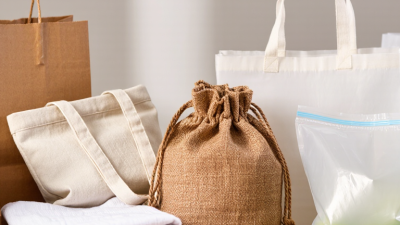
Choosing Eco Friendly Shopping Bags sounds simple until you compare materials, handles, and everyday use. A roomy tote may carry groceries well but feel bulky in a small purse. A lightweight bag folds neatly, yet weak seams can fail under heavy items. The label alone does not tell the whole story.
The right choice depends on how and where you shop. Consider what the bag is made from, how much it can carry, and whether you can clean it easily. Check the stitching, handle length, and closure before buying. Small details matter. A bag that stays by the door or in your car is more likely to be used than one left in a cupboard.
Environmental claims also deserve a careful look. Terms such as “recycled” or “natural” can describe materials, but they do not automatically prove that a product has a lower impact in every situation. Check the maker’s material details and care instructions, and think about how often you will reuse the bag. A durable option may suit frequent grocery trips, while a compact foldable bag may work better for errands. Neither choice is perfect for everyone. These ten tips will help you compare practical features and make a more informed decision, without expecting one bag to solve every environmental concern.
A shopping bag’s environmental impact starts before checkout. Its material, weight, production, transport, and likely number of uses all matter.
A lightweight plastic bag uses little material, but often becomes waste after one trip. Paper can be easier to collect in some places, yet it is heavier to transport and takes water and energy to make. Conventional cotton farming can require substantial water and land, so a cotton tote is not automatically the greener choice.
Look at what happens after a bag wears out.
Recycled-content bags can reduce demand for virgin materials, though they still take energy to produce. Reuse is often the practical advantage: keep a bag by the door, in a backpack, or beside the car.
I forget mine sometimes. That matters.
A durable bag helps most when it replaces many disposable ones; the break-even point varies with materials, manufacturing, and local waste systems. Check whether your area accepts paper, textile, or plastic bags for recycling, since collection rules differ.
Repair a stained or torn bag when possible, then use an appropriate collection route. No material is impact-free, and the best option may be the one you already own.
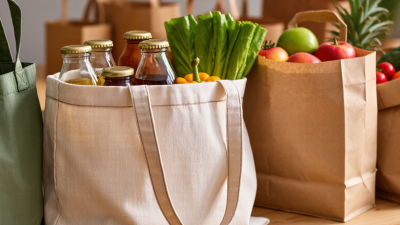
A reusable bag is only a practical choice if it survives regular shopping. Check the fabric weight, stitching, and handle attachment before buying. Thin seams can split when a bag carries jars or cans. A reinforced base helps distribute weight, while wider handles feel better against your hands. Small details matter. Also consider how much the empty bag weighs and whether it folds neatly into a coat pocket or car compartment.
Durability varies by material and construction. Cotton can feel sturdy, but a thick bag may take longer to dry after washing. Recycled synthetic fabric often dries quickly, though heat may damage some coatings or seams. Paper bags suit lighter loads and repeated dry use, but moisture can weaken them. No material is indestructible. Compare the bag’s likely lifespan with how often you will actually remember to bring it; an excellent bag left at home is not very reusable.
Care requirements affect long-term use. Look for clear washing instructions, and avoid assuming every bag belongs in a machine. Empty crumbs from the corners, spot-clean spills promptly, and let damp bags dry fully before folding them away. Bags used for raw produce or leaking containers may need more frequent cleaning. That takes effort. It is easy to overestimate how convenient a care routine will feel, so choose one you can realistically maintain.
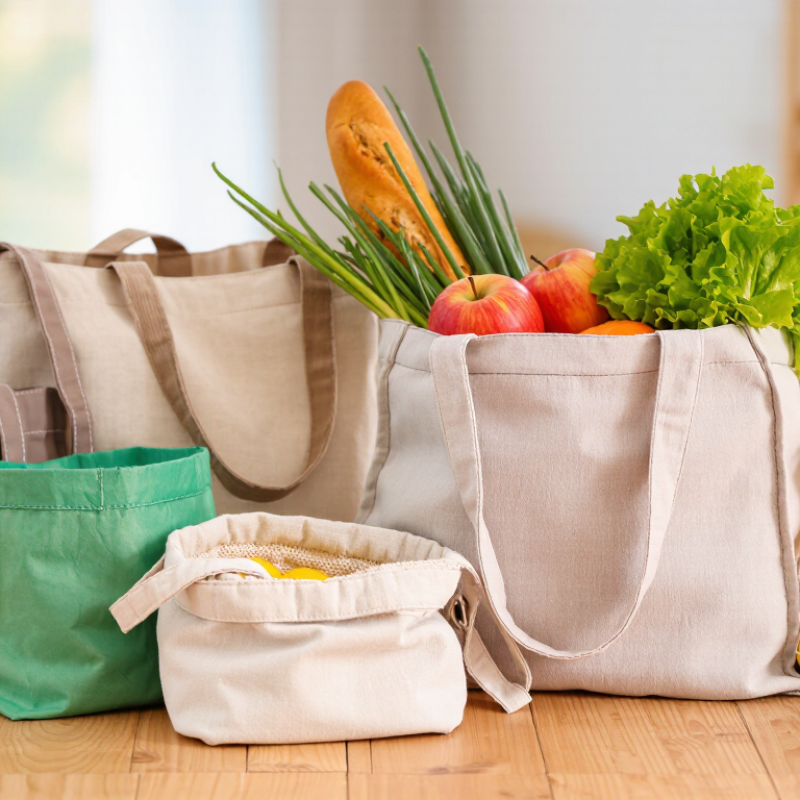
A useful shopping bag should fit the way you actually shop, not an imaginary weekly haul. If you usually buy a few items after work, a compact bag that folds into a coat pocket may be easier to carry. For a market trip with leafy vegetables, bread, and a jar, choose a wider base and enough depth to keep items steady. Small details matter.
Tip: Before choosing a size, picture your usual purchases on a counter. A bag that is too small can strain its seams; one that is too large may let delicate items slide around. Check the handles, too. Short handles suit hand-carrying, while longer ones can sit over a shoulder when the bag is moderately loaded.
Design should match your routine as well. A simple open top makes quick errands convenient, but a closure can help keep contents in place on a crowded bus. Light-colored fabric shows stains sooner, though it makes contents easier to spot. I sometimes choose the roomier option and then regret carrying the extra bulk. A practical compromise is a medium bag with a gusset and a foldable spare. Try folding it and lifting it before committing. The perfect fit is not always obvious online.
Use these approximate capacity ranges as a starting point: a compact bag suits a few essentials, while larger or insulated bags are more practical for bigger grocery trips. Actual capacity varies by bag shape and construction, so check product dimensions and care instructions before buying.
A shopping bag’s environmental claims begin at the factory, not at the checkout. Ask what its fabric contains and where the fibers come from. For recycled content, look for documentation that identifies the material and percentage, rather than relying on a vague label. Ask for proof. Production records or independent assessments can clarify whether a supplier tracks energy use, water consumption, and dye wastewater. Check what a certificate covers and when it was issued; one verified step does not prove every stage is responsible.
Small details matter. A thick handle may last longer, but extra coatings or laminated layers can make a bag harder to recycle. If a supplier cannot explain its manufacturing process, treat that gap as a reason to ask more, not as proof of wrongdoing. I used to focus on the fabric alone; that was too narrow. Stitching, dyes, and factory practices also shape a bag’s impact.
Before buying, find out what happens when the bag wears out. Check whether local recycling accepts its specific material, including handles, linings, and coatings. Compostable materials may require commercial facilities, which are not available everywhere. Don’t assume. A simple, durable bag that gets reused often may be a more practical choice than one with an impressive end-of-life claim but no nearby disposal route.
A useful shopping bag should fit your usual errands, not an imaginary perfect trip. Check that its base sits flat and its handles feel comfortable when carrying a few heavier groceries. Look closely at the stitching where the handles meet the body; that small area often takes repeated strain. A washable fabric can be practical, but check its care label before buying. Small details matter.
Care keeps a bag useful longer. Empty crumbs after each trip, and wipe spills before they dry. For fabric bags, use mild soap and cool or lukewarm water unless the label says otherwise. Let the bag dry fully. Damp fabric stored in a cupboard can develop an unpleasant smell. Keep bags folded in a dry spot, and avoid overloading them just because they seem sturdy. If you carry raw meat or leaking containers, use a separate washable liner and clean it promptly.
A bag will not stay pristine, and that is not a failure. Check seams and handles occasionally; small loose threads are easier to notice early. Replace a bag when damage makes it unreliable, rather than waiting for a handle to give way mid-errand. Perfect care is unrealistic. A simple routine you actually follow is more useful than elaborate rules you forget.